Multiparameter Water Quality Meter
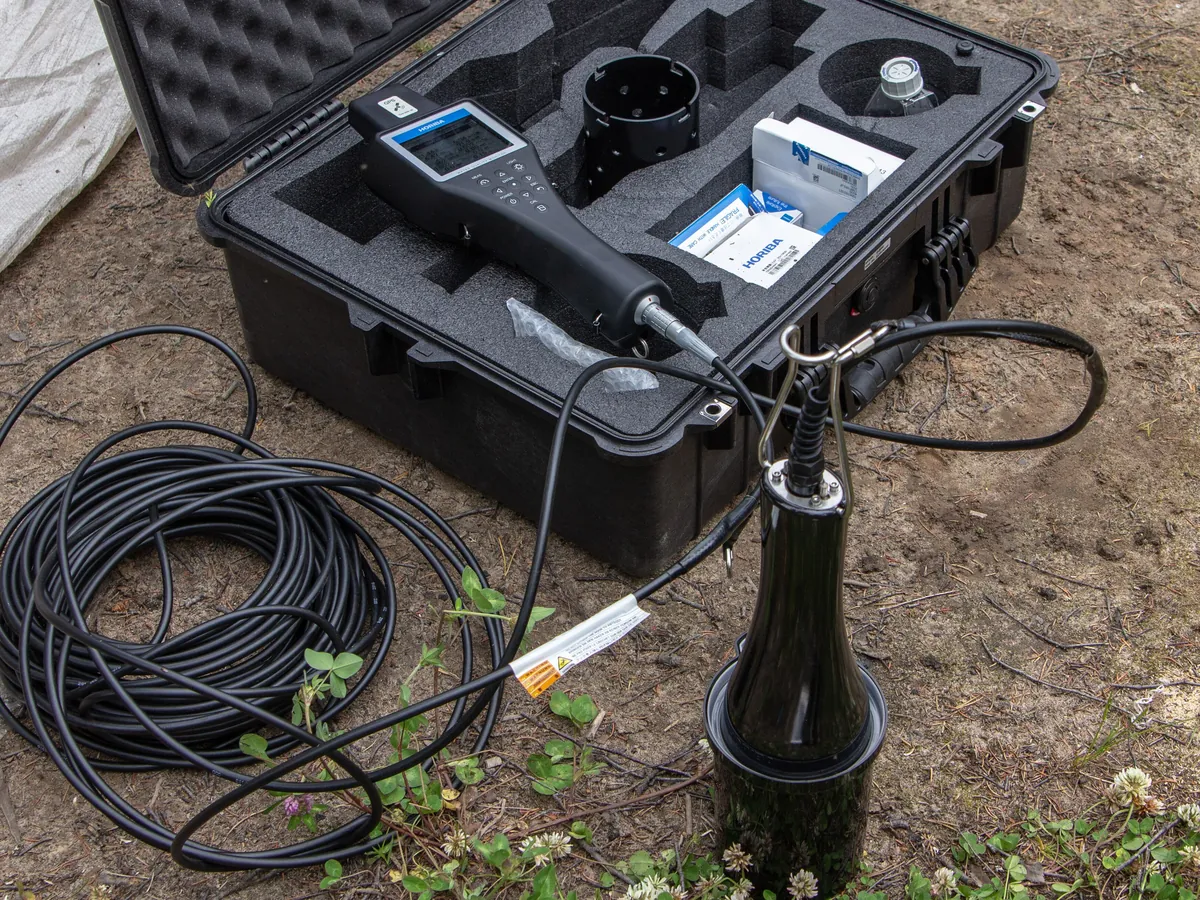
A portable or benchtop meter, often with a submersible sonde, that measures several water quality parameters at once, such as pH, conductivity, dissolved oxygen, temperature, turbidity and ORP.
- Environmental monitoring agencies
- Water and wastewater utilities
- Aquaculture
- Mining and industrial effluent
- Research and education
Test your Multiparameter meter knowledge
Multiple-choice questions
Pick an answer to see whether you are right and why.
Q1. Why are pH, temperature and dissolved oxygen best measured in the field?
basicQ2. Which standard is commonly used to calibrate conductivity sensors?
basicQ3. Between pH 4.01 and 7.00 buffers, the electrode reads 177.3 mV and 0.5 mV at 25 °C. What is the slope?
intermediateQ4. Why does a luminescent DO sensor not need water movement past it, unlike a membrane (Clark) sensor?
intermediateQ5. What must be entered for an accurate DO calibration in water-saturated air?
intermediateQ6. An end-of-day check finds the pH 7.00 buffer reads 7.25. What should happen to the day's pH data?
advanced
Viva questions
Think of your answer first, then open it to compare.
1. Describe the start-of-day calibration of a multiparameter meter.
Clean and rinse sensors, calibrate pH with two or three bracketing buffers and check slope and offset, calibrate conductivity with a 1413 µS/cm (or suitable) standard, calibrate DO in water-saturated air with local pressure, then verify with a buffer and standard read as samples and record everything.
2. Why is conductivity reported at 25 °C?
Conductivity rises by about 2% per °C for most natural waters. Reporting at a reference temperature of 25 °C, using temperature compensation, lets results from different temperatures and sites be compared.
3. What causes fouling of field sensors in wastewater, and how is it managed?
Biofilm, oil, grease and solids coat sensors, slowing response and causing drift. It is managed by regular cleaning with soft brushes or mild detergents, wipers on turbidity sensors, shorter deployments, and post-deployment checks.
Keep every Multiparameter meter in control: usage logs, calibration and maintenance schedules, and automatic blocking of overdue instruments.