Free Residual Chlorine by DPD Colorimetric Method
Free chlorine oxidises the DPD reagent to a magenta-coloured product within seconds. The colour intensity, read at about 515 nm, is proportional to the chlorine concentration. Because chlorine decays quickly, the test should be done at the sampling point.
- Environmental & water
- Colorimetry at about 515 nm with DPD reagent; usually performed on site with a portable photometer
- UV-Vis
- Multiparameter meter
- Micropipette
Reference: Typical method based on APHA Standard Methods 4500-Cl G (DPD colorimetric method) and ISO 7393-2. Field photometers use pre-dosed DPD reagents with factory or user calibration. Follow your SOP.
Why this method works
N,N-diethyl-p-phenylenediamine (DPD) is oxidised by free chlorine at pH 6.2–6.5 to a pink-magenta Würster dye. Read immediately, the colour reflects free chlorine only. Adding potassium iodide releases iodine from chloramines, which also oxidises DPD — this second reading gives total chlorine, and combined chlorine = total − free. Very high chlorine (above the method range) bleaches the dye and can give falsely low readings.
Instruments used
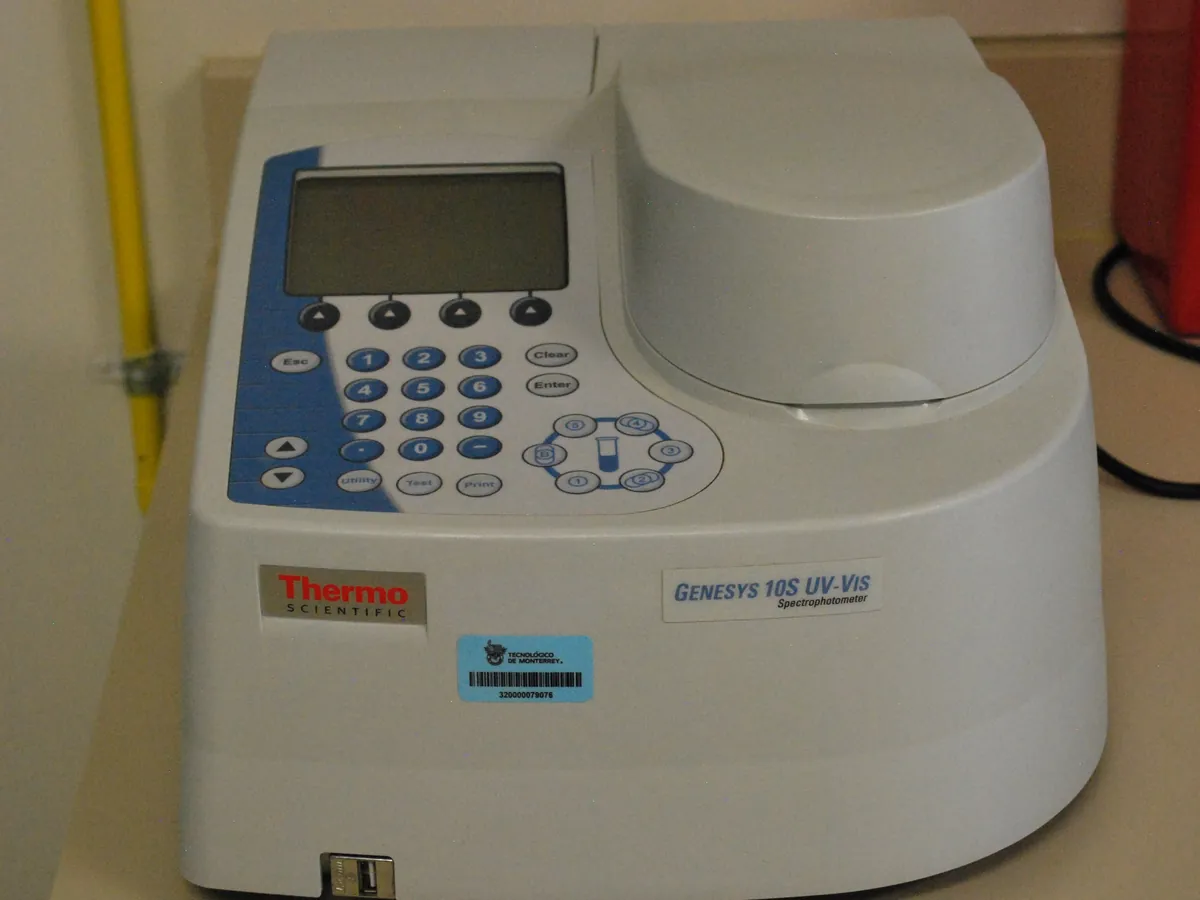
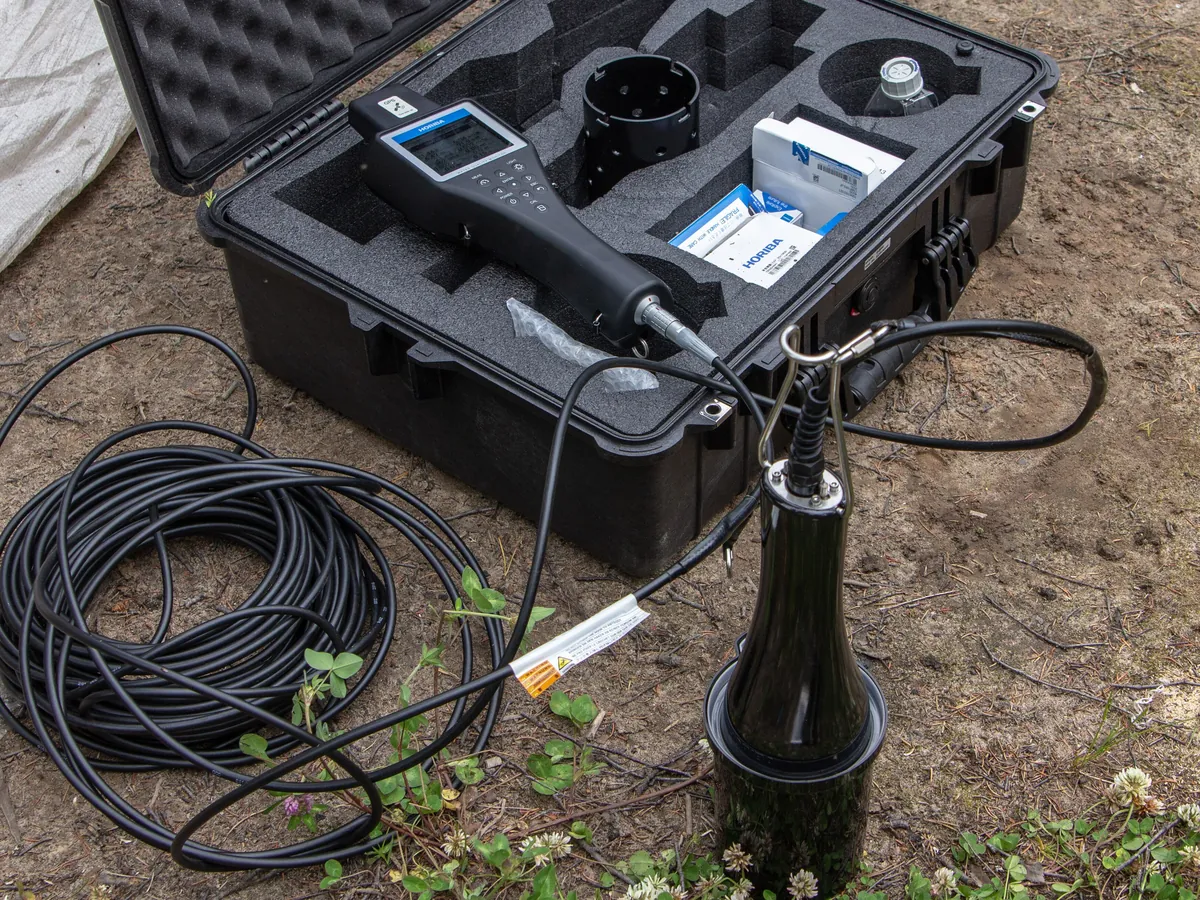
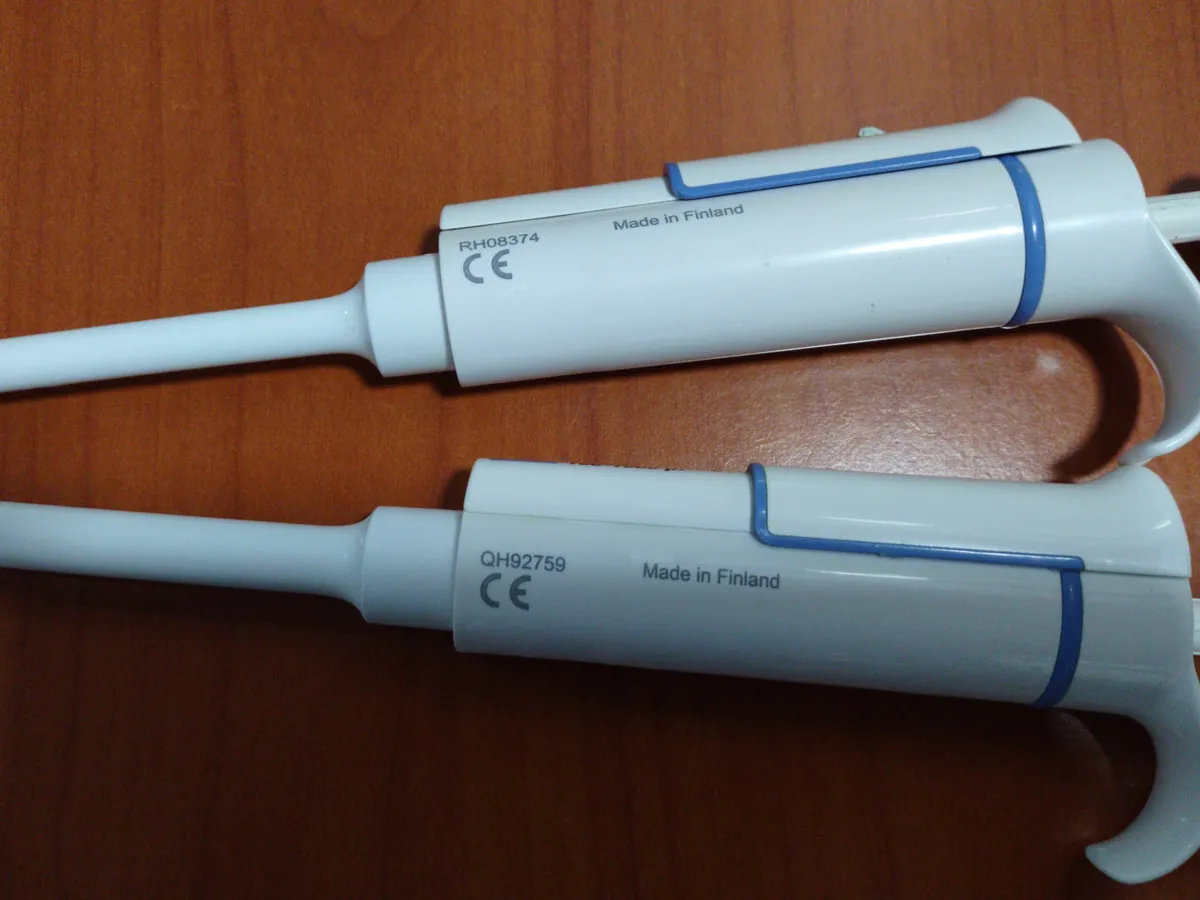
Reagents & standards
| Reagent | Grade / specification |
|---|---|
| DPD reagent | Pre-dosed powder pillows or tablets (buffered DPD for free chlorine) |
| Potassium iodide | For total chlorine (or 'total' reagent packs) |
| Chlorine standard | Secondary gel/glass standards for photometer checks, or freshly standardised hypochlorite solution |
| Chlorine-demand-free water | For blanks and dilutions |
Preparing the sample
- 01
Flush tap
Run 2–3 min to get water from the main.
- 02
Fill cell
Rinse and fill two cells: blank and sample.
- 03
Zero
Zero the photometer on the sample blank.
- 04
Add DPD
Add reagent to the sample cell; mix.
- 05
Read fast
Read free chlorine within about 1 min.
Procedure
- 1At the sampling point, run the tap until the water temperature is steady (typically 2–3 minutes). Avoid agitation and sunlight, which drive off chlorine.
- 2Rinse two clean sample cells with the water and fill each to the mark (for example 10 mL).
- 3Wipe the cells and zero the photometer with the unreacted sample as the blank (this compensates for colour and turbidity).
- 4Add the free-chlorine DPD reagent to the second cell, cap and swirl for about 20 seconds.
- 5Insert the cell and read within about 1 minute (free chlorine). For total chlorine, use the total reagent (with KI) and read after the reaction time stated by the manufacturer (typically 3–6 minutes).
- 6If the reading is above the range, dilute with chlorine-demand-free water and re-test; record the dilution.
Standard preparation
- 1Verify the photometer daily with secondary standards; verify the secondary standards periodically against a freshly prepared and iodometrically standardised hypochlorite solution, as per SOP.
Notes for analysts
- Chlorine is unstable; do not bring samples back to the lab for residual chlorine — the field result is the result.
- Samples for microbiology must be dechlorinated with sodium thiosulphate at collection, but samples for chlorine testing must not.
- Free chlorine above roughly 10 mg/L can bleach DPD and give a falsely low or zero reading — dilute and repeat if the colour fades.
Method parameters (typical)
| Wavelength | About 515 nm (510–530 nm) |
|---|---|
| pH of reaction | 6.2–6.5 (provided by buffered reagent) |
| Read time (free) | Within about 1 min of adding reagent |
| Typical range | About 0.02–2 mg/L Cl₂ (higher with dilution or high-range reagents) |
| Reporting | mg/L as Cl₂ |
System suitability & sequence
| Parameter | Limit |
|---|---|
| Secondary standard check | Within the stated tolerance of the standard (e.g. ±10%) |
| Reagent blank | Reads near zero in chlorine-free water |
Typical sequence
- 1Photometer check with secondary standard
- 2Sample blank (zero)
- 3Free chlorine reading
- 4Total chlorine reading (if required)
Calculation with a worked example
Where
- A
- Absorbance of the developed sample at 515 nm
- m, c
- Slope and intercept of the calibration line
- DF
- Dilution factor (1 if undiluted)
Given
- Calibration
- A = 0.205 × C + 0.003
- Sample absorbance (free)
- 0.142
- DF
- 1
Working
- 1Free chlorine = (0.142 − 0.003) ÷ 0.205 = 0.139 ÷ 0.205 = 0.678 mg/L
Free residual chlorine = 0.68 mg/L as Cl₂ (meets the IS 10500 minimum of 0.2 mg/L)
What result passes
- As per IS 10500:2012: free residual chlorine minimum 0.2 mg/L where water is chlorinated (the standard notes that higher residuals may be needed in some situations, for example when protection against viruses is required); check the current edition.
- WHO guideline value for chlorine is 5 mg/L (health-based maximum), and it recommends a free residual of at least about 0.2 mg/L at the point of delivery and 0.5 mg/L after at least 30 min contact time at pH < 8.
Validation parameters (ICH Q2(R2))
| Parameter | Typical requirement |
|---|---|
| Accuracy | Comparison with standardised hypochlorite or amperometric titration |
| Interferences | Oxidised manganese, chromate and other oxidants give false positives; check with arsenite blank if suspected |
| Range | Verified for the reagent and photometer in use |
Run this method in LimsPulse: specifications and STPs under version control, results calculated and checked against limits, and a signed Certificate of Analysis.