Environmental monitoring
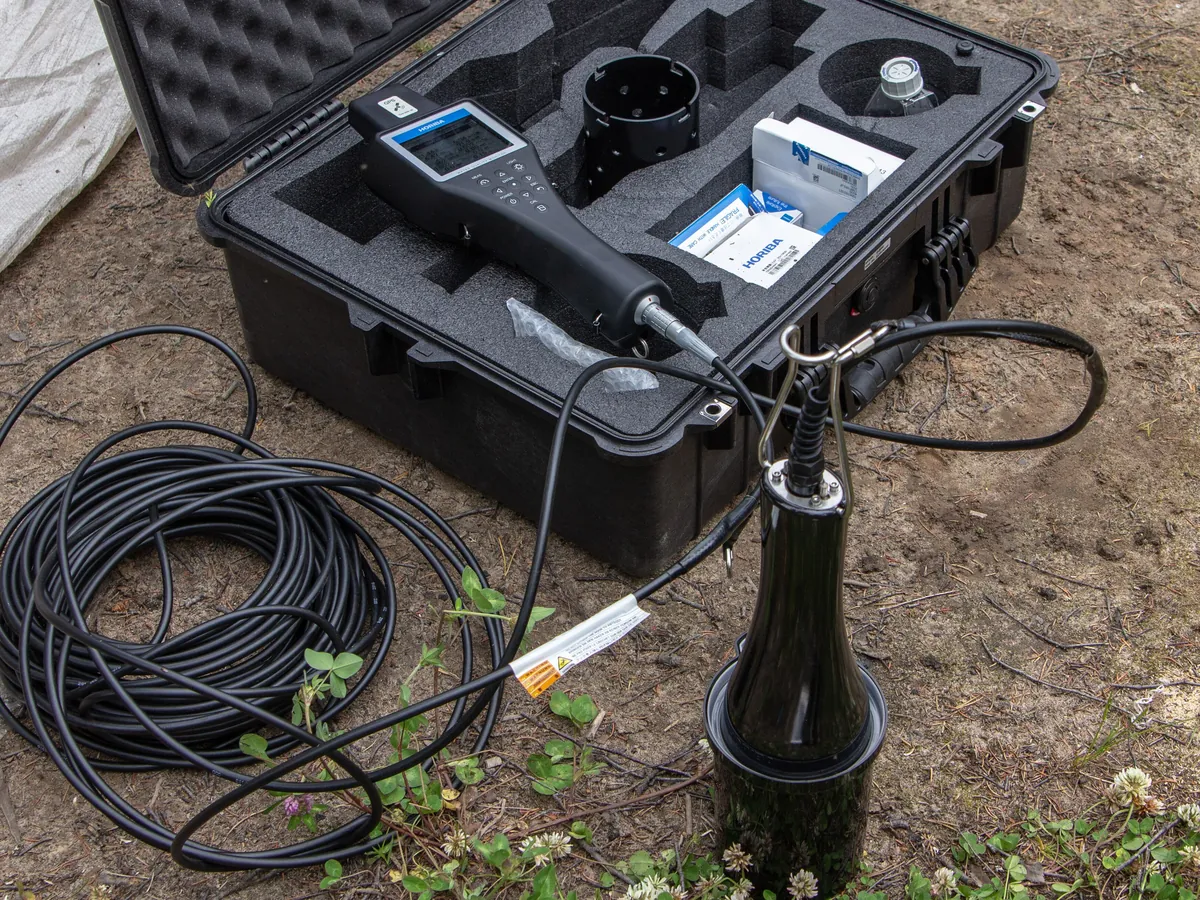
Multiparameter Water Quality Meter
A portable or benchtop meter, often with a submersible sonde, that measures several water quality parameters at once, such as pH, conductivity, dissolved oxygen, temperature, turbidity and ORP.
- Environmental monitoring agencies
- Water and wastewater utilities
- Aquaculture
- Mining and industrial effluent
- Research and education
Follow your site SOP
This is a typical operating sequence for learning. Your instrument model and approved SOP take precedence.
STAGE 1
Calibration (start of day)
- 1Rinse sensors with purified water and then with a little of each standard.
- 2Calibrate pH with two or three buffers that bracket the expected range (for example 4.01, 7.00, 10.01).
- 3Calibrate conductivity with a standard close to the expected sample range (for example 1413 µS/cm).
- 4Calibrate DO at 100% saturation in water-saturated air or air-saturated water, and at zero if the SOP requires.
- 5Record slopes, offsets and calibration values in the field log.
- Do not reuse buffers or standards; pour fresh portions each time.
- Let standards reach the same temperature as the sensors.
STAGE 2
Field measurement
- 1Immerse the sonde fully so all sensors are under water and no air is trapped.
- 2Wait for readings to stabilise (often 1–3 minutes).
- 3Record or log pH, temperature, conductivity, DO and other parameters.
- 4Rinse sensors with purified water between sites.
- Do not let sensors dry out between sites.
- Work safely near water: wear a life jacket where required.
STAGE 3
End-of-day check
- 1Re-measure a pH buffer and the conductivity standard as a post-calibration check.
- 2Clean sensors and store the probe with the storage solution or moist sponge in the cup.
- 3Download data and charge or replace batteries.
In LimsPulse · Calibration Management
Keep every Multiparameter meter in control: usage logs, calibration and maintenance schedules, and automatic blocking of overdue instruments.