Microbiology & sterility
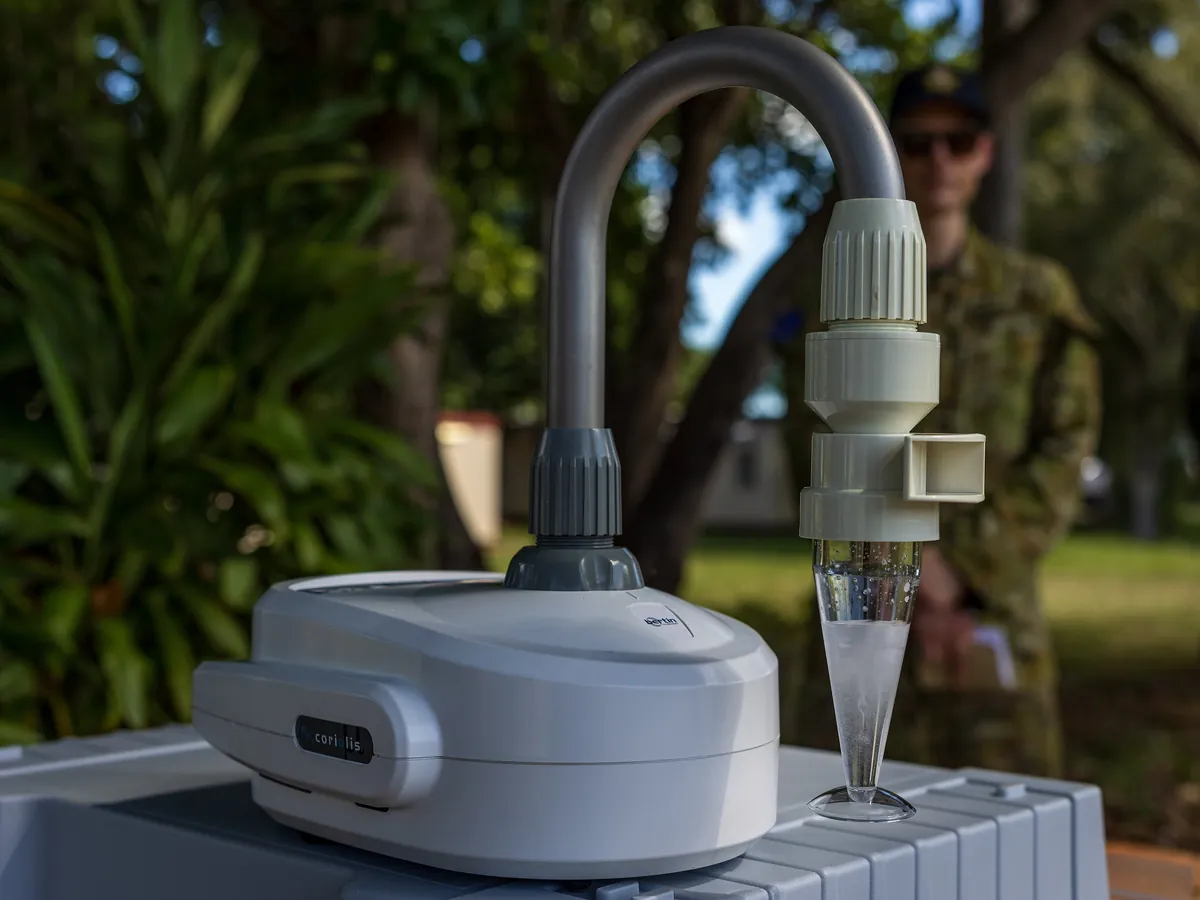
Microbial air sampler (active air sampler)
Draws a known volume of air across an agar plate so that airborne microorganisms are collected and can be counted as cfu per m³. Used for active viable air monitoring of clean rooms, isolators and LAF units.
- Pharmaceutical
- Biotech
- Hospitals and compounding pharmacies
- Medical devices
- Food & beverage
Follow your site SOP
This is a typical operating sequence for learning. Your instrument model and approved SOP take precedence.
STAGE 1
Preparation
- 1Check the sampler is within its airflow calibration date and the battery is charged.
- 2Sterilise the head (autoclave) or sanitise it with sterile 70% IPA as per the SOP, and allow it to dry.
- 3Take growth-promotion-tested, pre-incubated SCDA plates in their sterile wrap to the area.
- Alcohol left on the head can kill organisms on the agar; let it evaporate.
STAGE 2
Sampling
- 1Place the sampler at the defined location and height, near the critical work but without blocking the airflow.
- 2Open the plate and fit it in the holder without touching the agar; replace the head.
- 3Enter the sample ID and volume (commonly 1000 L in Grade A, or as per SOP) and start sampling.
- 4When sampling is complete, remove the head, close the plate and label it with location, date, time and volume.
- Avoid standing upstream of the sampler or leaning over it during sampling.
STAGE 3
After sampling
- 1Incubate the plate as per the EM SOP and record the sampling details.
- 2Clean and sanitise the sampler and head before the next location or area.
- 3Count colonies, calculate cfu/m³ and compare with the alert and action limits.
In LimsPulse · Calibration Management
Keep every Air sampler in control: usage logs, calibration and maintenance schedules, and automatic blocking of overdue instruments.