Particle & solid-state
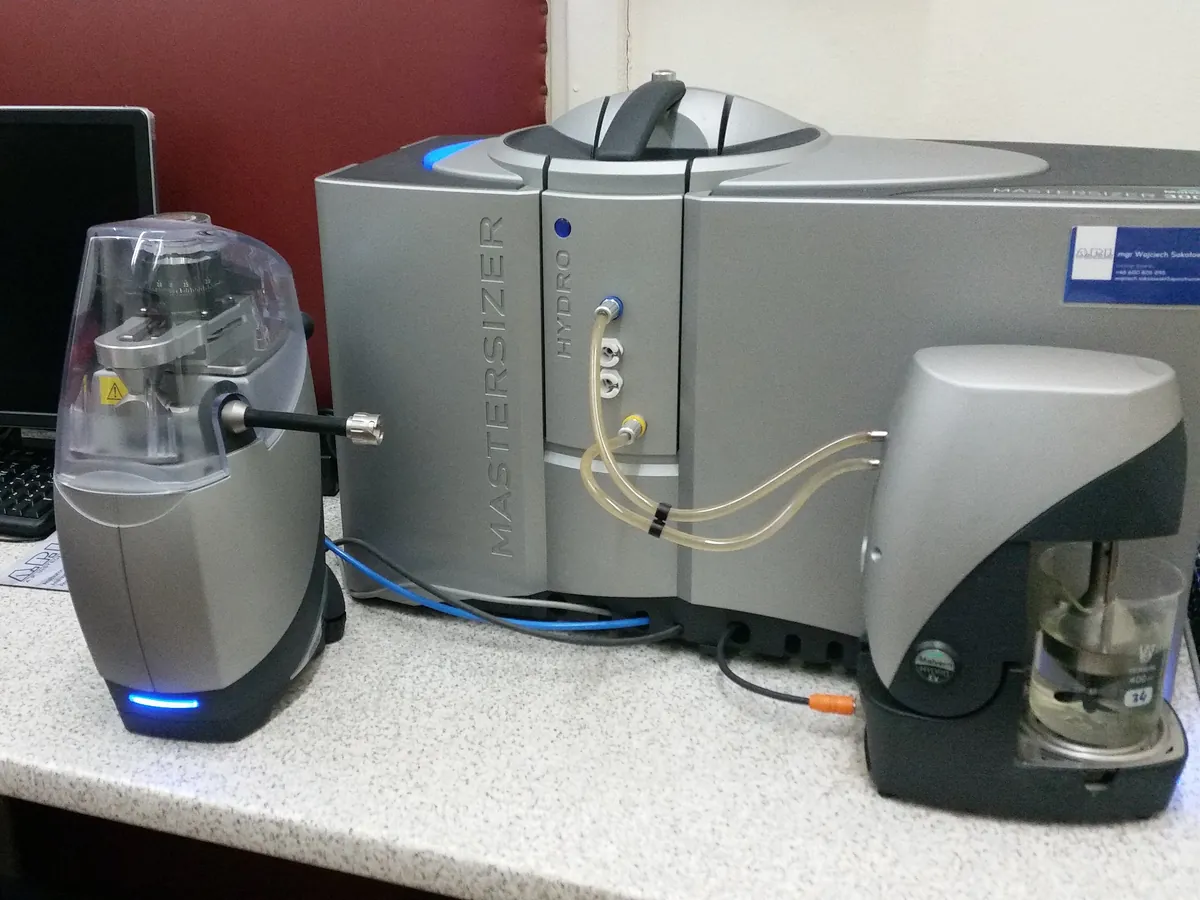
Laser Diffraction Particle Size Analyser
Measures the particle size distribution of powders, suspensions and emulsions from the pattern of laser light scattered by the particles. Reports D10, D50 and D90 within a minute or two.
- Pharmaceutical
- Biotech
- Chemicals
- Cosmetics
- Food & beverage
- Mining and cement
TROUBLESHOOTING
Common problems, causes and fixes
High or noisy background
Likely causes
- • Dirty or scratched cell windows
- • Air bubbles in the wet unit
- • Contaminated dispersant
What to do
- • Clean or replace windows
- • Degas the dispersant and lower the stirrer speed
- • Use fresh, filtered dispersant
Results keep getting smaller across replicates
Likely causes
- • Agglomerates still breaking up
- • Sample dissolving in the dispersant
- • Sonication too strong, breaking primary particles
What to do
- • Extend the pre-measurement dispersion time
- • Use a saturated or different dispersant
- • Review sonication settings during method development
Unexpected coarse peak
Likely causes
- • Agglomerates not dispersed
- • Air bubbles seen as large particles
- • Dust in the cell
What to do
- • Increase dispersion energy within the validated range
- • Remove bubbles; avoid vigorous stirring
- • Clean the cell and re-run background
High fit residual
Likely causes
- • Wrong refractive index
- • Obscuration outside range
- • Non-spherical particles
What to do
- • Confirm optical properties in the method
- • Adjust sample amount
- • Check shape by microscopy and document it
Cannot reach obscuration
Likely causes
- • Blocked feeder (dry)
- • Sample sticking to tray
- • Too little sample
What to do
- • Clean the feeder and venturi
- • Adjust feed rate or vibration
- • Add more sample
CRM check fails
Likely causes
- • Misalignment
- • Dirty optics
- • Poor CRM dispersion or handling
What to do
- • Run alignment and clean optics
- • Repeat with fresh CRM using the certificate conditions
- • Call service if it fails again
In LimsPulse · Calibration Management
Keep every Laser diffraction PSA in control: usage logs, calibration and maintenance schedules, and automatic blocking of overdue instruments.