Particle & solid-state
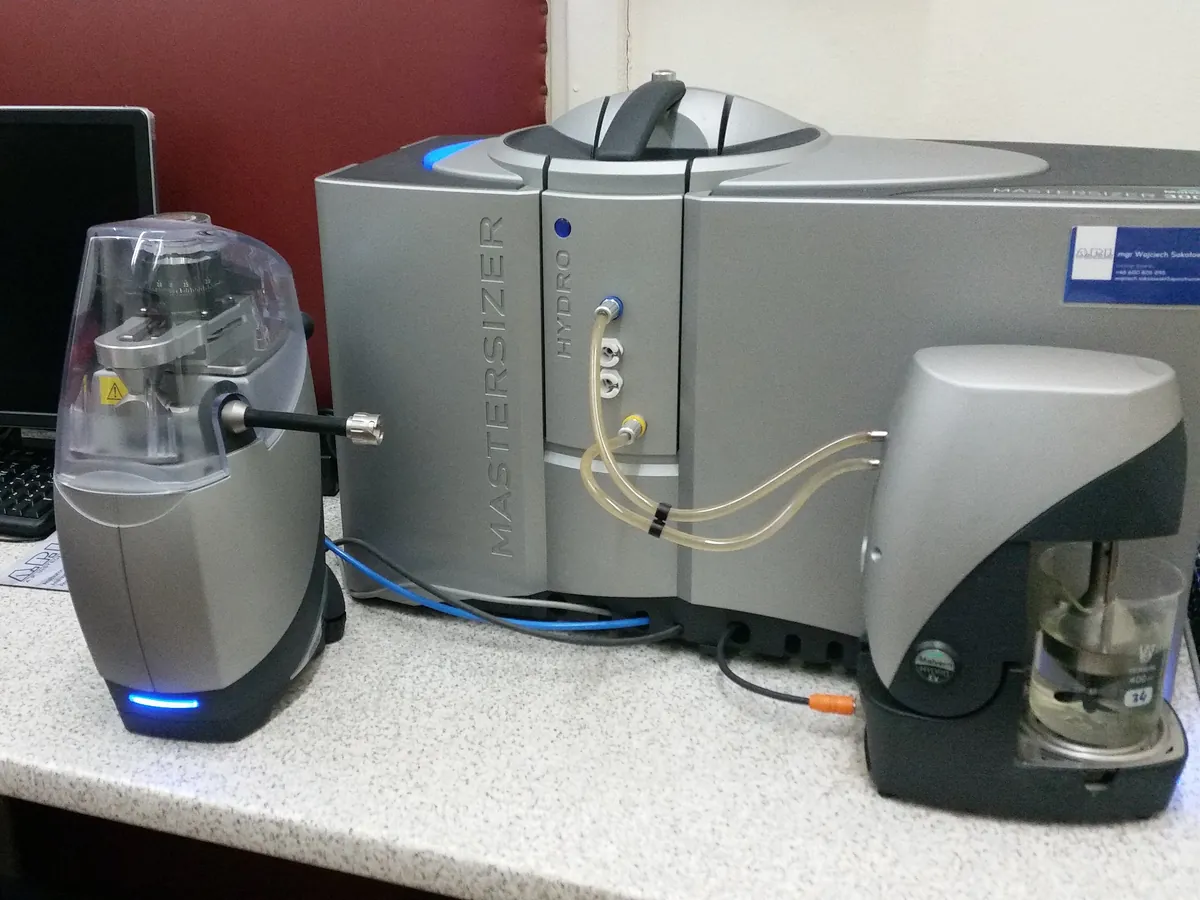
Laser Diffraction Particle Size Analyser
Measures the particle size distribution of powders, suspensions and emulsions from the pattern of laser light scattered by the particles. Reports D10, D50 and D90 within a minute or two.
- Pharmaceutical
- Biotech
- Chemicals
- Cosmetics
- Food & beverage
- Mining and cement
Follow your site SOP
This is a typical operating sequence for learning. Your instrument model and approved SOP take precedence.
STAGE 1
Before you start
- 1Check the instrument is within its calibration (CRM check) due date.
- 2Select the validated method (SOP) for the product: dispersion type, refractive indices, obscuration range and measurement time.
- 3For wet methods, prepare the dispersant (with surfactant if required) and confirm the sample does not dissolve in it.
- Never change the optical model or refractive index from the validated method; this changes the result.
STAGE 2
Background and alignment
- 1Switch on and allow the laser to warm up as the manufacturer recommends.
- 2Fill or start the dispersion unit and let the system align automatically.
- 3Measure the background with clean dispersant or empty air and check it is low and stable.
- A high or unstable background means dirty windows or bubbles; clean the cell before measuring.
STAGE 3
Measurement
- 1Add a representative sub-sample (taken with a riffler or by careful mixing) until obscuration is within the method range.
- 2Apply the stated sonication or air pressure and wait for the stated time.
- 3Measure in replicate (commonly three measurements of one aliquot, and sometimes several aliquots).
- 4Review the fit residual and the trend of replicate results before accepting them.
- Results that drift downward across replicates may mean the sample is still de-agglomerating or dissolving.
STAGE 4
After use
- 1Drain and rinse the wet unit, or vacuum-clean the dry tray and venturi.
- 2Clean the cell windows if the background was high.
- 3Record the measurement in the instrument log.
In LimsPulse · Calibration Management
Keep every Laser diffraction PSA in control: usage logs, calibration and maintenance schedules, and automatic blocking of overdue instruments.