Jar Test Apparatus
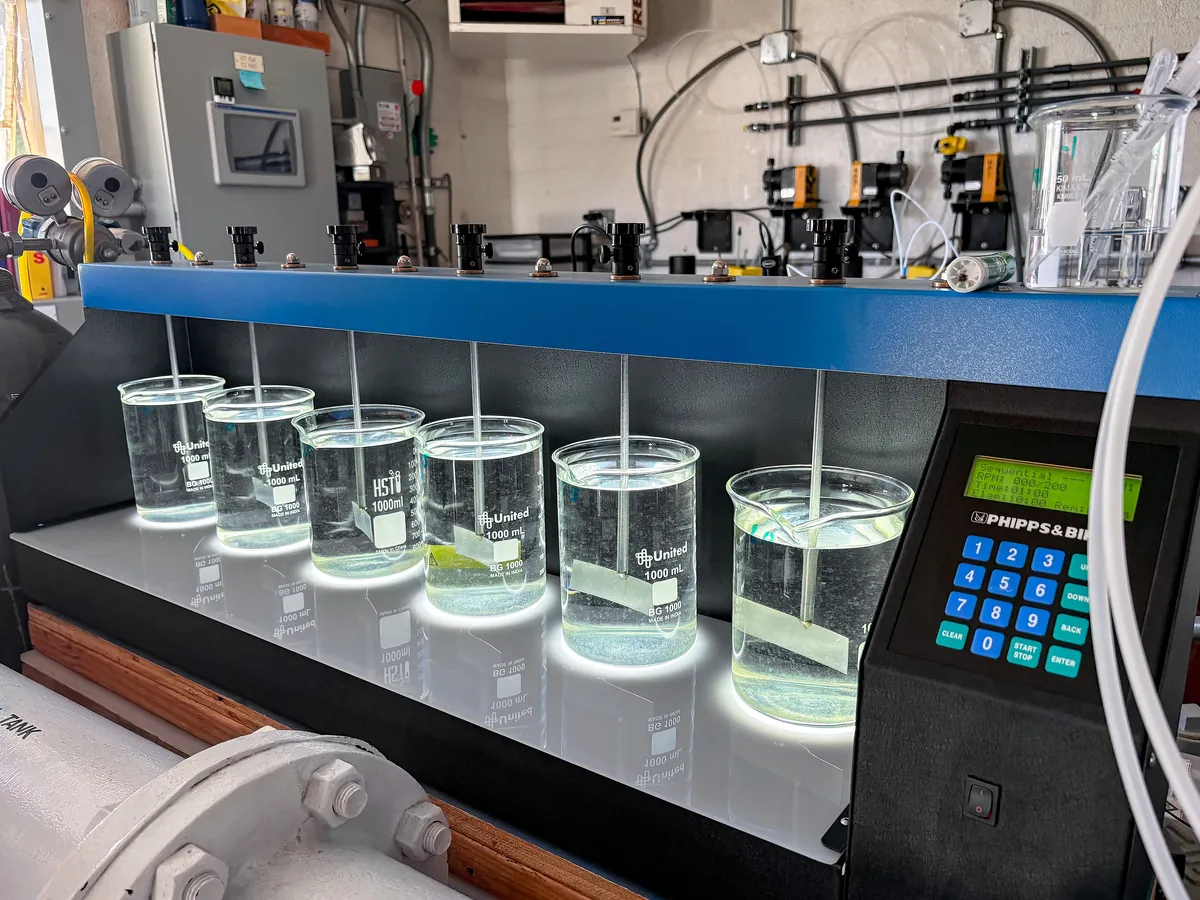
A bank of four to six paddle stirrers that mix identical water samples in beakers with different doses of coagulant, so the analyst can find the dose that gives the best floc formation and settling.
- Drinking water utilities
- Municipal and industrial wastewater treatment
- Chemical suppliers (coagulant trials)
- Paper, textile and mining industries
- Universities and training
What is Jar tester?
Water and wastewater treatment plants add coagulants such as alum, ferric chloride or polyaluminium chloride to make fine particles clump together into flocs that settle or can be filtered. The right dose depends on the raw water, which changes with season and rainfall.
The jar test reproduces the plant's mixing steps on a small scale. Several beakers (jars) of the same raw water are dosed with a range of coagulant amounts, rapidly mixed, then slowly stirred to grow flocs, and finally left to settle. The analyst then measures turbidity, pH, colour or residual metal in the clear water above the floc.
A jar test apparatus provides identical paddles driven at the same controlled speed, often with a lit base so flocs are easy to see. The result guides plant dosing and the choice of coagulant and flocculant aid.
Used for
- Finding the optimum coagulant dose for drinking water treatment
- Comparing different coagulants and polymers
- Optimising pH for coagulation
- Treatability studies for industrial effluents
- Sludge settling and dewatering trials
How it works
- 01
Fill jars
Equal volumes of raw water (commonly 1 L) go into each beaker.
- 02
Dose
Each jar receives a different coagulant dose, added at the same time.
- 03
Rapid mix
Paddles run fast (often 100–300 rpm) for about 1 minute to disperse the coagulant.
- 04
Slow mix (flocculation)
Speed is reduced (often 20–40 rpm) for 15–30 minutes to grow flocs.
- 05
Settle and measure
Paddles stop; after settling (often 15–30 minutes), the clear water is sampled for turbidity, pH and other tests.
Advantages
- Simple, cheap and quick way to simulate a full-scale process
- Several conditions tested side by side under identical mixing
- Easy to see floc size and settling
- Results directly guide plant operation
Limitations
- A small batch test does not fully reproduce plant hydraulics
- Results depend on operator judgement unless backed by measurements
- Raw water must be tested fresh; quality changes during storage
- Paddle speed and time must match the plant's mixing intensity to be meaningful
1 calibration procedure
Keep every Jar tester in control: usage logs, calibration and maintenance schedules, and automatic blocking of overdue instruments.