Environmental monitoring
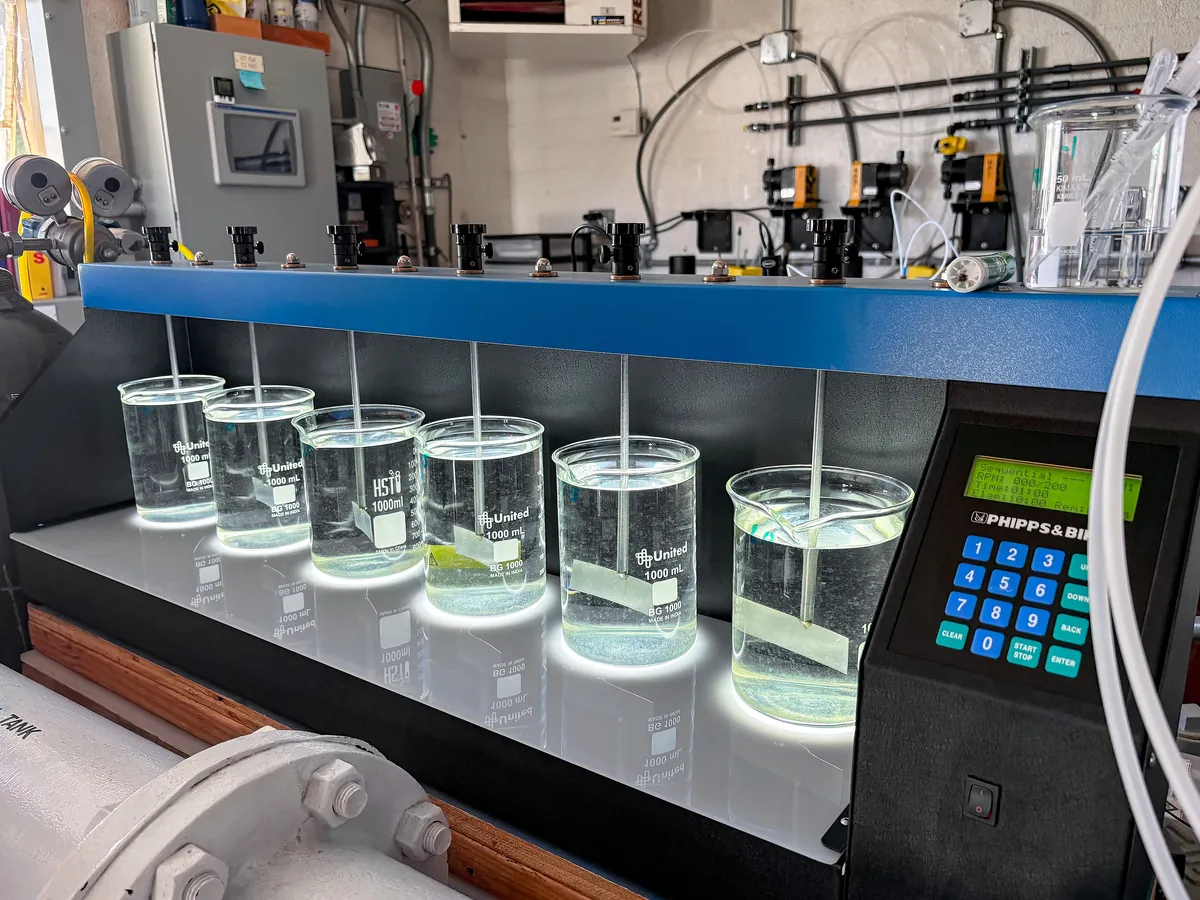
Jar Test Apparatus
A bank of four to six paddle stirrers that mix identical water samples in beakers with different doses of coagulant, so the analyst can find the dose that gives the best floc formation and settling.
- Drinking water utilities
- Municipal and industrial wastewater treatment
- Chemical suppliers (coagulant trials)
- Paper, textile and mining industries
- Universities and training
Follow your site SOP
This is a typical operating sequence for learning. Your instrument model and approved SOP take precedence.
STAGE 1
Preparation
- 1Collect a fresh raw water sample and measure its turbidity, pH, alkalinity and temperature.
- 2Prepare coagulant stock solution (for example 1% or 10 g/L) on the day of use.
- 3Fill each jar with the same volume of well-mixed raw water.
- 4Pre-measure the doses for each jar into syringes or a dosing rack.
- Shake the raw water container before filling each jar so solids are evenly shared.
STAGE 2
Mixing
- 1Lower the paddles into the jars at the same depth.
- 2Start rapid mixing and add all doses at the same moment.
- 3After the rapid mix time, reduce to the slow mixing speed for the set flocculation time.
- 4Observe and note the time floc first appears and its size in each jar.
STAGE 3
Settling and analysis
- 1Stop and lift the paddles carefully, or leave them still.
- 2Allow the set settling time without disturbing the jars.
- 3Draw supernatant from a fixed depth with a pipette or the sampling tap.
- 4Measure turbidity, pH and, where needed, colour and residual aluminium or iron.
- 5Plot settled turbidity against dose and pick the optimum.
In LimsPulse · Calibration Management
Keep every Jar tester in control: usage logs, calibration and maintenance schedules, and automatic blocking of overdue instruments.