Environmental monitoring
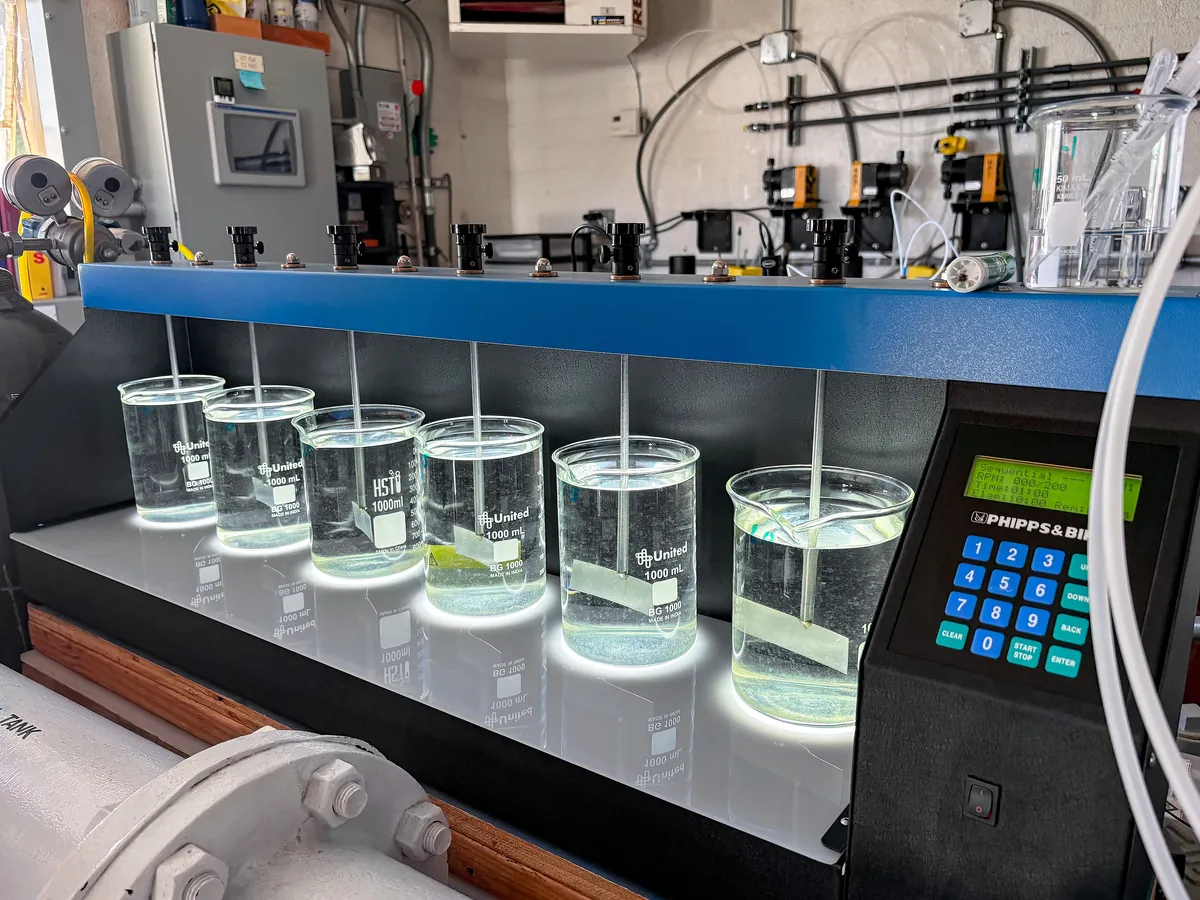
Jar Test Apparatus
A bank of four to six paddle stirrers that mix identical water samples in beakers with different doses of coagulant, so the analyst can find the dose that gives the best floc formation and settling.
- Drinking water utilities
- Municipal and industrial wastewater treatment
- Chemical suppliers (coagulant trials)
- Paper, textile and mining industries
- Universities and training
TROUBLESHOOTING
Common problems, causes and fixes
Jars with the same dose look different
Likely causes
- • Paddle speeds unequal
- • Bent paddle or different paddle depth
- • Uneven solids when filling jars
What to do
- • Check speeds with a tachometer
- • Straighten or replace paddle; set equal depth
- • Mix raw water well before filling
No floc forms at any dose
Likely causes
- • Dose range too low
- • pH outside the coagulant's working range
- • Low alkalinity
What to do
- • Widen the dose range
- • Adjust pH
- • Add alkalinity (lime or soda ash) as in the plant
Flocs break up
Likely causes
- • Slow mix speed too high
- • Flocculation time too long
What to do
- • Reduce slow mix speed
- • Shorten flocculation time to match plant conditions
Jar results do not match the plant
Likely causes
- • Mixing intensity or times do not match plant G and contact times
- • Aged raw water sample
What to do
- • Recalculate speeds and times to match plant
- • Test fresh raw water
Speed display unstable
Likely causes
- • Worn belt or motor brushes
- • Controller fault
What to do
- • Replace belt or service motor
- • Have the controller repaired
In LimsPulse · Calibration Management
Keep every Jar tester in control: usage logs, calibration and maintenance schedules, and automatic blocking of overdue instruments.