Jar Test Apparatus
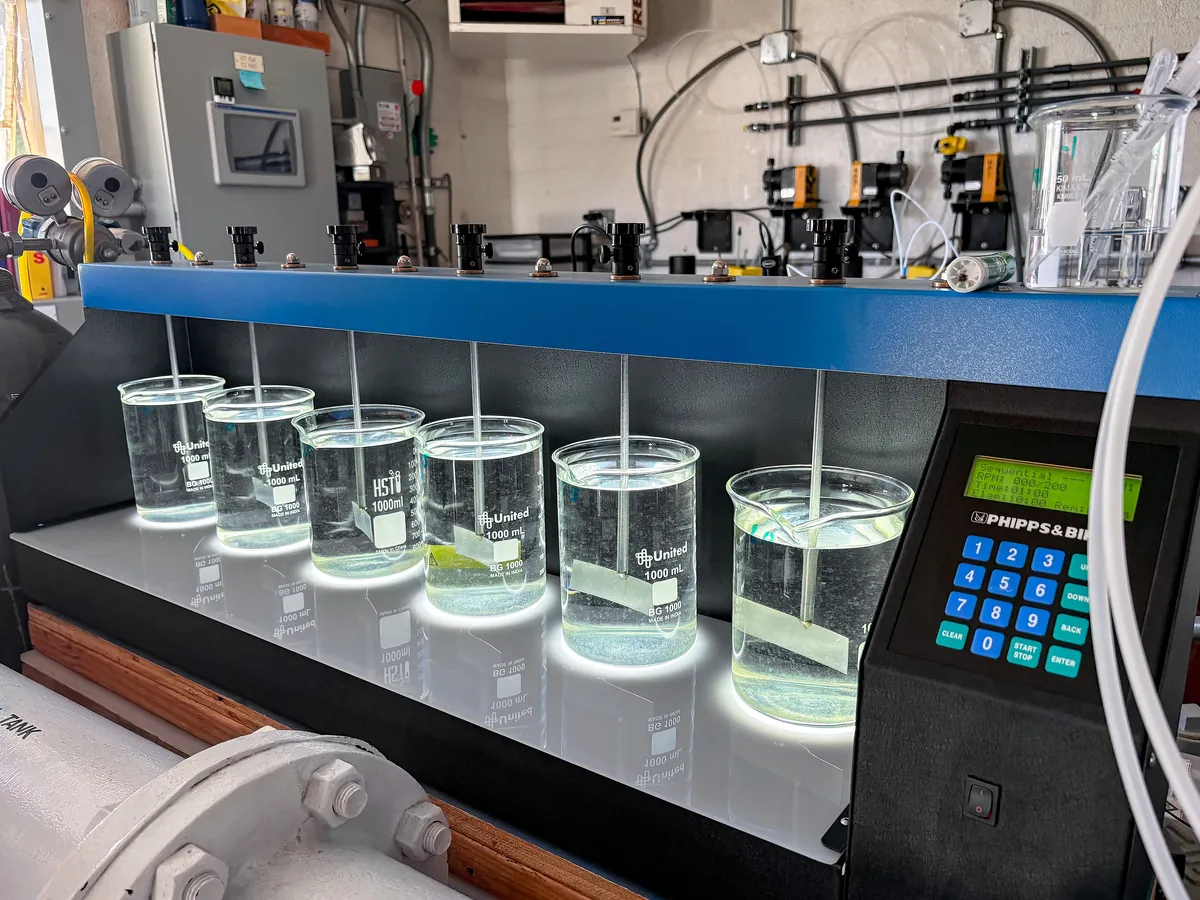
A bank of four to six paddle stirrers that mix identical water samples in beakers with different doses of coagulant, so the analyst can find the dose that gives the best floc formation and settling.
- Drinking water utilities
- Municipal and industrial wastewater treatment
- Chemical suppliers (coagulant trials)
- Paper, textile and mining industries
- Universities and training
Test your Jar tester knowledge
Multiple-choice questions
Pick an answer to see whether you are right and why.
Q1. What is the main purpose of a jar test?
basicQ2. What is the correct sequence of stages in a jar test?
basicQ3. What does a coagulant such as alum mainly do to colloidal particles?
intermediateQ4. Which instrument is used for the paddle speed check?
intermediateQ5. Jar results consistently suggest lower doses than the plant needs. What is the most likely cause?
advanced
Viva questions
Think of your answer first, then open it to compare.
1. How do you choose the optimum dose from jar test results?
Measure settled turbidity (and pH, colour or residual metal) in each jar, plot them against dose, and choose the lowest dose that meets the target turbidity with acceptable pH and residual coagulant. Overdosing wastes chemical and can re-stabilise particles.
2. Why should alkalinity and pH be measured in jar tests?
Alum and ferric coagulants consume alkalinity and lower pH. Each coagulant works best in a certain pH range; if alkalinity is too low, pH falls and coagulation fails, so lime or soda ash may be needed.
Keep every Jar tester in control: usage logs, calibration and maintenance schedules, and automatic blocking of overdue instruments.