Chromatography
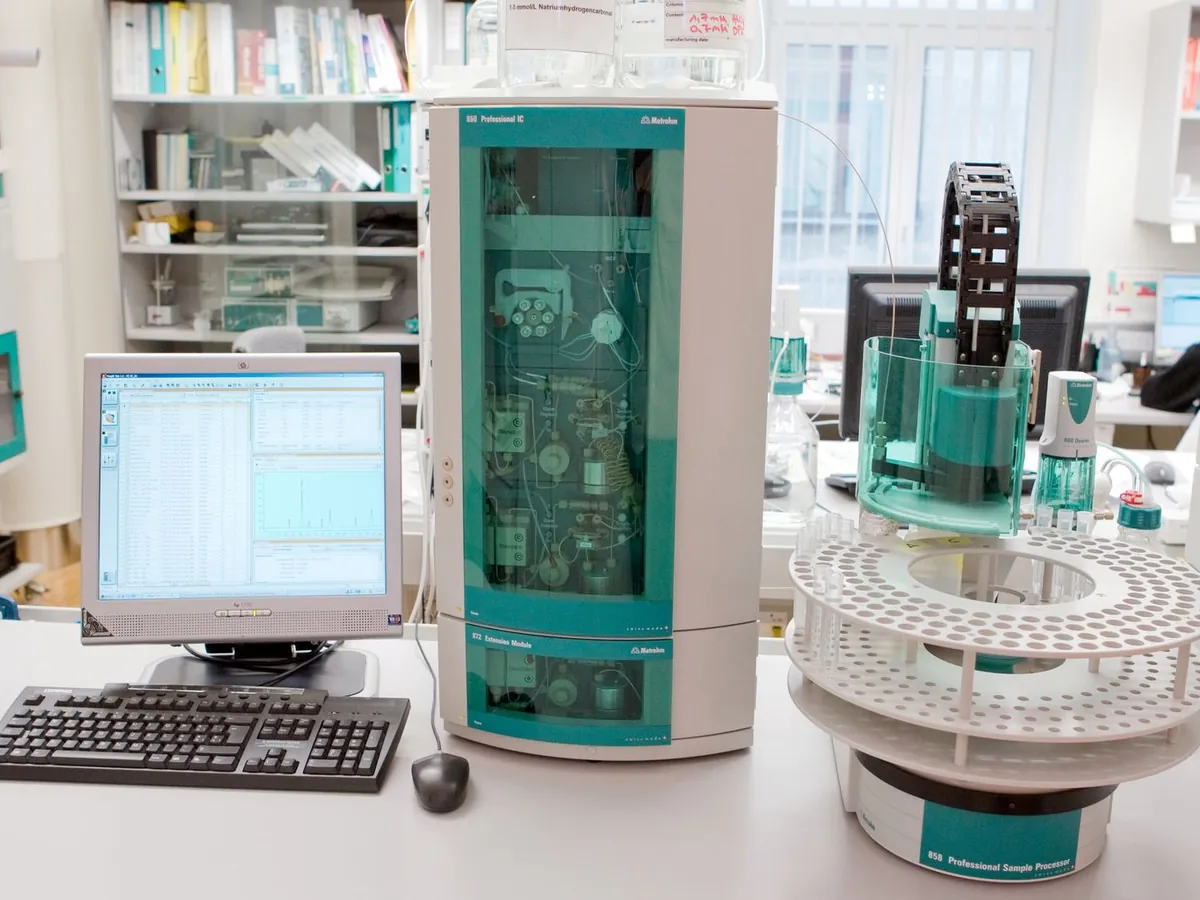
Ion Chromatograph (IC)
Separates charged species (anions, cations, small organic acids and amines) on an ion-exchange column and usually detects them by conductivity. Used in pharma QC for counter-ions, inorganic impurities and ions in water.
- Pharmaceutical
- Power and water utilities
- Environmental
- Food & beverage
- Semiconductor
- Chemicals
TROUBLESHOOTING
Common problems, causes and fixes
High background conductivity
Likely causes
- • Suppressor exhausted or failing
- • Contaminated eluent or water
- • Eluent too concentrated
What to do
- • Regenerate or replace the suppressor
- • Prepare fresh eluent with ultrapure water
- • Check eluent concentration and generator settings
Retention times getting shorter
Likely causes
- • Column capacity lost through contamination
- • Eluent concentration too high
- • Temperature change
What to do
- • Clean the column as per the supplier's guide or replace it
- • Re-prepare eluent
- • Use the column oven
Ghost peaks of chloride or sulfate in blanks
Likely causes
- • Contaminated water, vials or filters
- • Contaminated eluent reservoir
What to do
- • Use fresh ultrapure water and IC-grade vials
- • Rinse filters and vials before use
- • Clean the reservoir
Noisy or drifting baseline
Likely causes
- • Air bubble in the conductivity cell
- • Unstable cell temperature
- • Pump pulsation
What to do
- • Purge the cell
- • Check the cell and column temperature control
- • Service check valves
Poor peak shape for early ions
Likely causes
- • Sample matrix too concentrated
- • Carbonate interference
- • Overloaded column
What to do
- • Dilute the sample
- • Use eluent generation with a carbonate trap
- • Reduce injection volume
In LimsPulse · Calibration Management
Keep every IC in control: usage logs, calibration and maintenance schedules, and automatic blocking of overdue instruments.