Gel Permeation / Size-Exclusion Chromatography (GPC / SEC)
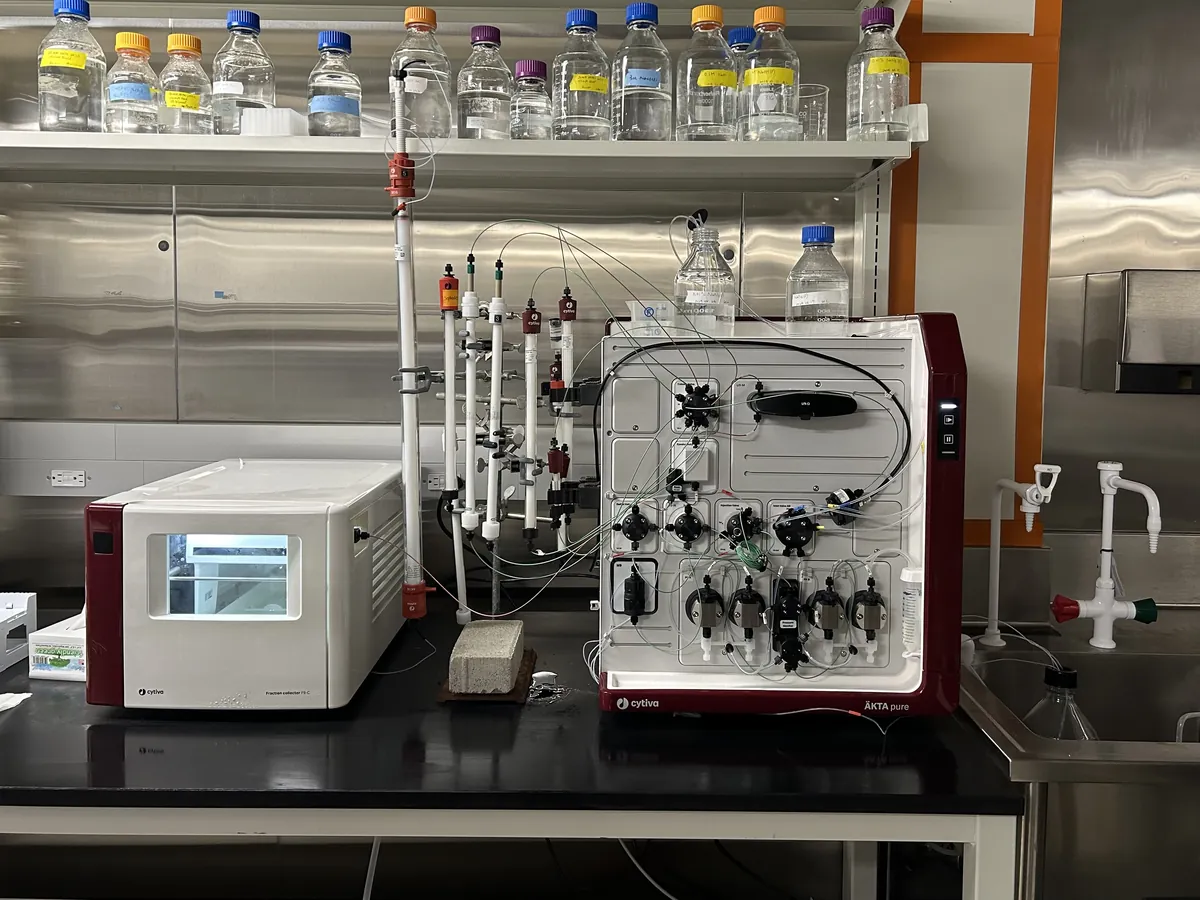
Separates molecules by their size in solution rather than by chemistry, so large molecules elute first. Used for polymer molecular-weight distribution and for protein aggregates in biologics.
- Pharmaceutical
- Biopharmaceutical
- Polymers & plastics
- Food (polysaccharides)
- Cosmetics
- Chemicals
Test your GPC / SEC knowledge
Multiple-choice questions
Pick an answer to see whether you are right and why.
Q1. In size-exclusion chromatography, which molecules elute first?
basicQ2. A polymer has Mw = 30,000 and Mn = 20,000. Its dispersity (Mw/Mn) is:
intermediateQ3. Which detector is most commonly used for GPC of polymers without a chromophore?
basicQ4. Why is a small flow-rate error serious in GPC?
intermediateQ5. In SEC-HPLC of a monoclonal antibody, what does the peak eluting before the monomer usually represent?
intermediateQ6. Why is salt (e.g. NaCl) added to aqueous SEC mobile phases?
advanced
Viva questions
Think of your answer first, then open it to compare.
1. What is the difference between conventional calibration and light-scattering detection in GPC?
Conventional calibration uses narrow standards (e.g. polystyrene) to relate elution volume to molecular weight, so results are relative to those standards. Multi-angle light scattering measures molar mass directly from the scattered light, giving absolute values independent of standards.
2. Explain the exclusion limit and total permeation volume.
Molecules larger than the exclusion limit cannot enter any pores and elute together at the void volume. Very small molecules enter all pores and elute at the total permeation volume. Useful size separation happens only between these two volumes.
3. Why is SEC a release and stability test for biologics?
Protein aggregates can reduce efficacy and increase immunogenicity risk. SEC measures % monomer and % high-molecular-weight species quickly under non-denaturing conditions, so changes during manufacture or storage are detected.
Keep every GPC / SEC in control: usage logs, calibration and maintenance schedules, and automatic blocking of overdue instruments.