Chromatography
Gel Permeation / Size-Exclusion Chromatography (GPC / SEC)
Separates molecules by their size in solution rather than by chemistry, so large molecules elute first. Used for polymer molecular-weight distribution and for protein aggregates in biologics.
- Pharmaceutical
- Biopharmaceutical
- Polymers & plastics
- Food (polysaccharides)
- Cosmetics
- Chemicals
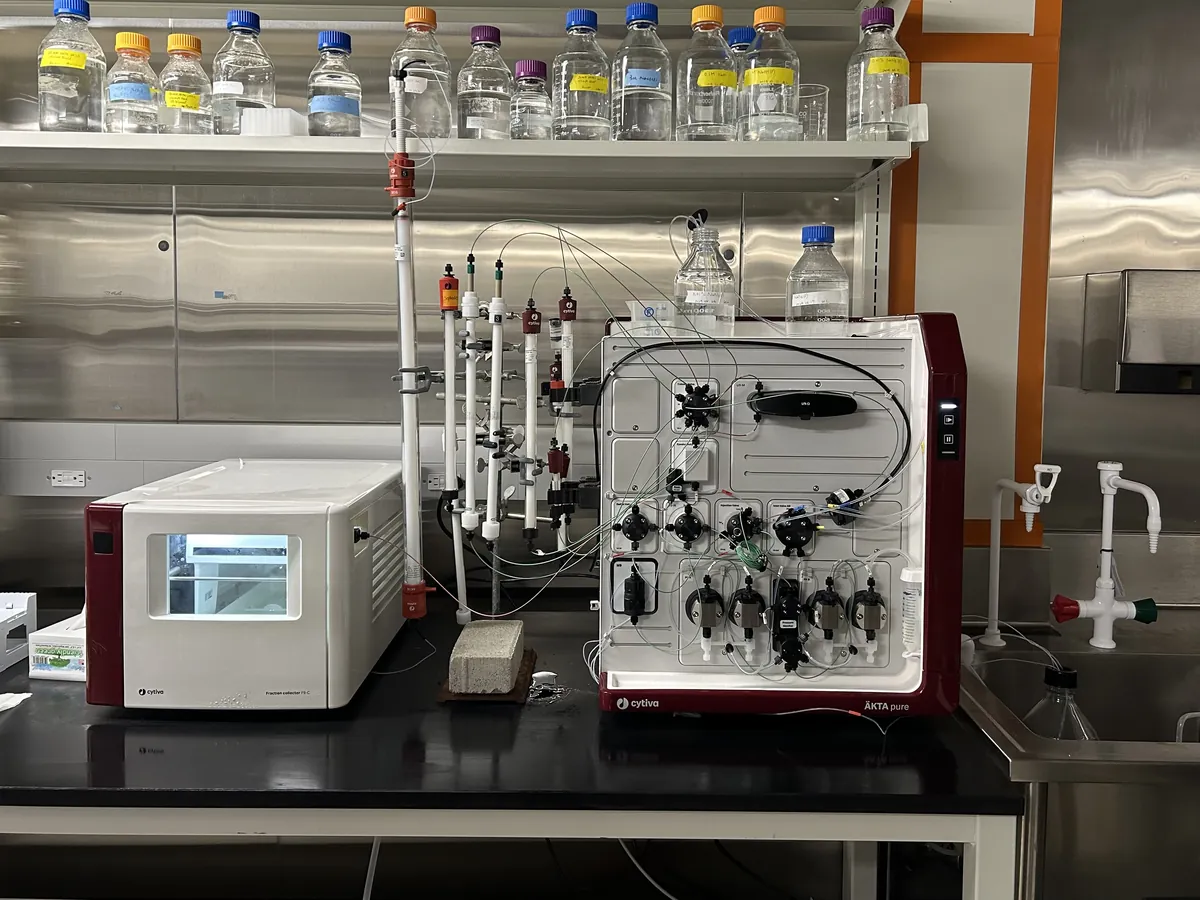
Follow your site SOP
This is a typical operating sequence for learning. Your instrument model and approved SOP take precedence.
STAGE 1
Before you start
- 1Prepare the mobile phase exactly as specified; for aqueous SEC, include salt to suppress ionic interactions.
- 2Dissolve samples slowly in mobile phase (polymers may need hours of gentle mixing); filter through a suitable membrane.
- 3Check that the column set and calibration standards match the method.
- Do not switch a GPC column between incompatible solvents (e.g. THF and water) unless the supplier allows it; the packing can collapse.
STAGE 2
Start-up
- 1Increase flow slowly to the method rate; SEC columns are sensitive to pressure shocks.
- 2Let the RI detector reference cell purge and the baseline stabilise (this can take an hour or more).
- 3Inject a flow marker or the calibration standards to confirm elution volumes are stable.
- RI detectors drift with tiny temperature changes; keep the instrument away from draughts and direct sun.
STAGE 3
Running samples
- 1Run narrow-distribution calibration standards across the molecular-weight range and fit the calibration curve.
- 2Run a system suitability or reference sample (e.g. a known polymer or a protein standard with monomer and dimer).
- 3Inject samples and check results against the calibration range; do not extrapolate outside it.
- A small change in flow rate shifts elution volume and gives a large molecular-weight error; many labs add an internal flow marker.
STAGE 4
Shutdown
- 1Leave the column in mobile phase at low flow, or store it in the supplier's recommended storage solvent (e.g. with antimicrobial agent for aqueous columns).
- 2Flush salt buffers from the system before long shutdowns.
- 3Complete the usage and column logs.
In LimsPulse · Calibration Management
Keep every GPC / SEC in control: usage logs, calibration and maintenance schedules, and automatic blocking of overdue instruments.