Chromatography
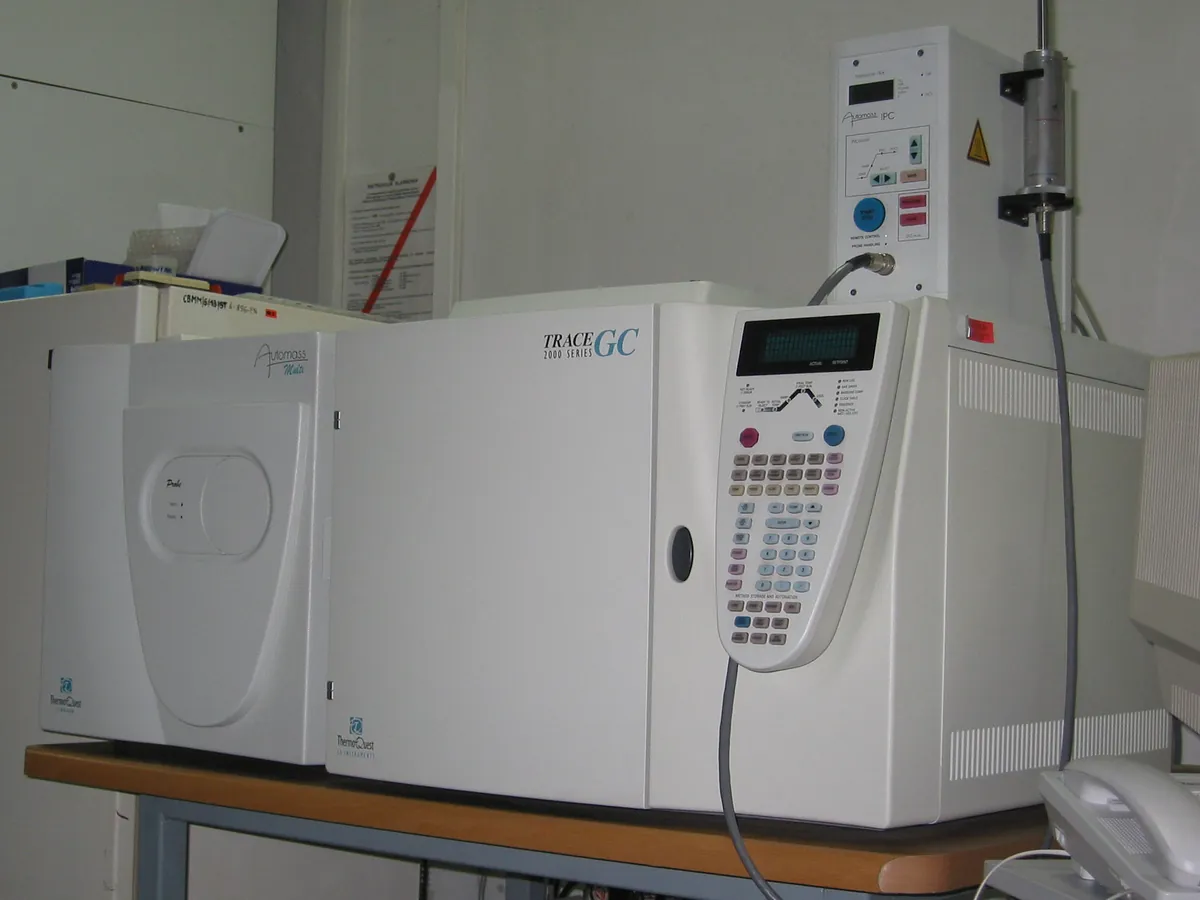
Gas Chromatography–Mass Spectrometry (GC-MS)
Couples a gas chromatograph to a mass spectrometer so each volatile compound is separated and then identified from its fragmentation pattern. Used for unknown volatile impurities, nitrosamines, residual solvent confirmation and extractables.
- Pharmaceutical
- Environmental
- Forensic and toxicology
- Food & flavour
- Petrochemical
- Packaging
TROUBLESHOOTING
Common problems, causes and fixes
High air / water in tune (m/z 18, 28, 32)
Likely causes
- • Leak at the column nut or transfer line
- • Recently vented system not fully pumped down
- • Leaking vent valve or seal
What to do
- • Check and tighten fittings; use a leak-check gas
- • Allow longer pump-down
- • Replace the faulty seal
Tune fails / electron multiplier voltage high
Likely causes
- • Dirty ion source
- • Ageing detector
- • Low calibrant level
What to do
- • Clean the source
- • Replace the electron multiplier if voltage is near its maximum
- • Refill or check the PFTBA vial
Peak tailing of active compounds
Likely causes
- • Dirty or active inlet liner
- • Column contamination at the inlet end
What to do
- • Replace the liner with a deactivated one
- • Trim 10–50 cm from the column inlet
Rising baseline with siloxane ions (m/z 207, 281)
Likely causes
- • Column bleed at high temperature
- • Septum bleed
What to do
- • Use a low-bleed MS column and stay within its temperature limit
- • Use low-bleed septa and replace them regularly
Poor library match
Likely causes
- • Co-eluting peaks
- • Background not subtracted
- • Spectral skew from scanning a fast peak
What to do
- • Improve separation
- • Subtract background near the peak
- • Increase scan speed or use more points across the peak
In LimsPulse · Calibration Management
Keep every GC-MS in control: usage logs, calibration and maintenance schedules, and automatic blocking of overdue instruments.