Chromatography
Gas Chromatography–Mass Spectrometry (GC-MS)
Couples a gas chromatograph to a mass spectrometer so each volatile compound is separated and then identified from its fragmentation pattern. Used for unknown volatile impurities, nitrosamines, residual solvent confirmation and extractables.
- Pharmaceutical
- Environmental
- Forensic and toxicology
- Food & flavour
- Petrochemical
- Packaging
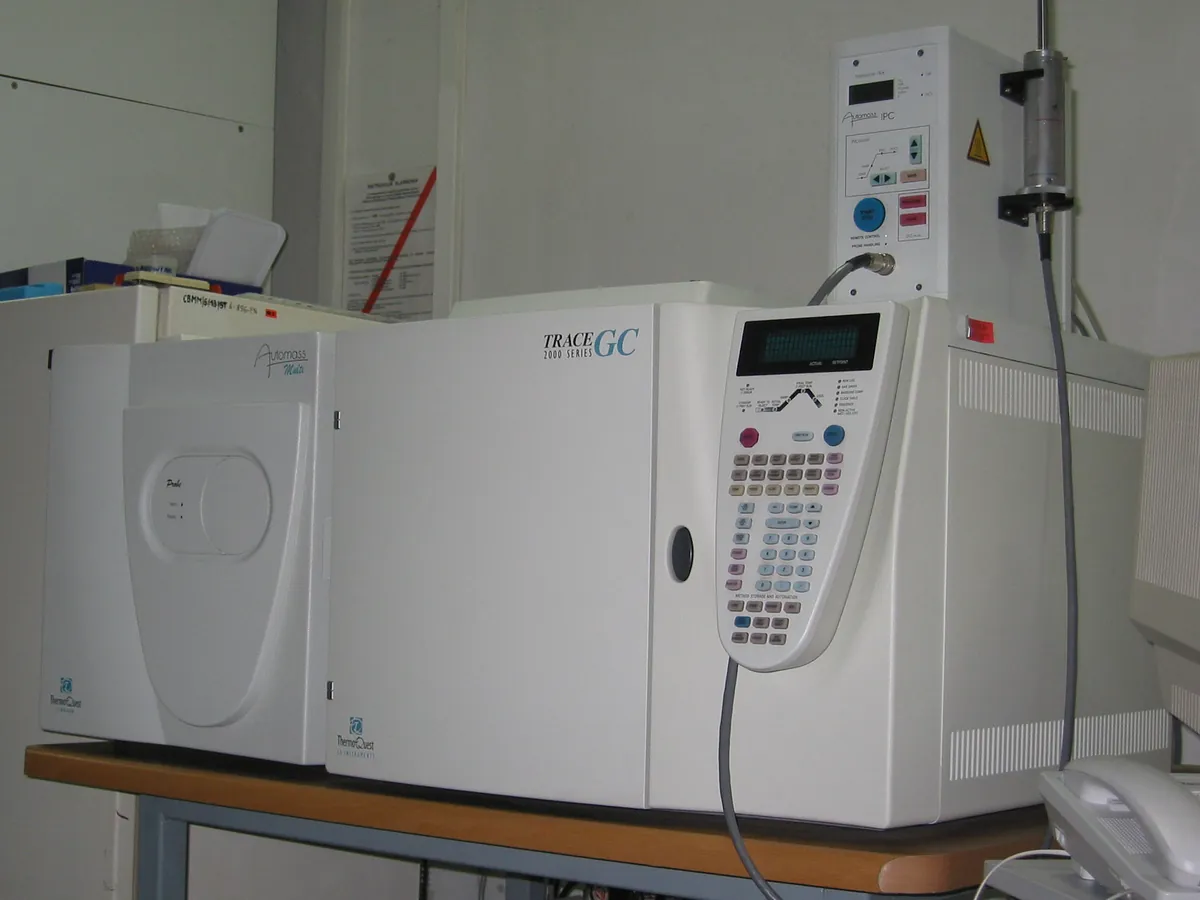
Follow your site SOP
This is a typical operating sequence for learning. Your instrument model and approved SOP take precedence.
STAGE 1
Before you start
- 1Check the carrier gas supply and that gas purifiers / traps are in date.
- 2Check vacuum readings and that the last tune report passed.
- 3Replace the inlet septum and liner if due, and check the column is correctly installed into the transfer line.
- Never open the MS to air while the source and turbo pump are hot and running; always follow the venting procedure.
STAGE 2
Start-up
- 1Allow the vacuum to stabilise after any venting (often several hours).
- 2Run the autotune (or a tune check) and review the tune report: masses, peak widths, abundances, air / water levels.
- 3Bake out or condition the column if the method requires.
- 4Run a solvent blank to check the baseline and column bleed.
- High m/z 28 and 32 in the tune report show an air leak; fix it before running samples.
STAGE 3
Running samples
- 1Set a solvent delay so the filament is off while the solvent peak passes.
- 2Run blank, standards, system suitability and samples as per the sequence.
- 3For unknowns, acquire in full scan and search the library; for trace quantitation, use SIM or MRM.
- 4Confirm identity with retention time and, where possible, a reference standard.
- A library hit is a suggestion, not proof; report identity only as confirmed by the method or a standard.
STAGE 4
Shutdown
- 1Cool the oven and inlet; keep carrier gas flowing through the column.
- 2Leave the MS under vacuum in standby, or follow the venting procedure for maintenance.
- 3Complete the usage log including tune and vacuum data.
In LimsPulse · Calibration Management
Keep every GC-MS in control: usage logs, calibration and maintenance schedules, and automatic blocking of overdue instruments.