Environmental monitoring
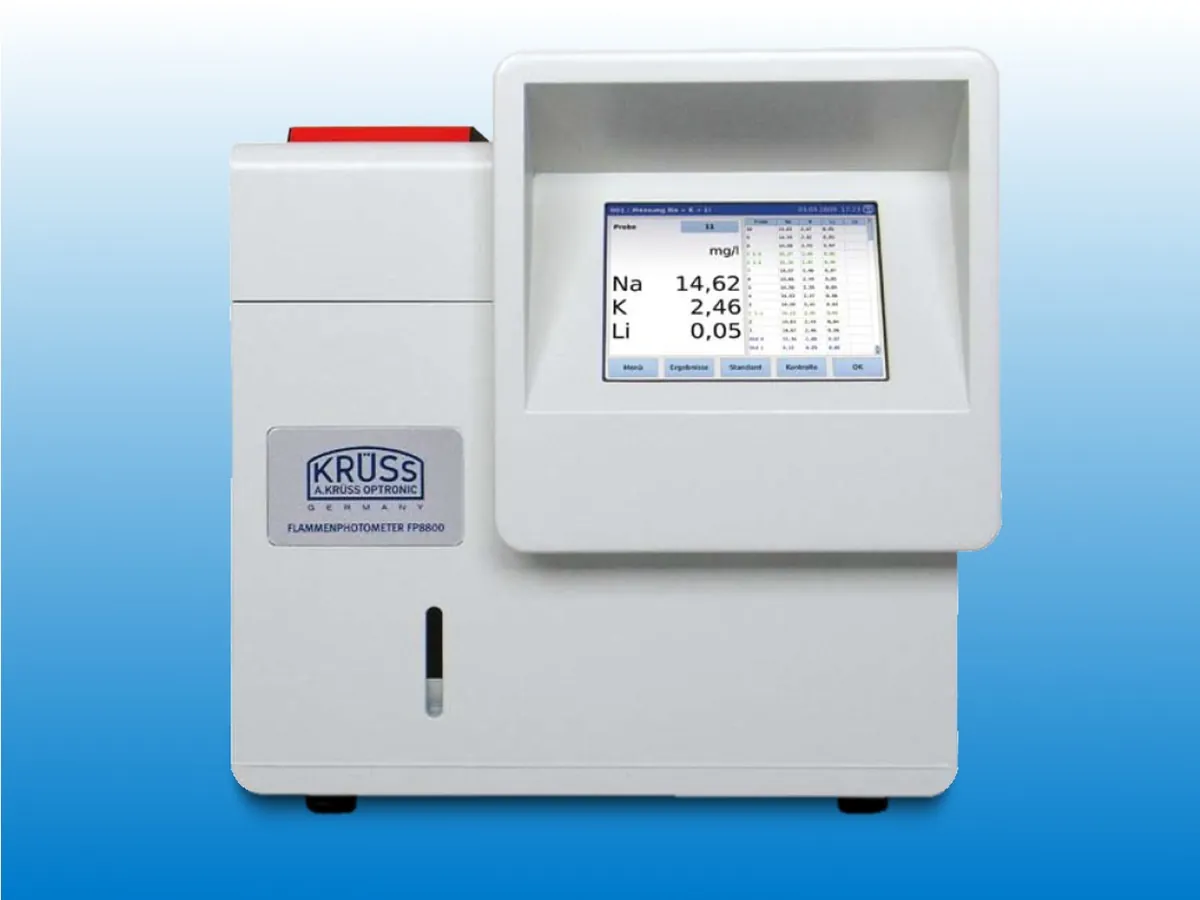
Flame Photometer
Measures sodium, potassium and a few other alkali and alkaline earth metals by spraying a solution into a flame and measuring the light the excited atoms emit at their characteristic wavelengths.
- Environmental and water testing
- Agriculture and soil testing
- Fertiliser manufacture
- Food and beverage
- Cement and glass (alkali content)
TROUBLESHOOTING
Common problems, causes and fixes
Reading drifts during a run
Likely causes
- • Unstable fuel or air pressure
- • Burner not warmed up
- • Partly blocked nebuliser
What to do
- • Check regulators and gas supply
- • Aspirate water for longer before calibration
- • Clean the nebuliser and capillary
Low or no signal
Likely causes
- • Blocked capillary
- • Wrong filter selected
- • Flame not lit properly or too lean
What to do
- • Clear the capillary with a fine wire or by back-flushing
- • Select the correct filter
- • Re-light and adjust the flame
Noisy readings
Likely causes
- • Air bubbles in the sample line
- • Dirty burner head
- • Draughts around the flame
What to do
- • Let samples settle; avoid aspirating from the surface
- • Clean the burner slot
- • Shield the instrument from draughts and fume hood airflow
Calibration curve bends at high standards
Likely causes
- • Self-absorption and ionisation effects
- • Concentration above linear range
What to do
- • Narrow the working range
- • Dilute samples into range
- • Add an ionisation buffer if the method allows
Results biased high for potassium in sodium-rich water
Likely causes
- • Spectral or ionisation interference from sodium
What to do
- • Add matching sodium to the potassium standards
- • Use an ionisation buffer or measure by AAS / ICP-OES
In LimsPulse · Calibration Management
Keep every Flame photometer in control: usage logs, calibration and maintenance schedules, and automatic blocking of overdue instruments.