Environmental monitoring
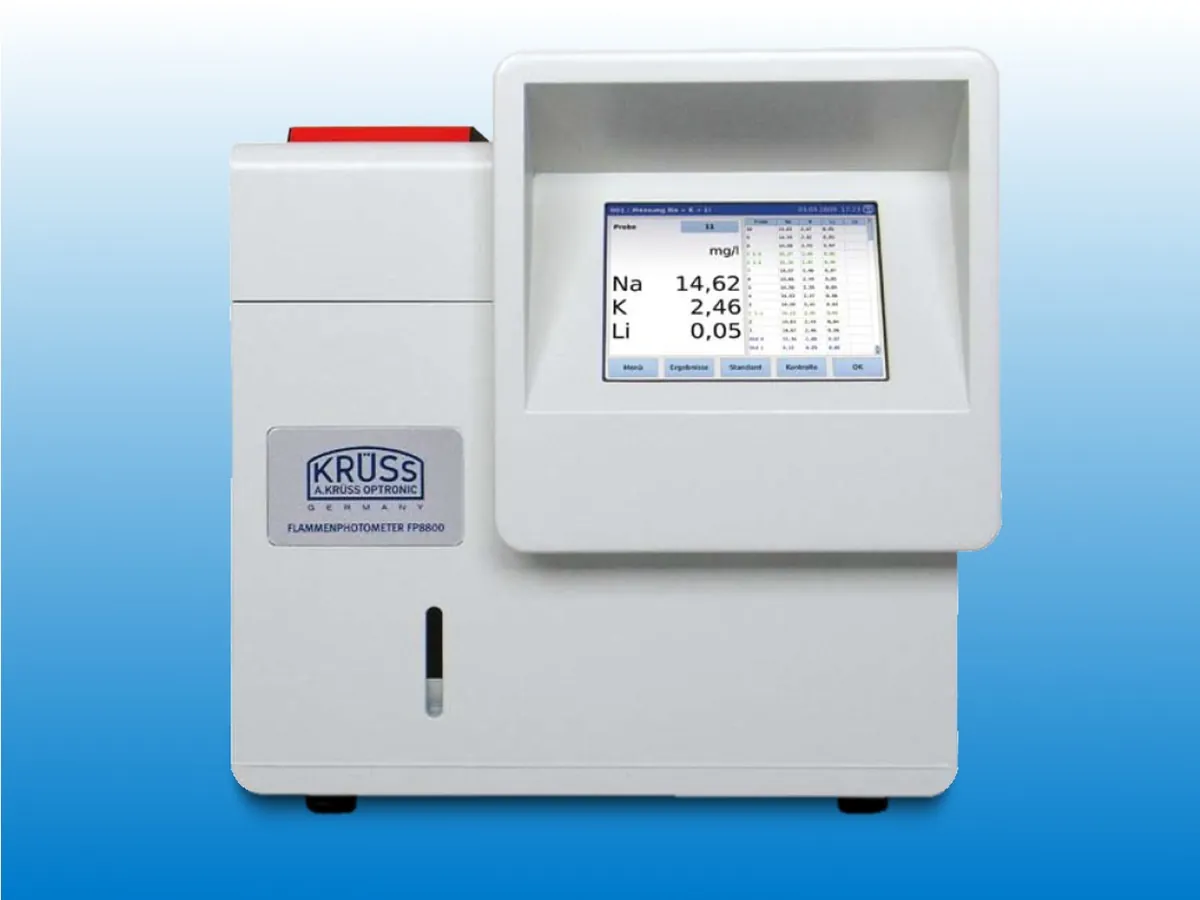
Flame Photometer
Measures sodium, potassium and a few other alkali and alkaline earth metals by spraying a solution into a flame and measuring the light the excited atoms emit at their characteristic wavelengths.
- Environmental and water testing
- Agriculture and soil testing
- Fertiliser manufacture
- Food and beverage
- Cement and glass (alkali content)
Follow your site SOP
This is a typical operating sequence for learning. Your instrument model and approved SOP take precedence.
STAGE 1
Start-up
- 1Check the drain trap is filled with water and the drain tube runs freely.
- 2Switch on the compressor and set the air pressure as specified by the manufacturer.
- 3Open the fuel supply and ignite the flame; adjust it to a steady blue flame with clear inner cones.
- 4Aspirate purified water for 10–15 minutes to let the burner and readings stabilise.
- Never leave a lit flame unattended.
- Check the fuel line for leaks with soap solution, never with a flame.
STAGE 2
Calibration
- 1Select the filter for the element to be measured.
- 2Aspirate the blank and set zero.
- 3Aspirate the top standard and set the reading (for example 100), then re-check zero.
- 4Aspirate intermediate standards to build or check the calibration curve.
- Prepare standards in the same acid or matrix as the samples.
STAGE 3
Sample measurement
- 1Aspirate each sample until the reading is steady and record it.
- 2Aspirate water between samples to rinse the nebuliser.
- 3Dilute any sample that reads above the top standard and re-measure.
- 4Re-check a mid-range standard every 10 samples or as per SOP.
STAGE 4
Shutdown
- 1Aspirate purified water for a few minutes to clean the system.
- 2Turn off the fuel first, then the air once the flame is out.
- 3Switch off the instrument and record usage.
- Always shut off fuel before air to avoid flashback.
In LimsPulse · Calibration Management
Keep every Flame photometer in control: usage logs, calibration and maintenance schedules, and automatic blocking of overdue instruments.