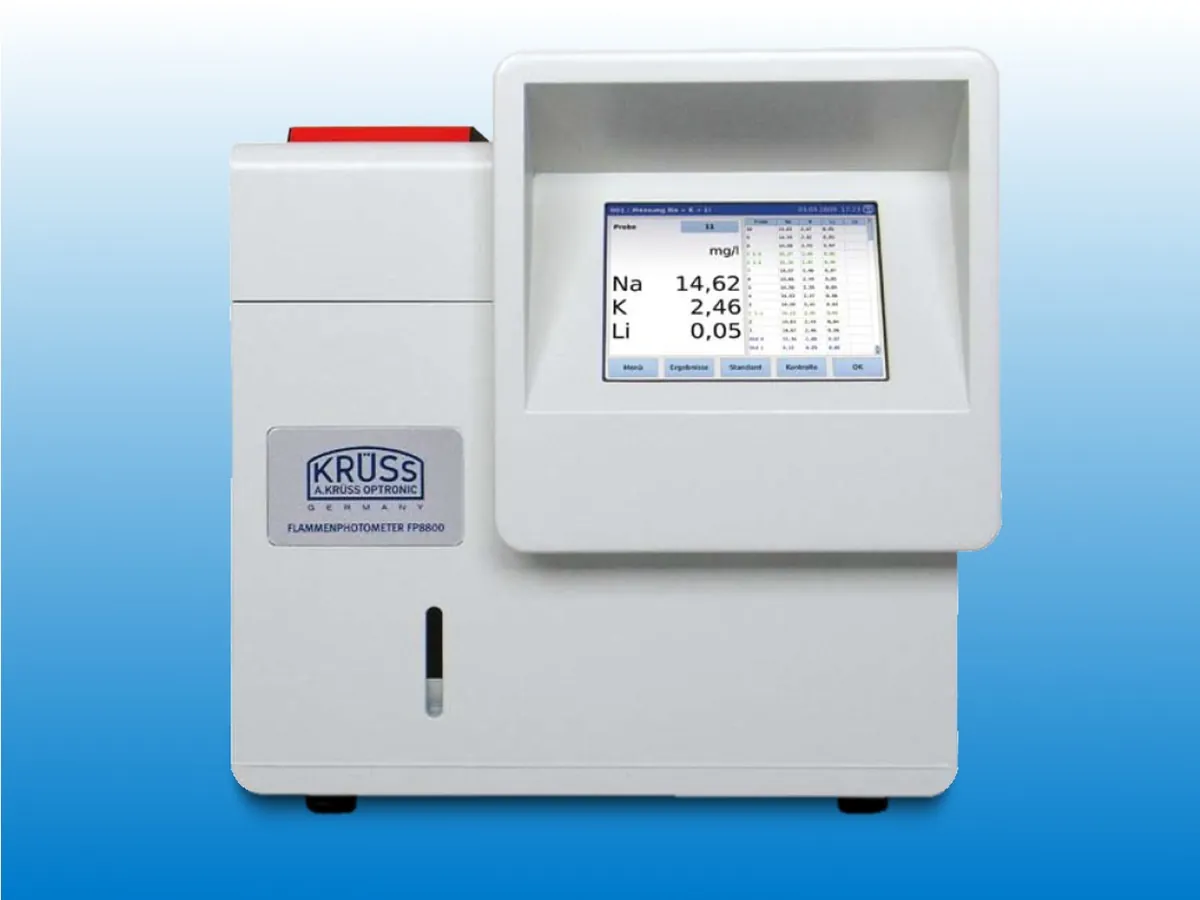
Flame Photometer
Measures sodium, potassium and a few other alkali and alkaline earth metals by spraying a solution into a flame and measuring the light the excited atoms emit at their characteristic wavelengths.
- Environmental and water testing
- Agriculture and soil testing
- Fertiliser manufacture
- Food and beverage
- Cement and glass (alkali content)
Test your Flame photometer knowledge
Multiple-choice questions
Pick an answer to see whether you are right and why.
Q1. At about which wavelength is sodium measured in a flame photometer?
basicQ2. Flame photometry is based on which phenomenon?
basicQ3. Why are flame photometers mainly used for alkali metals such as Na and K?
intermediateQ4. A calibration curve bends towards the concentration axis at high standards. What is the best action?
intermediateQ5. What is the purpose of an ionisation buffer such as caesium or lithium?
intermediateQ6. When shutting down a flame photometer, what is the correct order?
basic
Viva questions
Think of your answer first, then open it to compare.
1. How do you calibrate a flame photometer before measuring sodium in water?
Warm up with water aspirating, select the Na filter, set zero with the blank and set the top standard (for example 10 mg/L) to 100. Read intermediate standards to confirm linearity, read an independent check standard, and recheck a mid standard during the run.
2. Why should standards be matrix-matched to samples?
Viscosity, acid and dissolved salts change the nebulisation rate and flame conditions. If standards differ from samples, the same concentration gives a different reading, causing bias.
3. Compare flame photometry with AAS and ICP-OES for sodium and potassium in water.
Flame photometry is cheap and fast but limited to a few elements and a narrow linear range, with more interferences. AAS is more selective and covers more elements. ICP-OES measures many elements at once over a wide range but costs much more to buy and run.
Keep every Flame photometer in control: usage logs, calibration and maintenance schedules, and automatic blocking of overdue instruments.