Bioanalytical
Gel electrophoresis system
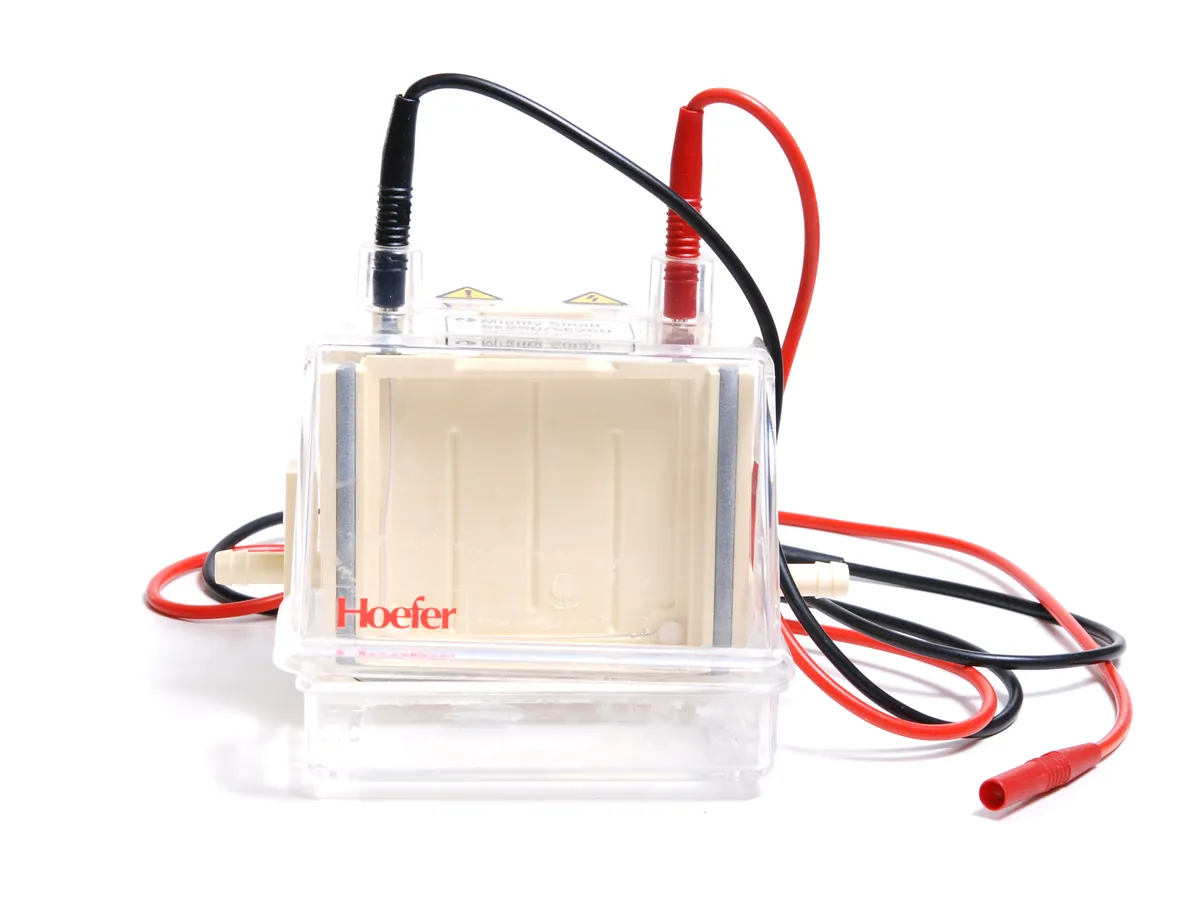
A tank with buffer and electrodes, a gel and a DC power supply. Charged molecules such as proteins or DNA move through the gel in the electric field and separate by size, then are stained and imaged.
- Biotechnology
- Biopharmaceutical
- Academic research
- Diagnostics development
- Food (protein profiling)
- Vaccines
Follow your site SOP
This is a typical operating sequence for learning. Your instrument model and approved SOP take precedence.
STAGE 1
Before you start
- 1Check the power supply is within its calibration due date and leads and connectors are undamaged.
- 2Check the tank lid, electrodes and seals for damage or leaks.
- 3Prepare fresh running buffer at the right concentration and pH.
- Never use a tank with a cracked lid, damaged lead or bare wire. Power supplies can deliver lethal voltage.
STAGE 2
Loading and running
- 1Place the gel in the tank and fill the chambers with buffer to the marked levels.
- 2Rinse wells and load samples, marker and reference in the planned order.
- 3Fit the lid so the colours match (red to red, black to black) before connecting to the power supply.
- 4Set the voltage, current limit and time from the method and start the run. Check bubbles form at the electrodes.
- 5Stop the run when the dye front reaches the set position.
- Switch off the power supply before removing the lid or touching the buffer.
- Do not exceed the voltage or power limit of the tank; overheating can melt or crack it.
STAGE 3
Staining and imaging
- 1Remove the gel carefully and stain for the time in the method.
- 2Destain if needed and image with consistent exposure settings.
- 3Save the raw image and record lane assignments and settings.
- Use UV face protection when viewing gels on a UV transilluminator.
STAGE 4
Shutdown
- 1Dispose of buffer and gels as per site waste rules (acrylamide and stain waste may be hazardous).
- 2Rinse the tank and electrodes with purified water and let them dry.
- 3Complete the logbook.
In LimsPulse · Calibration Management
Keep every Gel electrophoresis in control: usage logs, calibration and maintenance schedules, and automatic blocking of overdue instruments.