Bioanalytical
Gel electrophoresis system
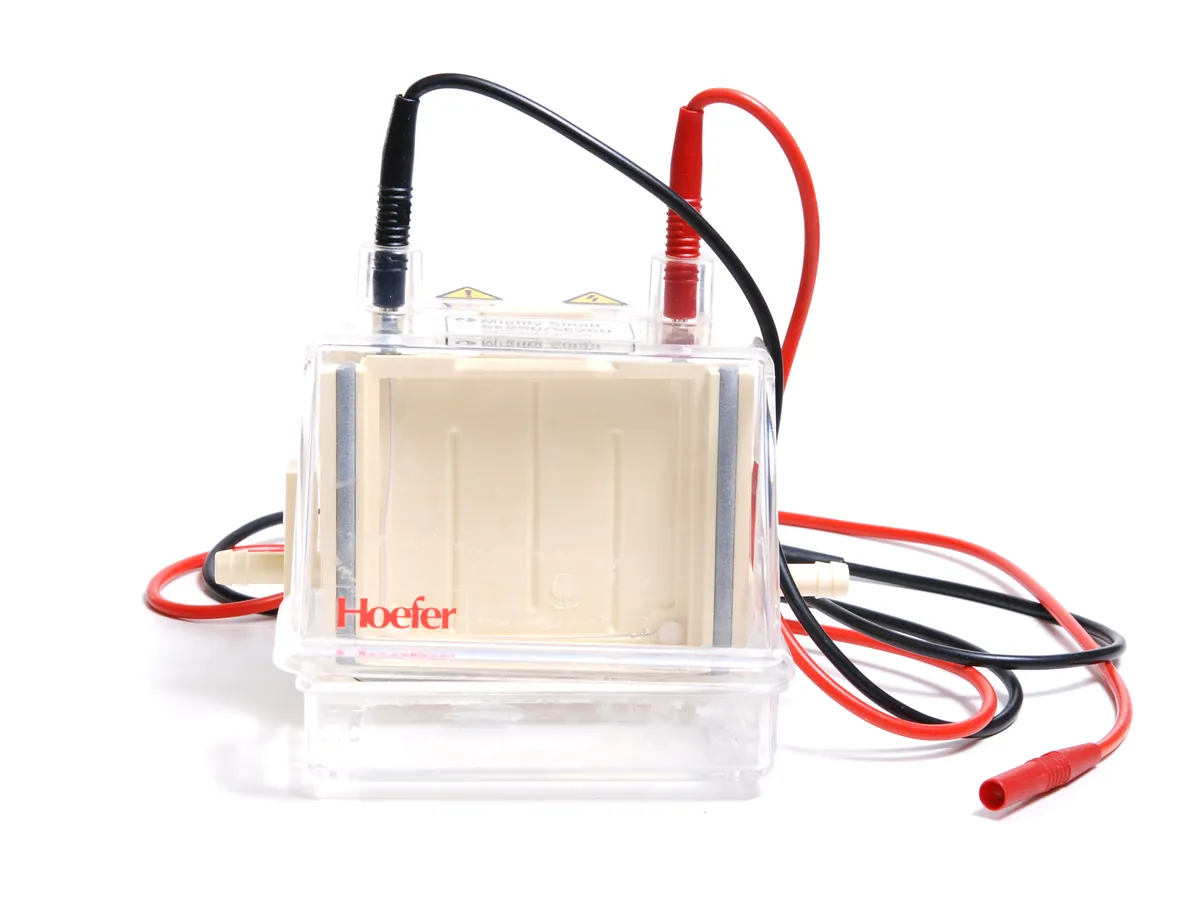
A tank with buffer and electrodes, a gel and a DC power supply. Charged molecules such as proteins or DNA move through the gel in the electric field and separate by size, then are stained and imaged.
- Biotechnology
- Biopharmaceutical
- Academic research
- Diagnostics development
- Food (protein profiling)
- Vaccines
PREVENTIVE MAINTENANCE
Maintenance checklist
Each use
- Rinse tank, electrodes and combs with purified water
- Inspect leads, plugs and lid interlock
Monthly
- Check the tank for cracks, warping and leaking seals
- Check electrodes for breaks or loose wire
- Clean the gel imager platen and check the camera focus
Every 6–12 months
- Calibrate or verify the power supply voltage, current and timer
- Verify the gel imager (flat field, focus, linearity of a step tablet) if used for densitometry
As needed
- Replace damaged leads or lids
- Replace worn gaskets in vertical tanks
SAFETY
Safety precautions
Before you work on the Gel electrophoresis
- Electrophoresis power supplies can deliver dangerous voltage. Always switch off before opening the lid.
- Acrylamide monomer is a neurotoxin. Use precast gels where possible and wear gloves.
- Some DNA stains are mutagenic or irritant. Follow the SDS; use safer alternatives where possible.
- UV transilluminators can burn skin and eyes. Use a face shield and close the imager door.
- Reducing agents such as β-mercaptoethanol have a strong odour and are toxic; use in a fume hood.
In LimsPulse · Calibration Management
Keep every Gel electrophoresis in control: usage logs, calibration and maintenance schedules, and automatic blocking of overdue instruments.