Titration & electrochemistry
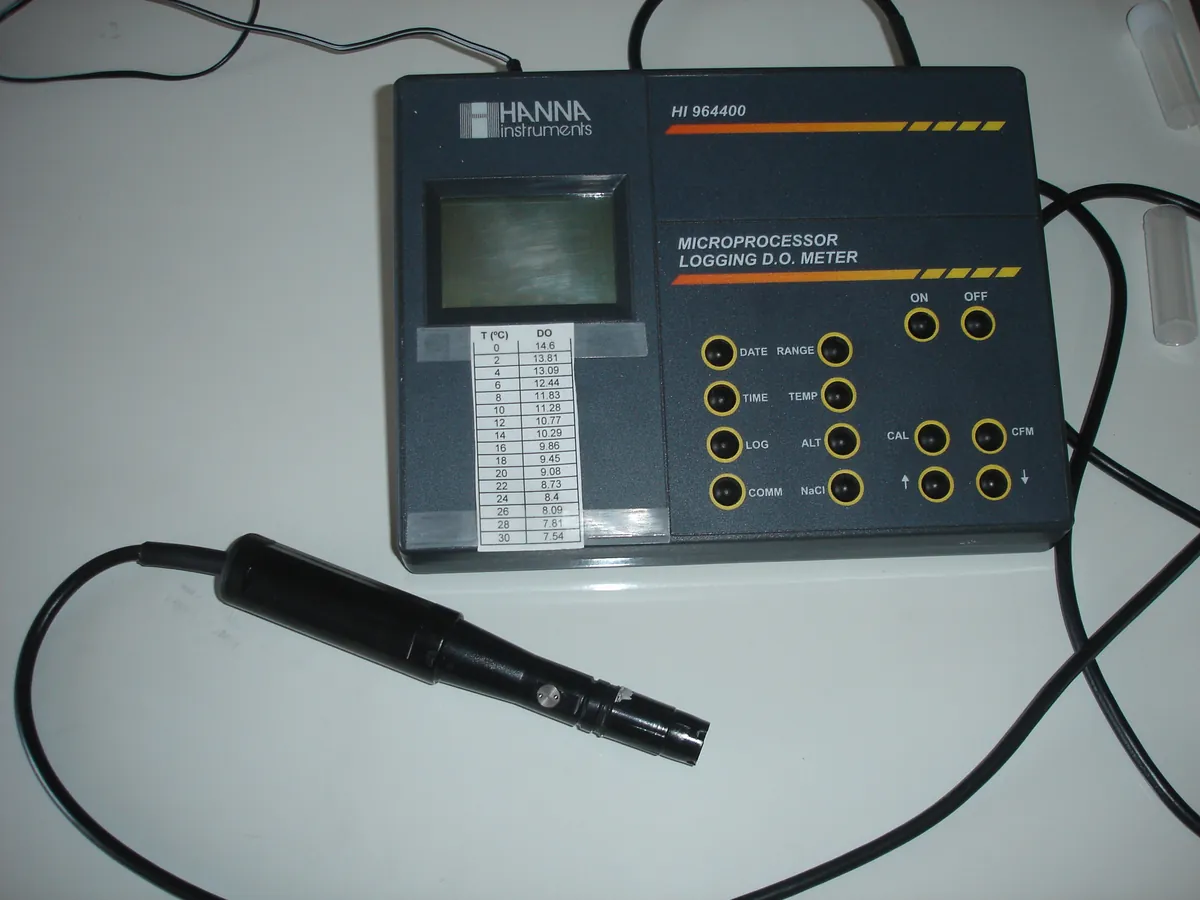
Dissolved Oxygen Meter
Measures the amount of oxygen dissolved in a liquid using an electrochemical or optical (luminescence) sensor. Used for water systems, fermentation, nitrogen-purged formulations and environmental testing.
- Pharmaceutical
- Biotech
- Environmental
- Food & beverage
- Aquaculture
- Power generation
Follow your site SOP
This is a typical operating sequence for learning. Your instrument model and approved SOP take precedence.
STAGE 1
Before you start
- 1Check the probe membrane or sensor cap for damage, fouling or air bubbles.
- 2For electrochemical sensors, check the electrolyte and allow the required polarisation time after switching on.
- 3Check the meter's barometric pressure and salinity settings.
STAGE 2
Calibration
- 1Perform the air (100%) calibration in water-saturated air at a stable temperature.
- 2Perform the zero calibration in oxygen-free solution if required by your SOP.
- 3Rinse the probe with purified water after the zero solution.
- Sodium sulphite zero solution consumes oxygen; rinse the probe well so it does not carry over into samples.
STAGE 3
Measurement
- 1Immerse the probe in the sample without trapping air bubbles under the membrane.
- 2Stir gently or ensure flow past the membrane (electrochemical sensors).
- 3Wait until the reading and temperature are stable, then record mg/L, % saturation and temperature.
- For low-oxygen samples, avoid exposing the sample to air: measure in a closed flow cell or fill a BOD bottle without bubbles.
STAGE 4
After use
- 1Rinse the probe with purified water.
- 2Store it as advised by the supplier (often in a moist storage sleeve).
- 3Complete the usage log.
In LimsPulse · Calibration Management
Keep every DO meter in control: usage logs, calibration and maintenance schedules, and automatic blocking of overdue instruments.