Construction materials testing
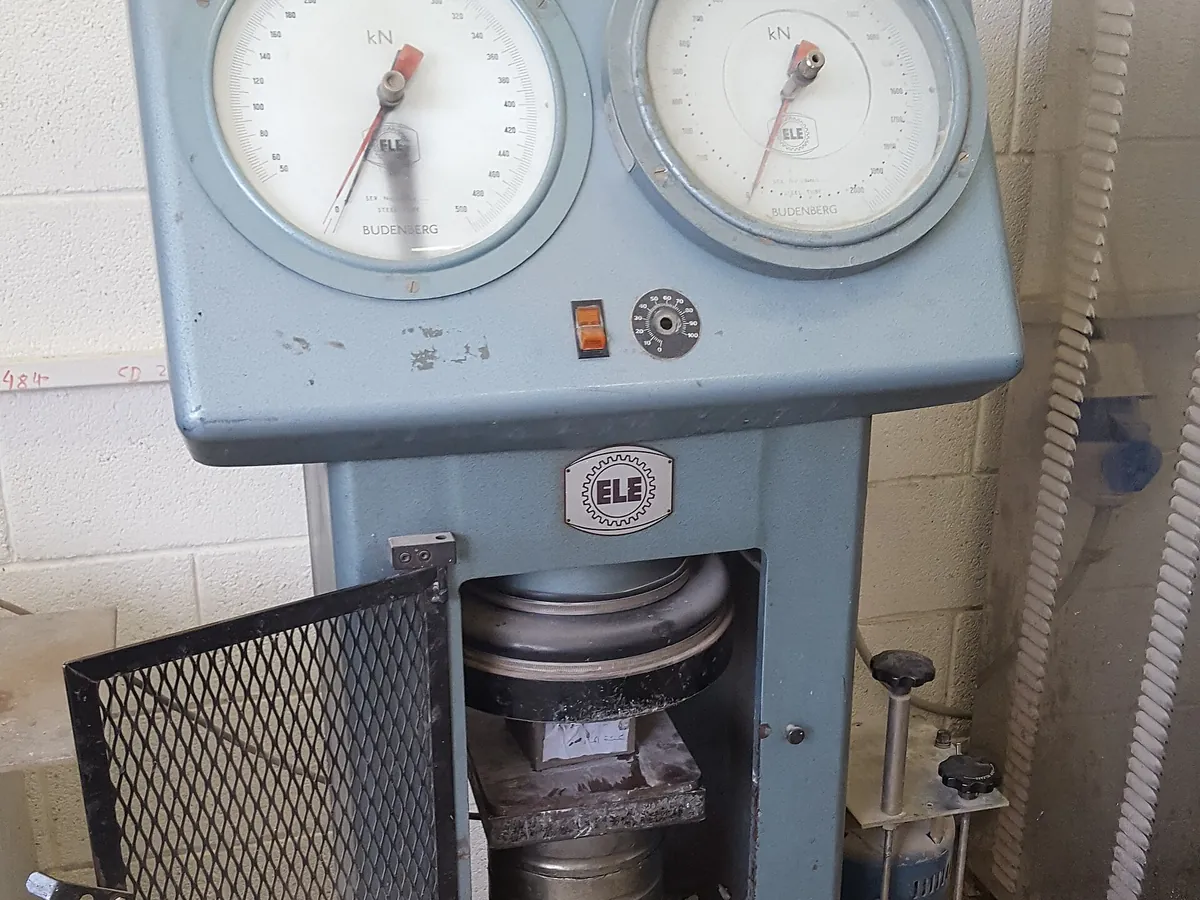
Compression Testing Machine (CTM)
A rigid hydraulic press that crushes concrete cubes, cylinders and cement mortar cubes at a controlled loading rate and records the maximum load. The basic instrument of every concrete and cement lab.
- Construction materials testing
- Ready-mix concrete plants
- Cement plants
- Precast concrete
- Infrastructure and road projects
- Academic and research labs
TROUBLESHOOTING
Common problems, causes and fixes
Load does not rise or rises very slowly
Likely causes
- • Low hydraulic oil
- • Air in the hydraulic circuit
- • Release valve not fully closed
- • Worn pump
What to do
- • Top up with the specified oil
- • Bleed air as per the manual
- • Check and close the release valve
- • Get the pump serviced
Peak load not captured / test stops early
Likely causes
- • Break-detection threshold set too sensitive
- • Load signal noisy
- • Specimen slipped or rocked
What to do
- • Adjust break-detection settings within the manufacturer's limits
- • Check cables and earthing of the transducer
- • Re-seat specimens centrally on clean platens
Strengths unexpectedly low across a batch
Likely causes
- • Pace rate set too low
- • Cubes tested on trowelled face or uneven faces
- • Spherical seat seized
- • Machine out of calibration
What to do
- • Check pace rate against the standard
- • Load cast faces only
- • Clean and lubricate the seat
- • Run a force verification check
Unusual (non-hourglass) failure patterns
Likely causes
- • Misaligned or worn platens
- • Specimen off-centre
- • Defective moulds giving non-square cubes
What to do
- • Check platen flatness and alignment
- • Use the centring marks
- • Check cube mould dimensions
Zero drifts or display unstable
Likely causes
- • Transducer warming up
- • Electrical interference
- • Faulty sensor
What to do
- • Allow warm-up time and re-zero
- • Check earthing and cable routing
- • Have the sensor checked and re-verify the machine
In LimsPulse · Calibration Management
Keep every CTM in control: usage logs, calibration and maintenance schedules, and automatic blocking of overdue instruments.