Construction materials testing
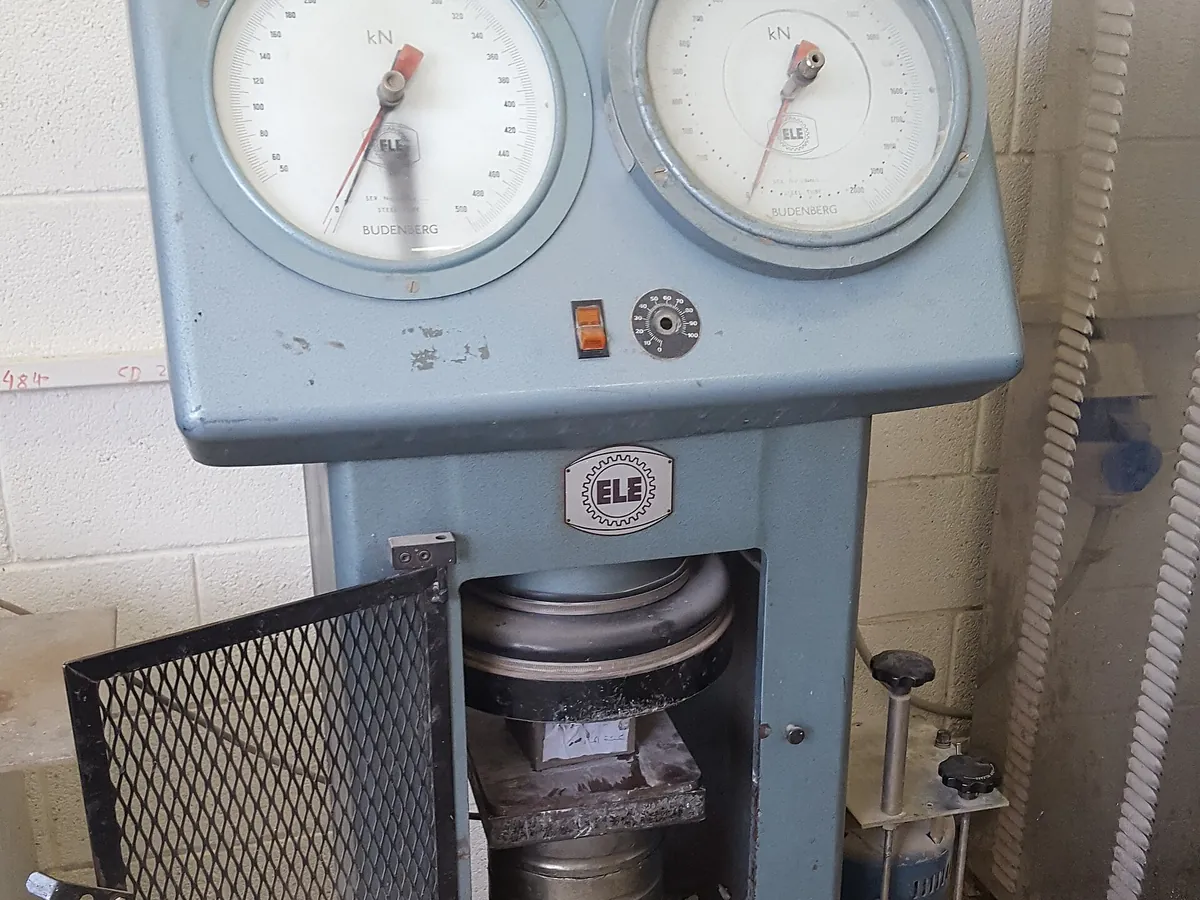
Compression Testing Machine (CTM)
A rigid hydraulic press that crushes concrete cubes, cylinders and cement mortar cubes at a controlled loading rate and records the maximum load. The basic instrument of every concrete and cement lab.
- Construction materials testing
- Ready-mix concrete plants
- Cement plants
- Precast concrete
- Infrastructure and road projects
- Academic and research labs
PREVENTIVE MAINTENANCE
Maintenance checklist
Daily / each use
- Clean platens and guard
- Check for oil leaks at hoses and ram seals
- Check the spherical seat moves freely and is lightly oiled
Weekly
- Check hydraulic oil level
- Check that the zero reading returns to zero after unloading
- Inspect platen surfaces for dents or wear
Six-monthly
- Check platen flatness and hardness if specimens show uneven failures
- Inspect electrical connections and emergency stop
- Filter or replace hydraulic oil as the manufacturer advises
Annual (or as SOP / accreditation requires)
- Force verification with a calibrated proving ring or load cell traceable to national standards
- Check of pace-rate control
- Service of pump, valves and seals
SAFETY
Safety precautions
Before you work on the CTM
- Always close the guard before loading; concrete fragments can be ejected at high speed.
- Wear safety glasses, safety shoes and gloves when handling cubes (a 150 mm cube weighs about 8 kg).
- Never put hands between the platens while the pump is running.
- Release hydraulic pressure before adjusting spacers or removing debris.
- Clean up oil spills at once to avoid slips.
In LimsPulse · Calibration Management
Keep every CTM in control: usage logs, calibration and maintenance schedules, and automatic blocking of overdue instruments.