Colony counter
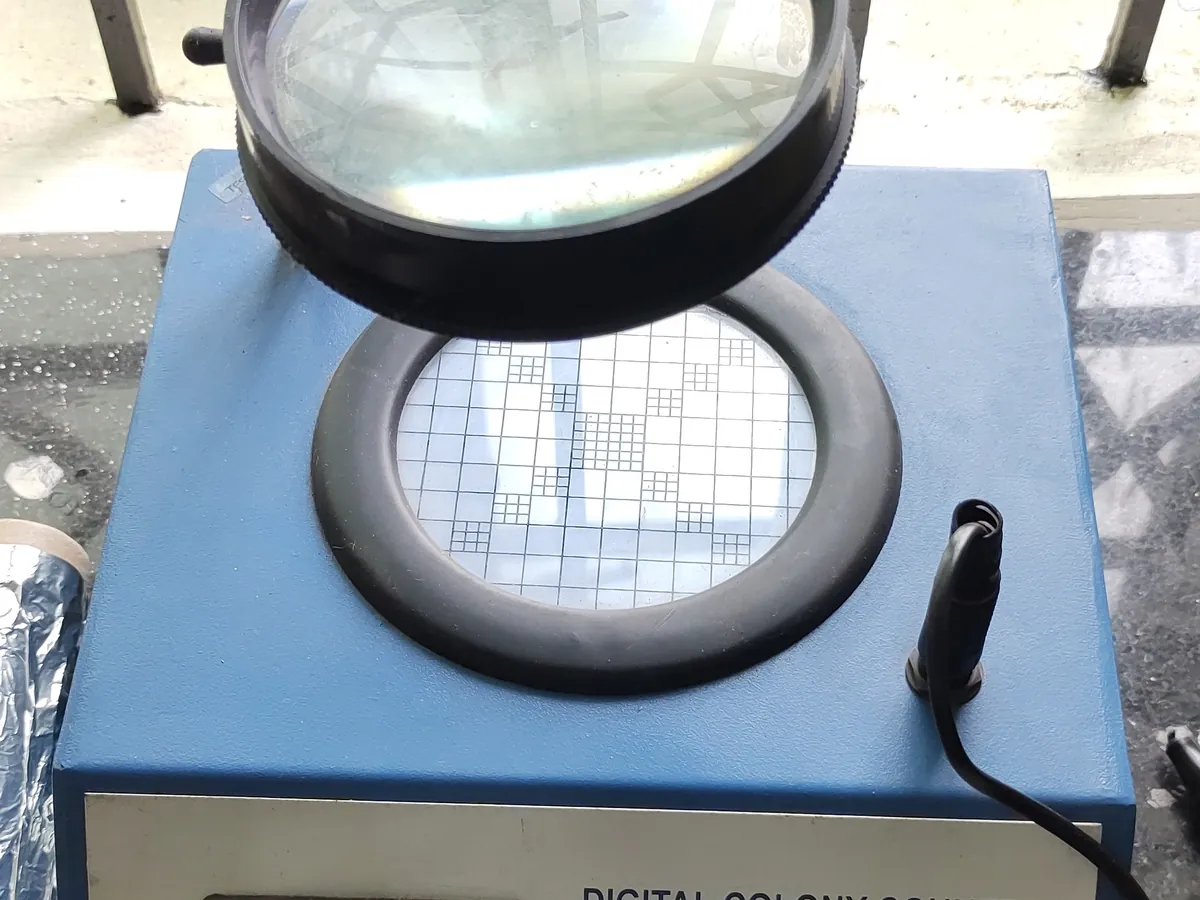
Helps the analyst count colonies on agar plates and membranes accurately, either by a lit magnifier with a counting pen (manual) or by a camera and image analysis software (automated).
- Pharmaceutical
- Biotech
- Food & beverage
- Water testing
- Cosmetics
- Research laboratories
Test your Colony counter knowledge
Multiple-choice questions
Pick an answer to see whether you are right and why.
Q1. Why does a manual colony counter mark each colony with a pen?
basicQ2. Which lighting makes colonies on clear agar appear bright against a dark background?
basicQ3. A common upper limit of the countable range for TAMC on a 9 cm plate is:
intermediateQ4. An automated counter counts many more colonies than the analyst. What is the most likely cause?
intermediateQ5. Why do automated colony counters need data integrity controls?
intermediate
Viva questions
Think of your answer first, then open it to compare.
1. How do you handle spreading or merged colonies when counting?
Follow the SOP rules: count a spreading growth as one colony if it comes from one source, separate merged colonies where they can be clearly seen as distinct, note the observation, and use another dilution or plate if the plate cannot be counted reliably.
2. How would you qualify an automated colony counter?
After IQ and OQ checks of lighting, software and security, compare automated and manual counts by trained analysts on real plates across the countable range and different media, and show that the agreement meets a criterion set in the protocol.
Keep every Colony counter in control: usage logs, calibration and maintenance schedules, and automatic blocking of overdue instruments.