CO₂ incubator
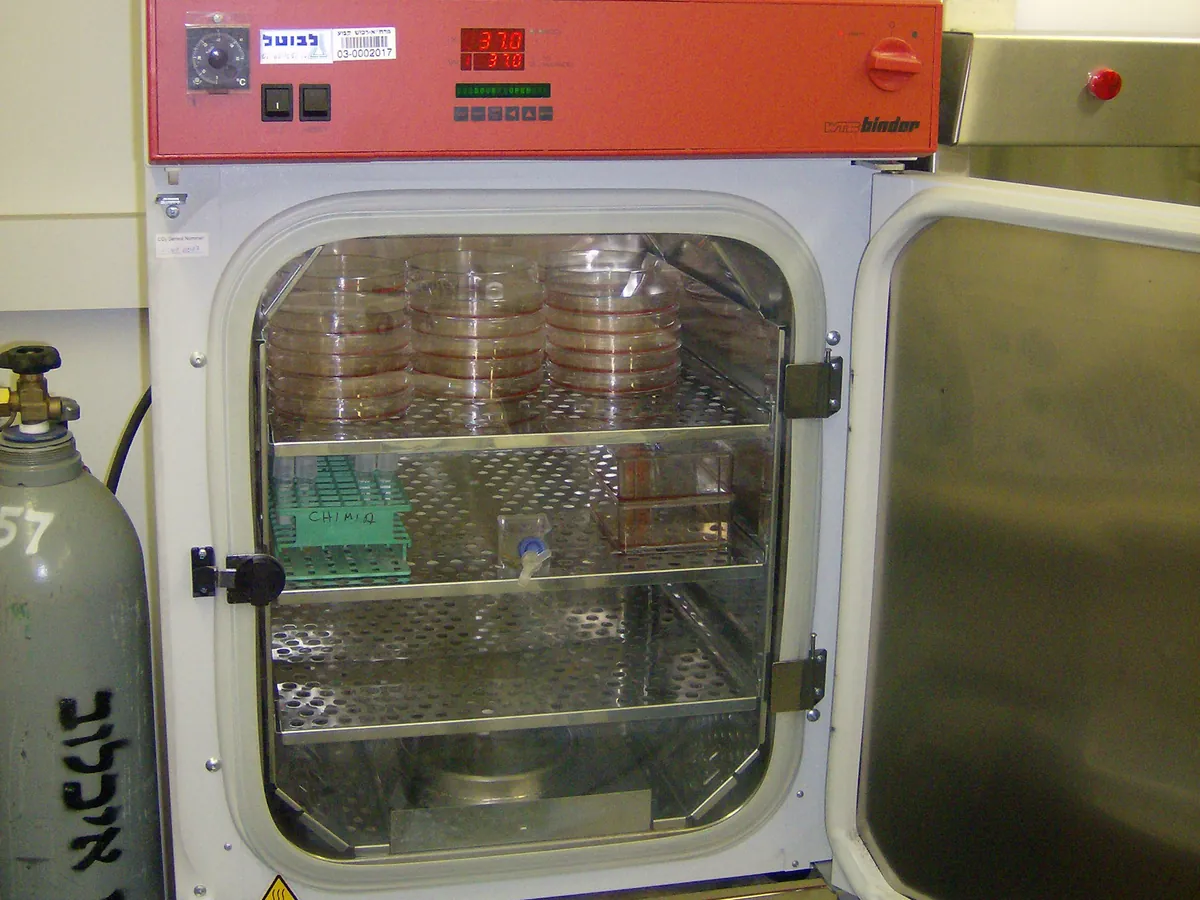
A warm, humid chamber that holds mammalian cell cultures at body temperature (usually 37 °C), high humidity and a set CO₂ level (usually 5%), so the culture medium stays at the right pH.
- Biotechnology
- Biopharmaceutical
- Cell and gene therapy
- IVF clinics
- Academic research
- Vaccine manufacture
What is CO₂ incubator?
Mammalian cells grow best in conditions close to those in the body. A CO₂ incubator keeps the chamber at about 37 °C, near-saturated humidity and a controlled CO₂ concentration, typically 5%. The CO₂ dissolves in the culture medium and works with the bicarbonate buffer in the medium to hold the pH at about 7.2–7.4.
Temperature is controlled by a water jacket or direct heat (air jacket). CO₂ is supplied from a cylinder and measured with a thermal conductivity (TC) or infrared (IR) sensor. Humidity comes from a water pan, which also reduces evaporation from culture plates. Some models also control oxygen for low-oxygen (hypoxic) culture.
In biotech labs CO₂ incubators hold cell banks during expansion, seed trains, cell-based potency assays and cell therapy products. Because temperature or CO₂ drift affects cell growth and assay results, incubators are qualified, mapped and verified with calibrated instruments, and alarms are monitored.
Used for
- Routine mammalian cell culture (CHO, HEK293, Vero and other lines)
- Seed train expansion before bioreactor inoculation
- Cell-based potency and bioassays in QC
- Cell therapy product processing and holding
- Hypoxic culture with O₂ control (tri-gas incubators)
How it works
- 01
Heat
Heaters in the walls (direct heat) or a water jacket bring the chamber to set temperature.
- 02
Measure CO₂
The IR or TC sensor continuously measures CO₂ in the chamber air.
- 03
Inject CO₂
A valve admits CO₂ through a filter when the reading is below set point.
- 04
Humidify
Water in the pan evaporates and keeps humidity high.
- 05
Circulate
A fan or natural convection keeps temperature and gas even across shelves.
- 06
Monitor and alarm
The controller logs values and raises alarms if they go out of range.
Advantages
- Stable, controlled environment for sensitive cells
- Alarms for temperature, CO₂ and door opening
- High-temperature or H₂O₂ decontamination cycles in many models
- IR sensors give accurate CO₂ readings that are not affected by humidity
Limitations
- Contamination risk from the humid environment if not cleaned regularly
- Recovery after door opening takes several minutes
- TC sensors are affected by temperature and humidity changes
- Copper or stainless interiors still need routine cleaning
- Display values can differ from actual conditions if not verified
1 calibration procedure
Keep every CO₂ incubator in control: usage logs, calibration and maintenance schedules, and automatic blocking of overdue instruments.