Available Nitrogen, Phosphorus and Potassium in Soil
Estimates the plant-available pool of the three main nutrients. Nitrogen that is easily mineralised is released by alkaline permanganate and distilled as ammonia. Phosphorus is extracted with sodium bicarbonate (Olsen) or acid fluoride (Bray) and measured as molybdenum blue. Exchangeable potassium is displaced by ammonium acetate and measured by flame photometry.
- Environmental & water
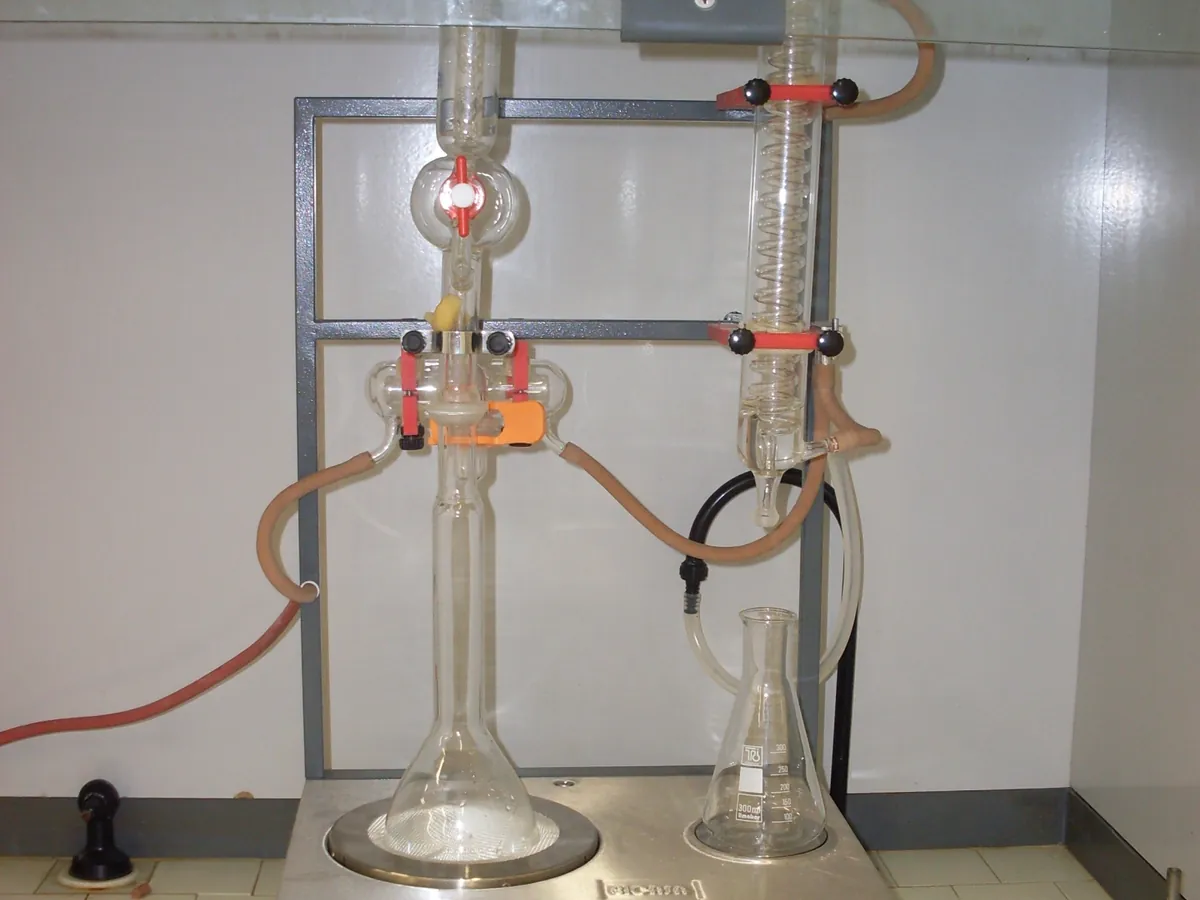
- Distillation–titration (N), molybdenum-blue colorimetry (P), flame photometry (K)
- Kjeldahl
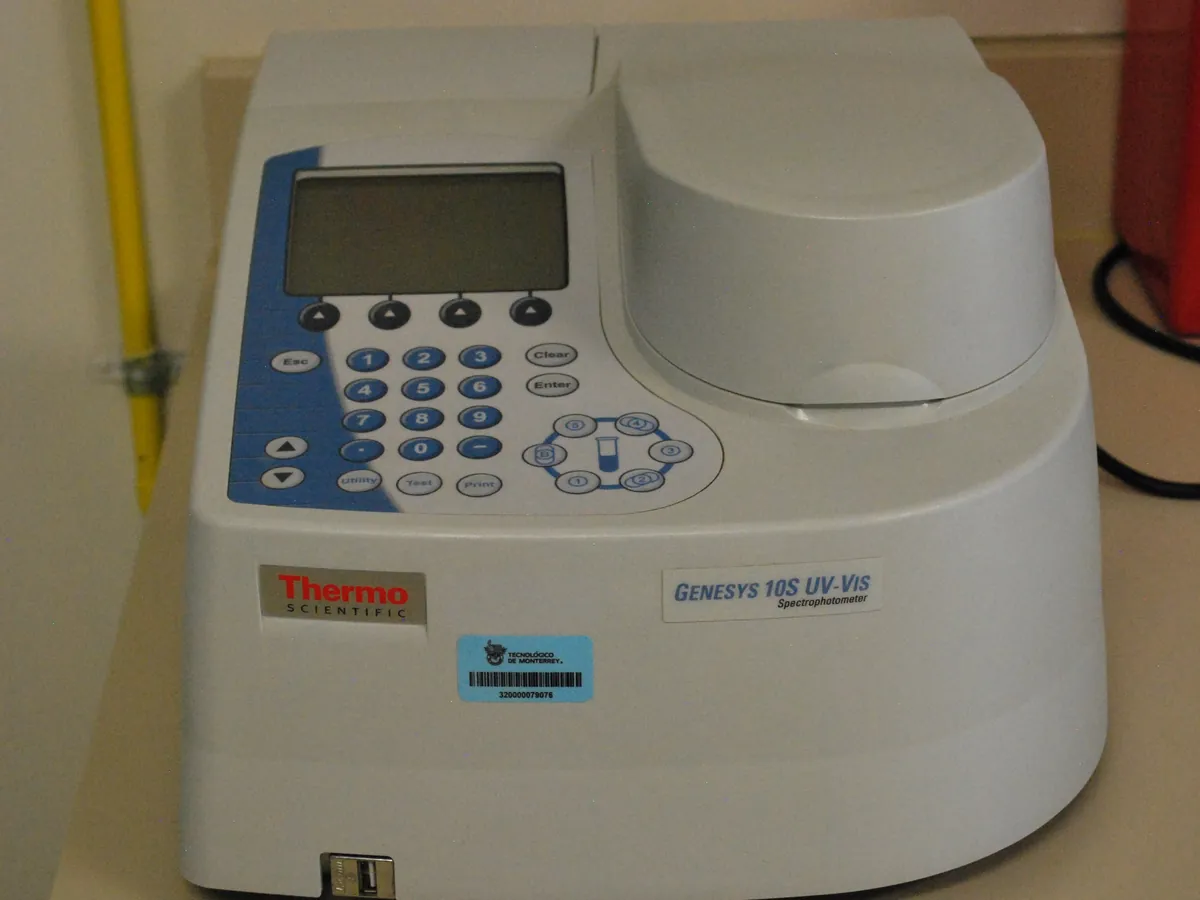
- UV-Vis
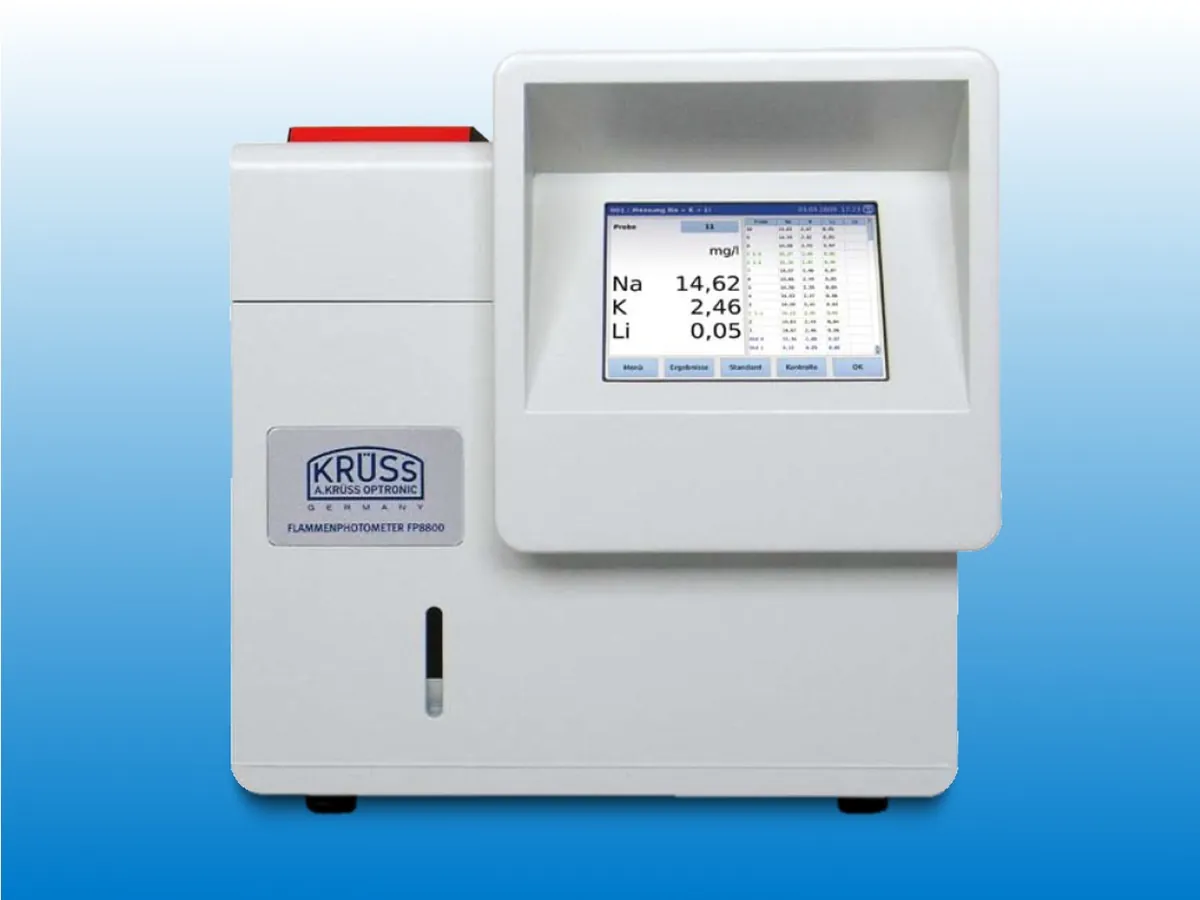
- Flame photometer
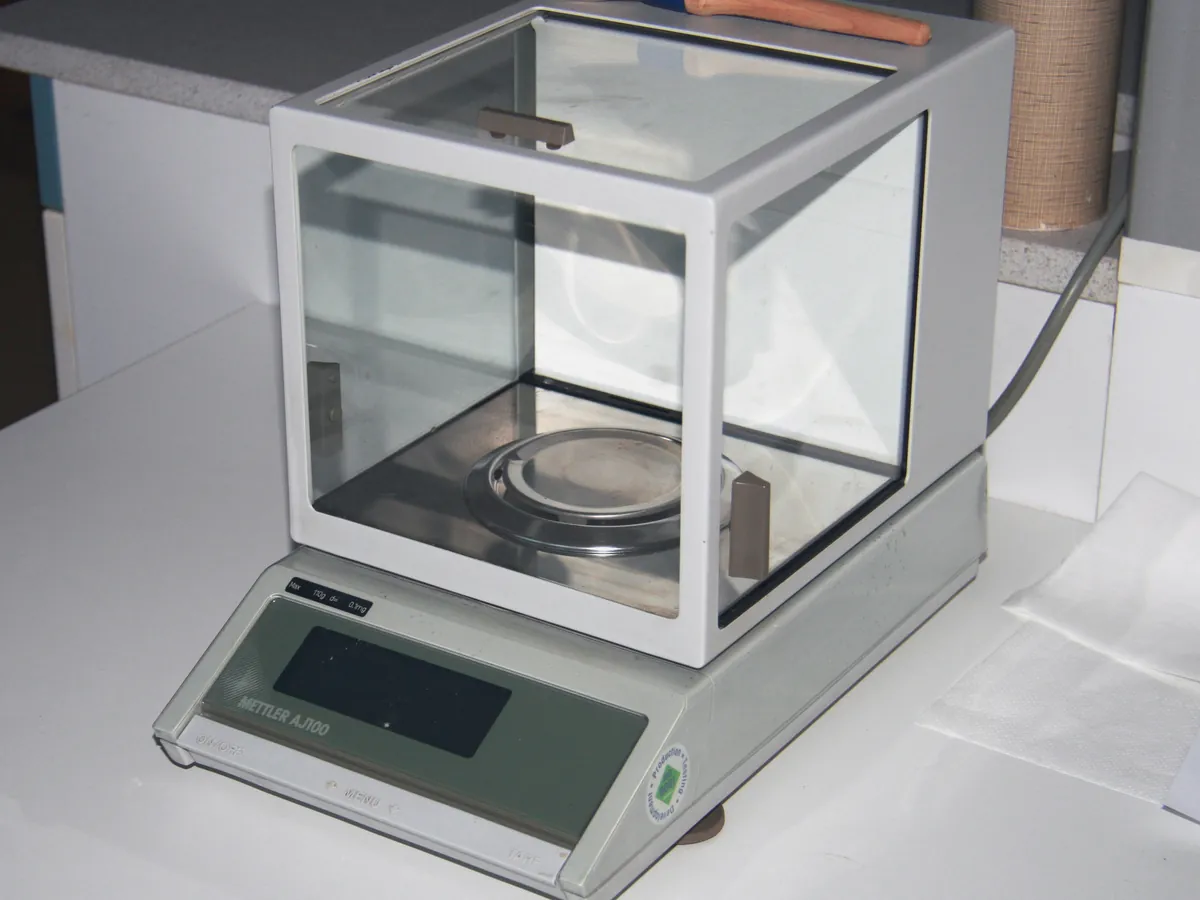
- Analytical balance
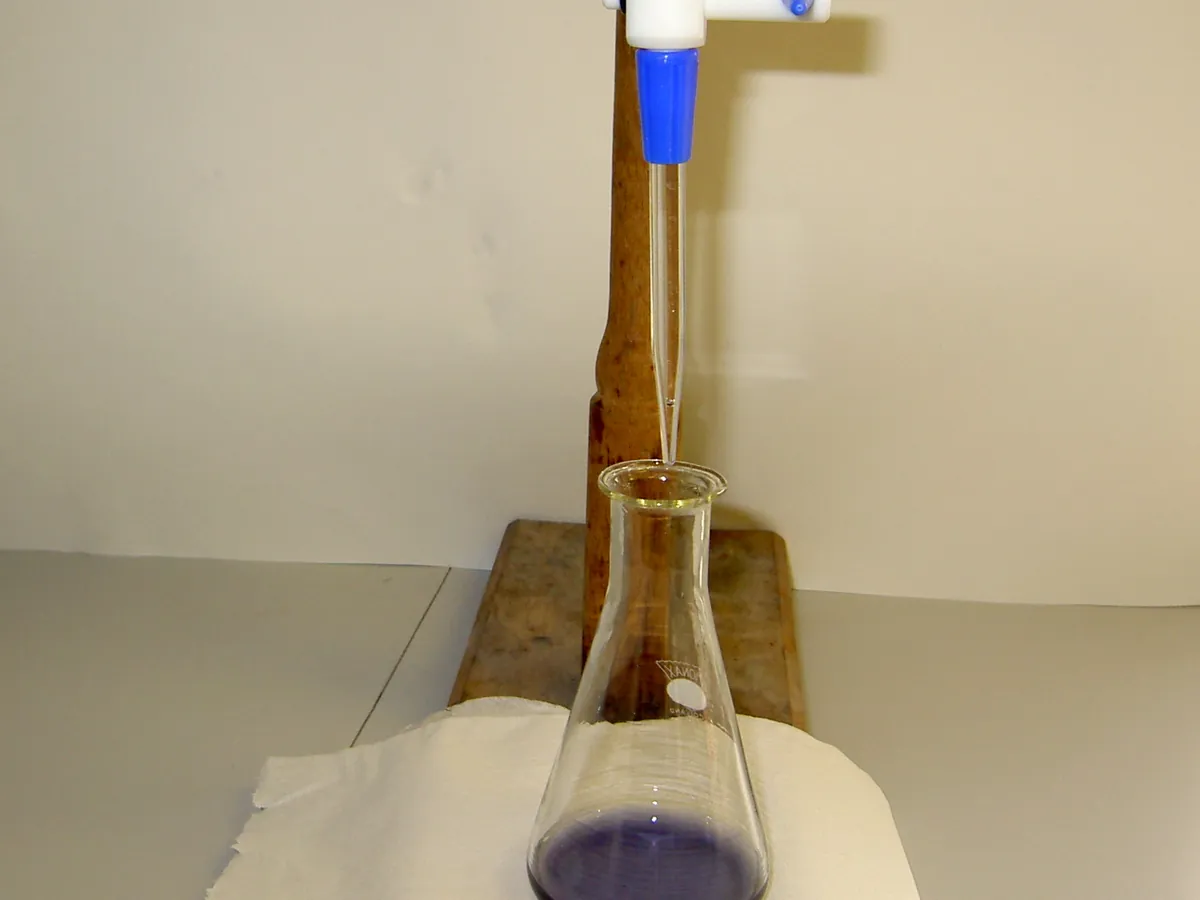
- Burette & glassware
Reference: Typical soil-testing methods: Subbiah and Asija (1956) for available N; Olsen et al. (1954) for neutral and alkaline soils or Bray and Kurtz (1945) for acid soils for available P; neutral normal ammonium acetate extraction for available K. Follow the manual adopted by your soil-testing programme.
Why this method works
These are not total contents; they are 'available' fractions defined by the extractant. (1) Nitrogen: alkaline potassium permanganate oxidises and hydrolyses the easily decomposable organic matter, releasing ammonia, which is distilled into boric acid and titrated with standard acid. (2) Phosphorus: 0.5 M NaHCO₃ at pH 8.5 (Olsen) extracts phosphate from calcium, aluminium and iron phosphates in neutral to alkaline soils; Bray-1 (dilute HCl with NH₄F) suits acid soils. The phosphate reacts with ammonium molybdate and is reduced, usually by ascorbic acid, to a blue complex whose absorbance is proportional to concentration. (3) Potassium: ammonium ions in neutral 1 N ammonium acetate exchange with K⁺ on soil colloids; potassium in the extract emits light at about 766–768 nm in a flame, and the flame photometer reads this against standards.
Instruments used
Reagents & standards
| Reagent | Grade / specification |
|---|---|
| N: Potassium permanganate | 0.32% KMnO₄ solution |
| N: Sodium hydroxide | 2.5% NaOH solution |
| N: Boric acid with mixed indicator | 2% H₃BO₃ with bromocresol green–methyl red indicator |
| N: Standard acid | 0.02 N H₂SO₄ (standardised) |
| P: Olsen extractant | 0.5 M NaHCO₃ adjusted to pH 8.5; activated charcoal (P-free) if the extract is coloured |
| P: Bray-1 extractant (acid soils) | 0.03 N NH₄F in 0.025 N HCl |
| P: Colour reagent | Ammonium molybdate–antimony potassium tartrate with ascorbic acid (Murphy and Riley type) |
| P: Standard | KH₂PO₄ stock (dried), diluted to working standards of 0–1.0 mg P/L in the final volume |
| K: Extractant | Neutral 1 N ammonium acetate, pH 7.0 |
| K: Standard | KCl stock (dried), working standards for example 0–40 mg K/L prepared in ammonium acetate |
Preparing the sample
- 01
Prepare soil
Air-dry, crush and sieve to < 2 mm.
- 02
N distillation
20 g soil + KMnO₄ + NaOH; distil NH₃ into boric acid.
- 03
N titration
Titrate distillate with 0.02 N H₂SO₄.
- 04
P extraction
2.5 g soil + 50 mL Olsen reagent; shake 30 min; filter.
- 05
P colour
Aliquot + colour reagent; read at about 880 nm.
- 06
K extraction & read
5 g soil + 25 mL NH₄OAc; shake; filter; read on flame photometer.
Procedure
- 1Available N: weigh 20 g soil into the distillation flask. Add 20 mL water, 100 mL of 0.32% KMnO₄ and 100 mL of 2.5% NaOH (volumes as in your manual). Distil immediately and collect about 100 mL of distillate in 20 mL of 2% boric acid containing mixed indicator. Titrate with 0.02 N H₂SO₄ from green back to the original pink. Run a reagent blank.
- 2Available P (Olsen): weigh 2.5 g soil into a 100 mL bottle, add a pinch of P-free charcoal if needed and 50 mL of 0.5 M NaHCO₃ (pH 8.5). Shake for 30 minutes and filter through a P-free filter paper.
- 3Pipette 5 mL of filtrate into a 25 mL volumetric flask. Acidify carefully to release CO₂ (as described in your manual), add the ascorbic-acid molybdate reagent, make to volume and allow the colour to develop (typically 10–30 minutes).
- 4Read absorbance at about 880–882 nm against a reagent blank. Prepare standards in the same matrix and plot a calibration curve.
- 5For acid soils, use Bray-1 extractant instead (typically 1 g soil + 7 mL extractant, shaken briefly) and read the same way.
- 6Available K: weigh 5 g soil, add 25 mL of neutral 1 N ammonium acetate, shake for about 5 minutes and filter. Aspirate the filtrate into the flame photometer, calibrated with K standards prepared in ammonium acetate.
- 7Include a reagent blank, a reference soil and one duplicate per ten samples for each nutrient.
Standard preparation
- 1P: dissolve dried KH₂PO₄ to give a 50 mg P/L stock; dilute to a 2 mg P/L intermediate; transfer 0, 1, 2, 3, 4, 5 mL into 25 mL flasks with 5 mL extractant to give 0–0.4 mg P/L in the final volume (extend if needed).
- 2K: dissolve dried KCl to give a 1000 mg K/L stock; prepare 0, 5, 10, 20, 30, 40 mg K/L in ammonium acetate. Set zero with the blank and full scale with the top standard.
- 3N: standardise the 0.02 N H₂SO₄ against a primary standard (for example sodium carbonate or borax) and check recovery with an ammonium sulphate standard.
Notes for analysts
- Use Olsen for neutral, calcareous and alkaline soils and Bray-1 for acid soils; results from the two are not interchangeable.
- The 2.24 × 10⁶ kg/ha factor assumes a 15 cm plough layer with a bulk density of about 1.5 g/cm³. Report mg/kg as the primary result.
- Phosphorus is easily contaminated by detergents. Wash glassware with phosphate-free detergent and acid rinse.
- Distillation uses hot caustic solutions. Check the apparatus seals and keep the receiver tube under the boric acid surface to avoid ammonia loss.
Method parameters (typical)
| N: soil mass / extractant | 20 g; 0.32% KMnO₄ + 2.5% NaOH; distillation into 2% boric acid |
|---|---|
| N: titrant | 0.02 N H₂SO₄ (1 mL = 0.28 mg N) |
| P (Olsen): ratio / time | 1 : 20 (2.5 g + 50 mL), 30 minutes shaking |
| P: measurement | Molybdenum blue (ascorbic acid), about 880 nm, 1 cm cell |
| K: ratio / time | 1 : 5 (5 g + 25 mL), about 5 minutes shaking |
| K: measurement | Flame photometer, K filter (about 766–768 nm) |
| Reporting basis | mg/kg; often also kg/ha using 2.24 × 10⁶ kg soil per hectare (0–15 cm layer) |
System suitability & sequence
| Parameter | Limit |
|---|---|
| P calibration curve | Correlation coefficient typically ≥ 0.995 |
| K calibration | Standards read back within the tolerance in your SOP; re-check a mid standard every 10 samples |
| N recovery | Ammonium sulphate standard typically recovered at 95–105% |
| Reference soil | Each nutrient within control-chart limits |
| Blanks | Reagent blanks low and consistent |
Typical sequence
- 1Reagent blanks
- 2Calibration standards (P, K)
- 3Reference soil
- 4Samples with one duplicate per ten
- 5Mid-range check standard every 10 samples (P, K)
Calculation with a worked example
Where
- T, B
- Acid titre for sample and blank (mL)
- Nₐ
- Normality of H₂SO₄ (0.02 N)
- 14
- mg of N per milliequivalent
- W
- Soil mass (g)
- C
- Concentration read from the calibration curve (mg/L)
- Vf
- Final colour volume for P (mL)
- Ve, Va
- Extract volume (mL) and aliquot taken (mL)
- 2.24
- Factor from mg/kg to kg/ha (2.24 × 10⁶ kg soil/ha)
Given
- N: W, T, B
- 20 g; 8.2 mL; 0.2 mL of 0.02 N H₂SO₄
- P: W, Ve, Va, Vf
- 2.5 g; 50 mL; 5 mL aliquot; 25 mL final
- P: C from curve
- 0.32 mg P/L
- K: W, Ve
- 5 g; 25 mL
- K: C from flame photometer
- 12.0 mg K/L
Working
- 1
N: (8.2 − 0.2) × 0.02 × 14 = 8.0 × 0.28 = 2.24 mg N in 20 g soil
- 2N: 2.24 × 1000 ÷ 20 = 112 mg/kg; × 2.24 = 250.9 kg N/ha
- 3
P: 0.32 mg/L × 25 mL = 8 µg P in the 5 mL aliquot
- 4P: in the 50 mL extract = 8 × (50 ÷ 5) = 80 µg; per 2.5 g soil = 80 ÷ 2.5 = 32 mg P/kg
- 5
P: 32 × 2.24 = 71.7 kg P/ha; as P₂O₅ = 71.7 × 2.29 = 164 kg P₂O₅/ha
- 6K: 12.0 mg/L × 25 mL = 300 µg K in 5 g soil; 300 ÷ 5 = 60 mg K/kg
- 7
K: 60 × 2.24 = 134.4 kg K/ha; as K₂O = 134.4 × 1.205 = 162 kg K₂O/ha
Available N ≈ 251 kg/ha; available P = 32 mg/kg (≈ 164 kg P₂O₅/ha); available K = 60 mg/kg (≈ 162 kg K₂O/ha)
What result passes
- Results are interpreted against the soil-test rating chart used by your state or national soil-testing programme, then converted into fertiliser recommendations.
- For available N by alkaline permanganate, a commonly quoted Indian rating is below about 280 kg/ha low, 280–560 kg/ha medium and above 560 kg/ha high. Check your programme's current chart for P and K classes.
Validation parameters (ICH Q2(R2))
| Parameter | Typical requirement |
|---|---|
| Linearity | P and K calibration curves over the working range |
| Accuracy | Reference soils and proficiency-testing samples; N recovery from ammonium sulphate |
| Precision | Duplicates and reference-soil control charts for each nutrient |
| LOQ | From replicate reagent blanks |
| Selectivity | Charcoal or blank correction for coloured Olsen extracts; matrix-matched K standards |
Run this method in LimsPulse: specifications and STPs under version control, results calculated and checked against limits, and a signed Certificate of Analysis.