Aggregates by size-exclusion HPLC (SEC-HPLC)
Separates the protein by molecular size under native conditions. Aggregates (dimers and larger) elute first, then the monomer, then fragments. The result is reported as % monomer, % HMW and % LMW by area normalisation. Aggregate level is a critical quality attribute because aggregates can reduce activity and increase the risk of an immune response.
- Biotech & biologics
- Size-exclusion HPLC with UV detection (isocratic, non-denaturing)
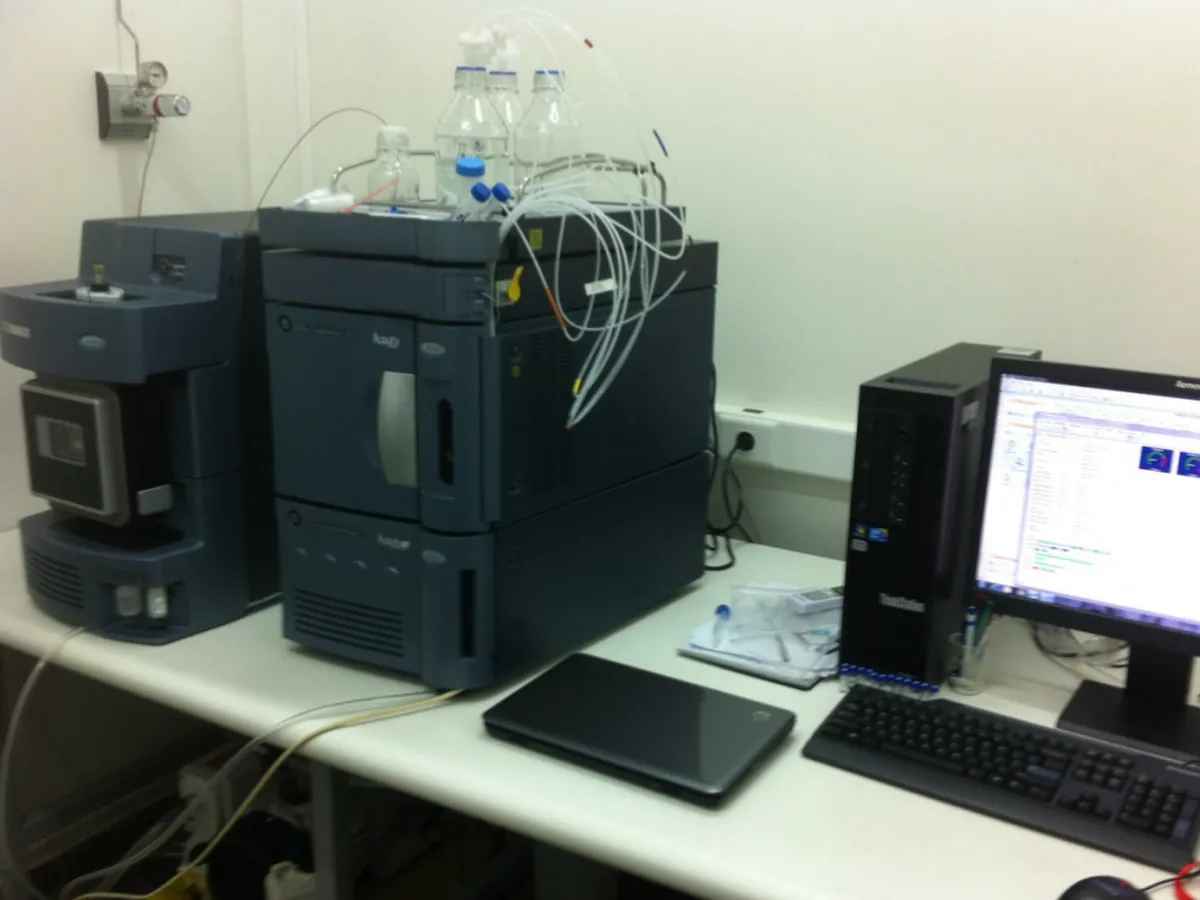
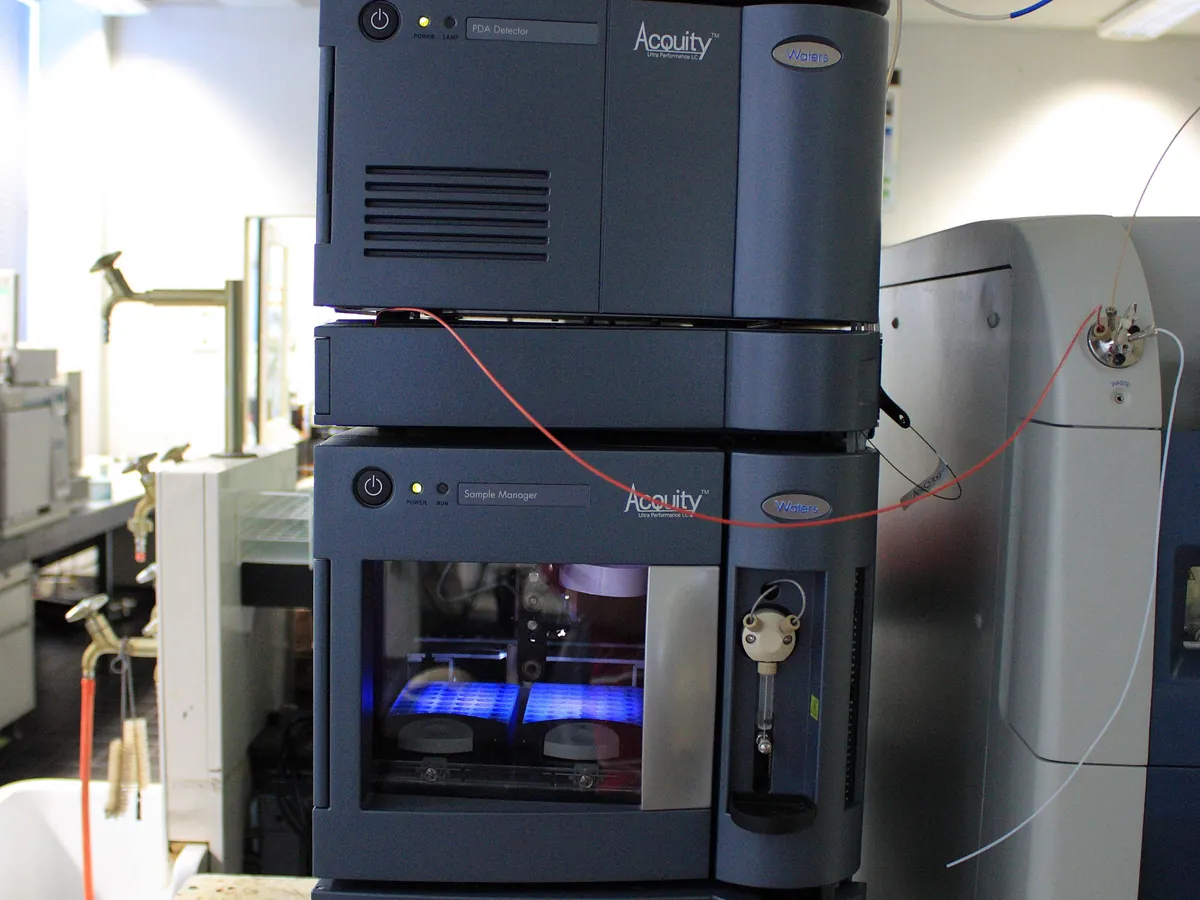
- HPLC
- UHPLC
- Analytical balance
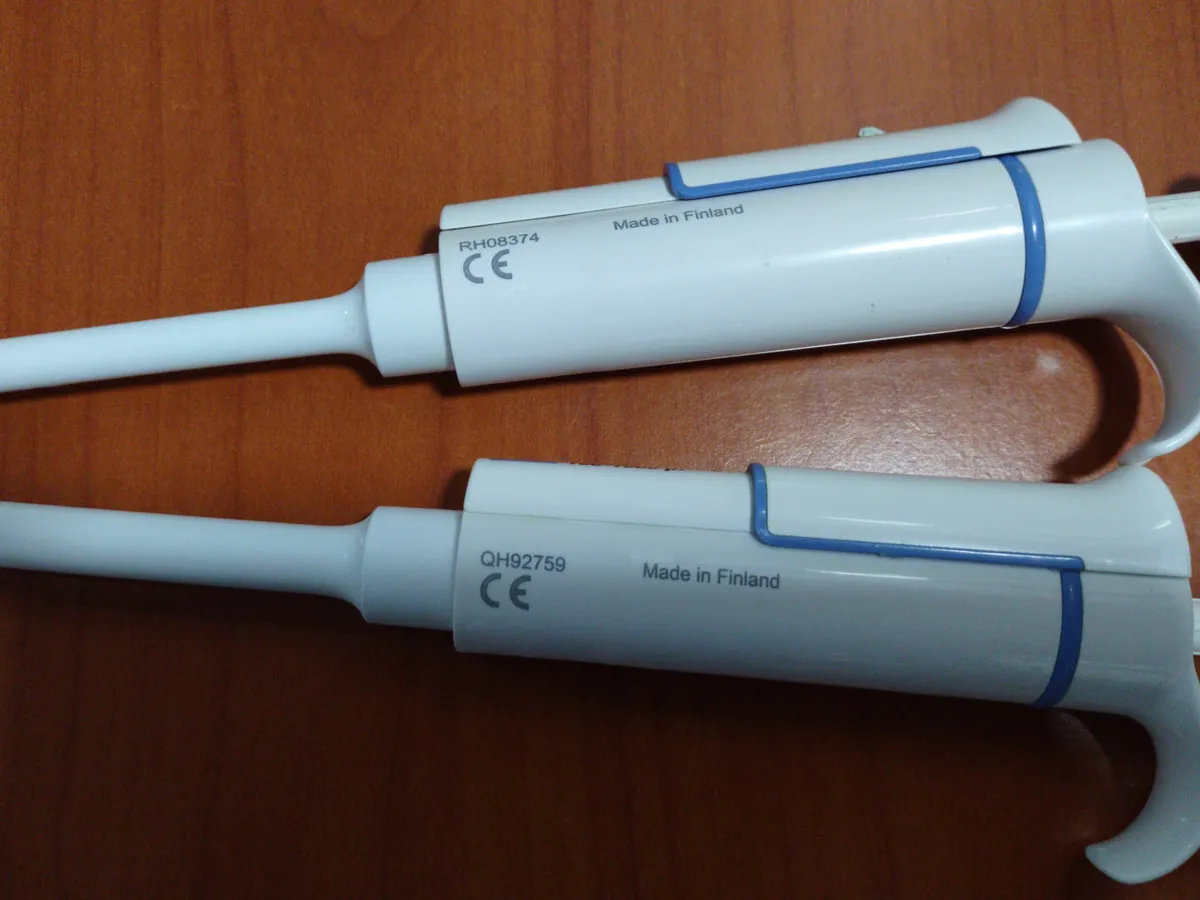
- Micropipette
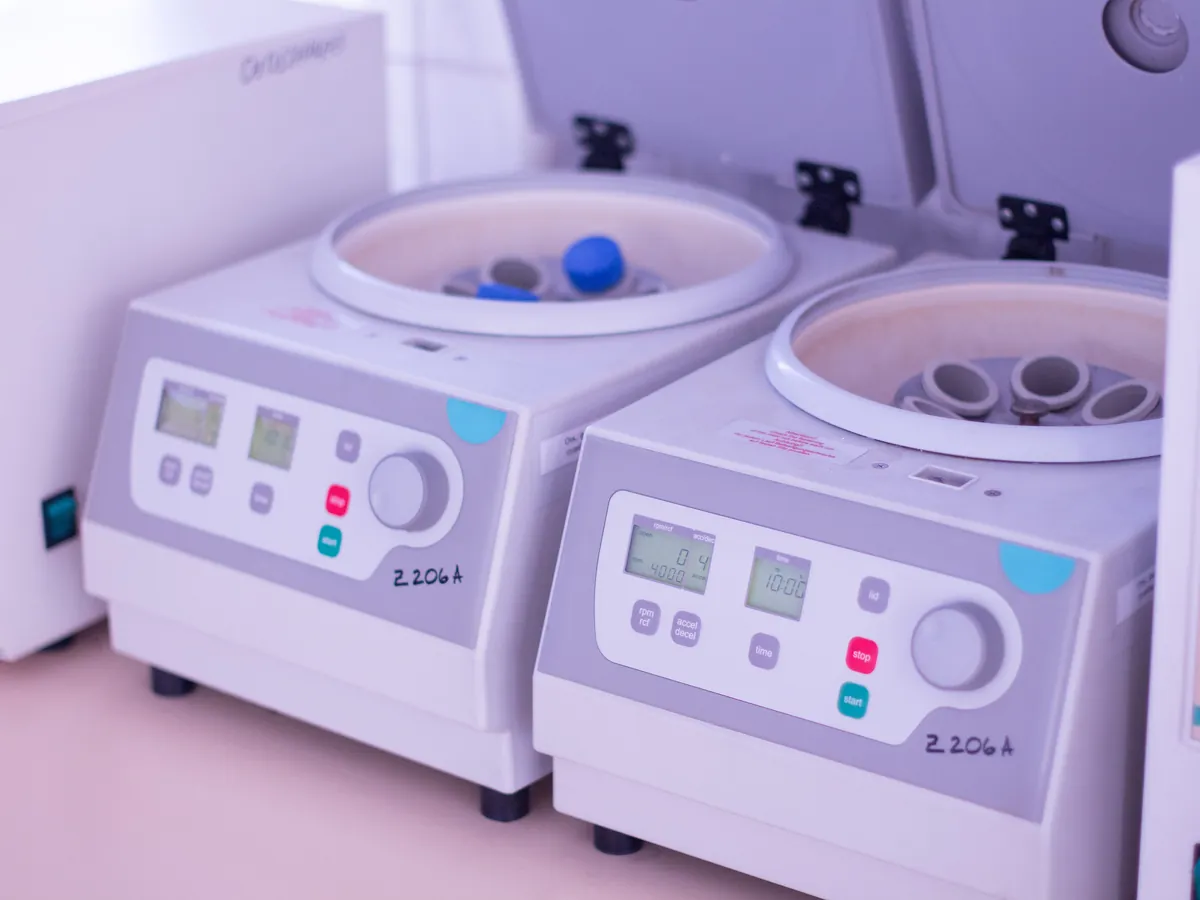
- Centrifuge
Reference: Typical method based on Ph. Eur. 2.2.30, USP <129> and USP <621>. Follow your approved test procedure and product specification.
Why this method works
The SEC column is packed with porous particles (usually silica with a hydrophilic diol coating, or a polymer). Molecules too large to enter the pores pass straight through and elute at the void volume. Smaller molecules spend time inside the pores and elute later. Separation therefore depends on hydrodynamic size, with no gradient. The mobile phase is an aqueous buffer near neutral pH with salt (and sometimes arginine) to suppress ionic and hydrophobic interactions with the packing, so separation is by size only. Detection at 280 nm (or 214 nm for more sensitivity) gives peak areas proportional to the mass of protein in each size form, so area percentages estimate the relative amounts.
Instruments used

Reagents & standards
| Reagent | Grade / specification |
|---|---|
| Sodium phosphate (mono- and dibasic) | AR grade, for buffer |
| Sodium chloride or potassium chloride | AR grade (e.g. 0.2–0.3 M in mobile phase) |
| L-arginine hydrochloride (optional) | Added to some mobile phases to reduce non-specific adsorption |
| Reference standard | In-house reference standard of the same protein |
| Gel filtration / size standard | Protein size standard mix for column performance checks |
| Water | HPLC grade / purified water, mobile phase filtered through 0.22 µm |
Preparing the sample
- 01
Equilibrate
Bring the sample to room temperature gently; do not vortex.
- 02
Dilute
Dilute to the working concentration with mobile phase if needed.
- 03
Clarify
Centrifuge briefly; do not filter unless validated.
- 04
Inject
Transfer to a vial and inject within the solution stability time.
Procedure
- 1Allow the sample to reach room temperature and mix by gentle inversion. Vortexing or foaming can create aggregates.
- 2Dilute with mobile phase (or formulation buffer) to the working concentration, typically about 1–2 mg/mL, so that the load on column is about 20–50 µg.
- 3Centrifuge briefly to remove any visible particles. Avoid filtration unless validated, because filters can remove aggregates and give a falsely high % monomer.
- 4Transfer to an HPLC vial and keep in the autosampler at about 5 °C. Analyse within the validated solution stability period.
Standard preparation
- 1Prepare the reference standard at the same concentration and in the same diluent as the sample.
- 2Inject the size standard mix (or a reference standard containing a known amount of dimer) to confirm resolution between HMW and monomer.
Notes for analysts
- The chromatogram is illustrative; retention times depend on column size, pore size, flow rate and the protein.
- New SEC columns can adsorb protein and under-report aggregates. Condition a new column with several protein injections before use, as the procedure allows.
- SEC only sees aggregates small enough to pass the column inlet frit. Large, sub-visible particles need other methods such as light obscuration or flow imaging.
- Some aggregates are reversible and can dissociate on dilution. Keep sample handling, dilution and hold times consistent.
Method parameters (typical)
| Column | SEC column suited to proteins of about 10–500 kDa, e.g. 300 × 7.8 mm, 5 µm, about 250–300 Å pore size (diol-bonded silica) |
|---|---|
| Mobile phase | e.g. 0.1 M sodium phosphate + 0.2 M sodium chloride, pH 6.8, filtered and degassed |
| Flow rate | About 0.5 mL/min (isocratic) |
| Detection | UV at 280 nm (214 nm if more sensitivity is needed) |
| Injection | About 20–50 µg protein |
| Column temperature | Ambient or controlled, e.g. 25 °C |
| Autosampler | About 5 °C |
| Run time | About 30 minutes (monomer near 17 minutes on this column format) |
System suitability & sequence
| Parameter | Limit |
|---|---|
| Resolution between HMW (dimer) and monomer | Not less than the value in the procedure (often around 1.2–1.5) |
| Reference standard % monomer | Within its established range |
| Precision of monomer peak area | %RSD typically ≤ 2.0% for replicate standard injections |
| Retention time of monomer | Consistent with the reference standard, e.g. within ±2% |
| Blank | No peaks interfering with HMW, monomer or LMW |
Typical sequence
- 1Mobile phase blank × 1
- 2Size standard / resolution solution × 1
- 3Reference standard × 3 (system suitability)
- 4Sample preparations in duplicate
- 5Bracketing reference standard × 1
- 6Blank × 1 at the end
Calculation with a worked example
Where
- A(HMW)
- Summed area of all peaks eluting before the monomer (dimer and larger aggregates)
- A(monomer)
- Area of the main (monomer) peak
- A(LMW)
- Summed area of fragment peaks eluting after the monomer, before buffer/excipient peaks
Given
- A(HMW)
- 18,450
- A(monomer)
- 2,986,300
- A(LMW)
- 9,870
Working
- 1
Total = 18,450 + 2,986,300 + 9,870 = 3,014,620
- 2
% HMW = 18,450 / 3,014,620 × 100 = 0.61%
- 3
% monomer = 2,986,300 / 3,014,620 × 100 = 99.06%
- 4
% LMW = 9,870 / 3,014,620 × 100 = 0.33%
Monomer 99.1%, HMW 0.6%, LMW 0.3% (the three add up to 100%)
What result passes
- Main peak retention time matches the reference standard.
- % monomer not less than, and % HMW not more than, the product specification limits. Many antibodies are released at well over 95% monomer, but the limit is product-specific.
- Report HMW and LMW to the decimal place stated in the procedure (commonly one).
Validation parameters (ICH Q2(R2))
| Parameter | Typical requirement |
|---|---|
| Specificity | Stressed samples (heat, agitation, low pH) show increased HMW/LMW resolved from the monomer; excipients do not interfere |
| Linearity | Monomer and HMW responses linear over the working range; HMW linear from quantitation limit upward |
| Accuracy | Often shown by spiking enriched aggregate into monomer, or by comparison with an orthogonal technique such as analytical ultracentrifugation or SEC-MALS |
| Precision | Repeatability and intermediate precision of % HMW and % monomer |
| Quantitation limit | Typically around 0.1% HMW relative to the monomer load |
| Robustness | Flow rate, salt concentration, pH, column temperature, column lot |
Run this method in LimsPulse: specifications and STPs under version control, results calculated and checked against limits, and a signed Certificate of Analysis.