Benzoic acid and sorbic acid by HPLC-UV
Extracts benzoic and sorbic acid (and their salts) from a food or drink, separates them on a C18 column with an acidic buffer–methanol mobile phase, and measures them by UV absorbance against external standards. Results are expressed as the free acids and compared with the permitted maximum levels.
- Food & beverage
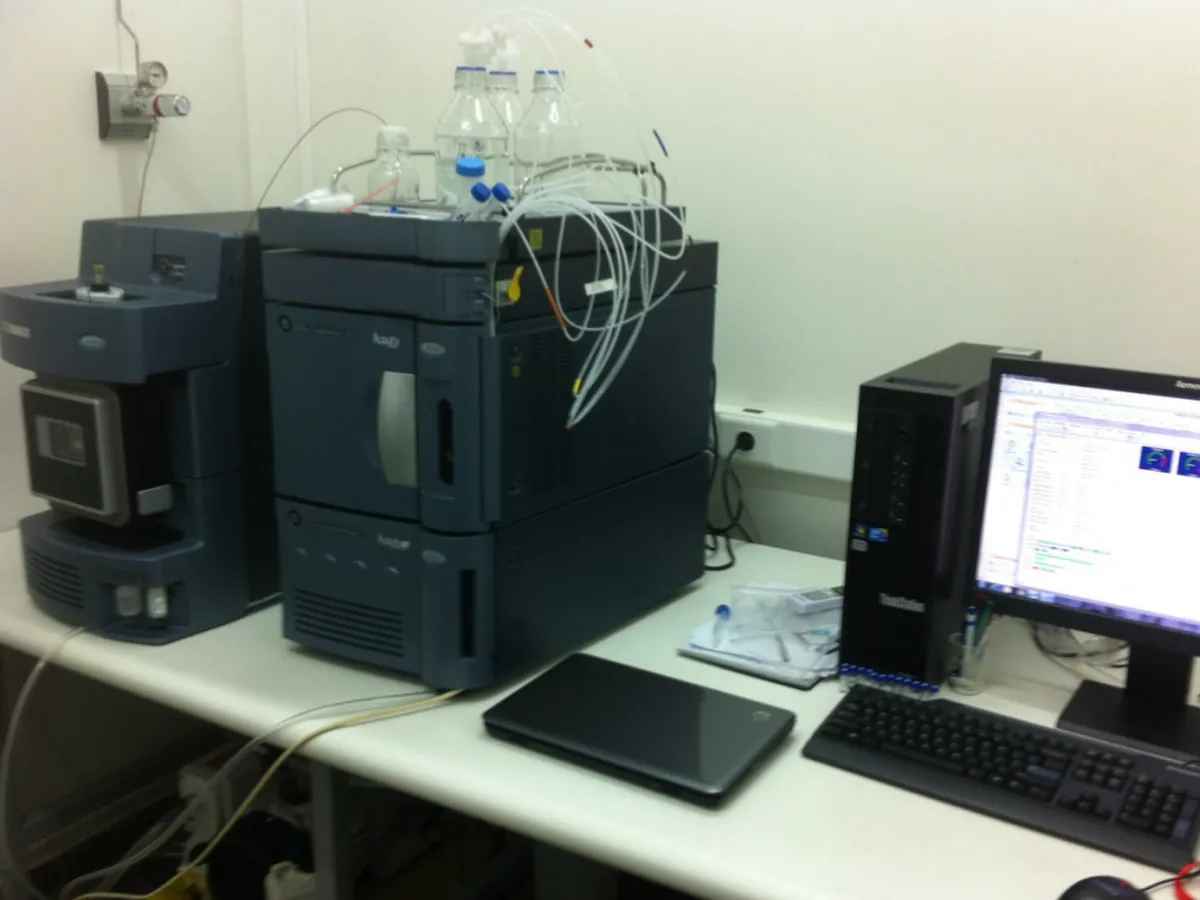
- HPLC (reversed phase, UV/DAD detection)
- HPLC
- Analytical balance
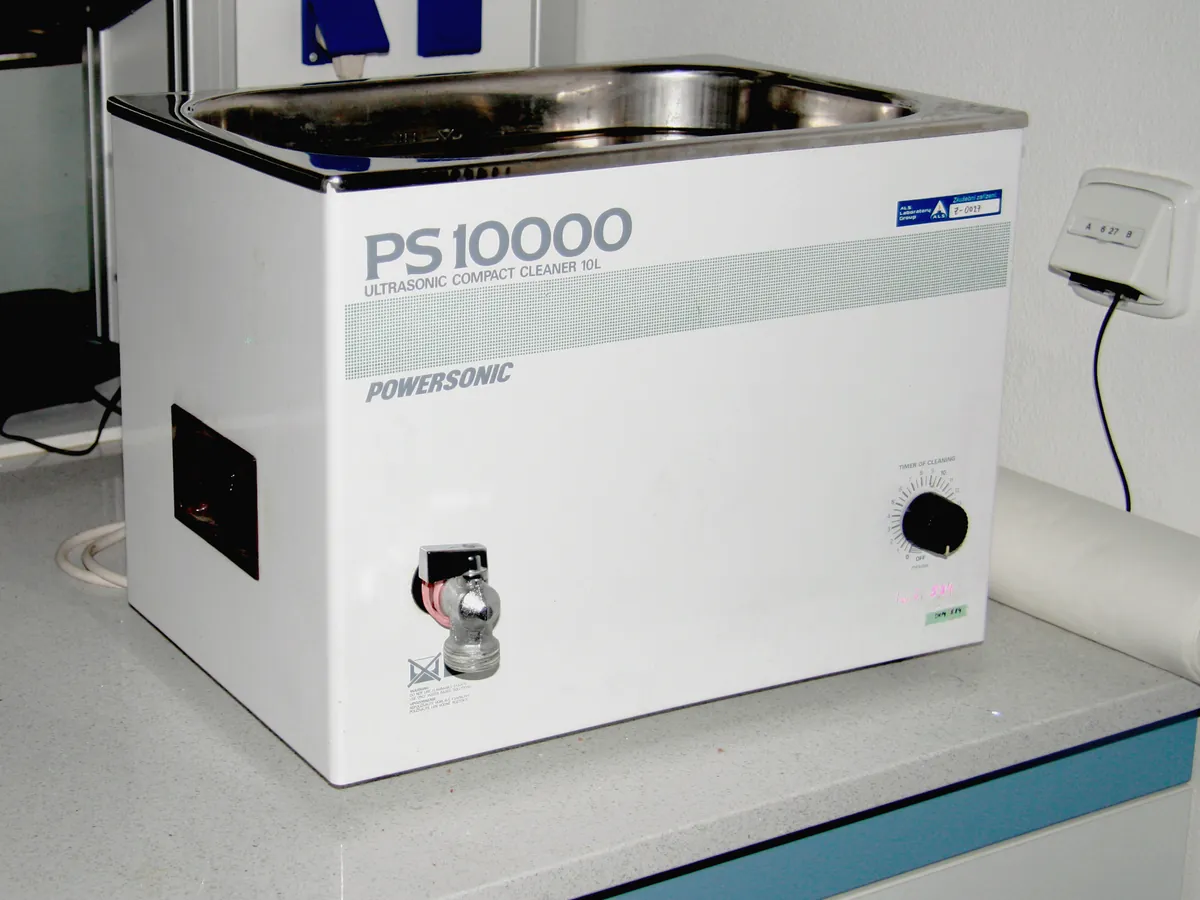
- Sonicator
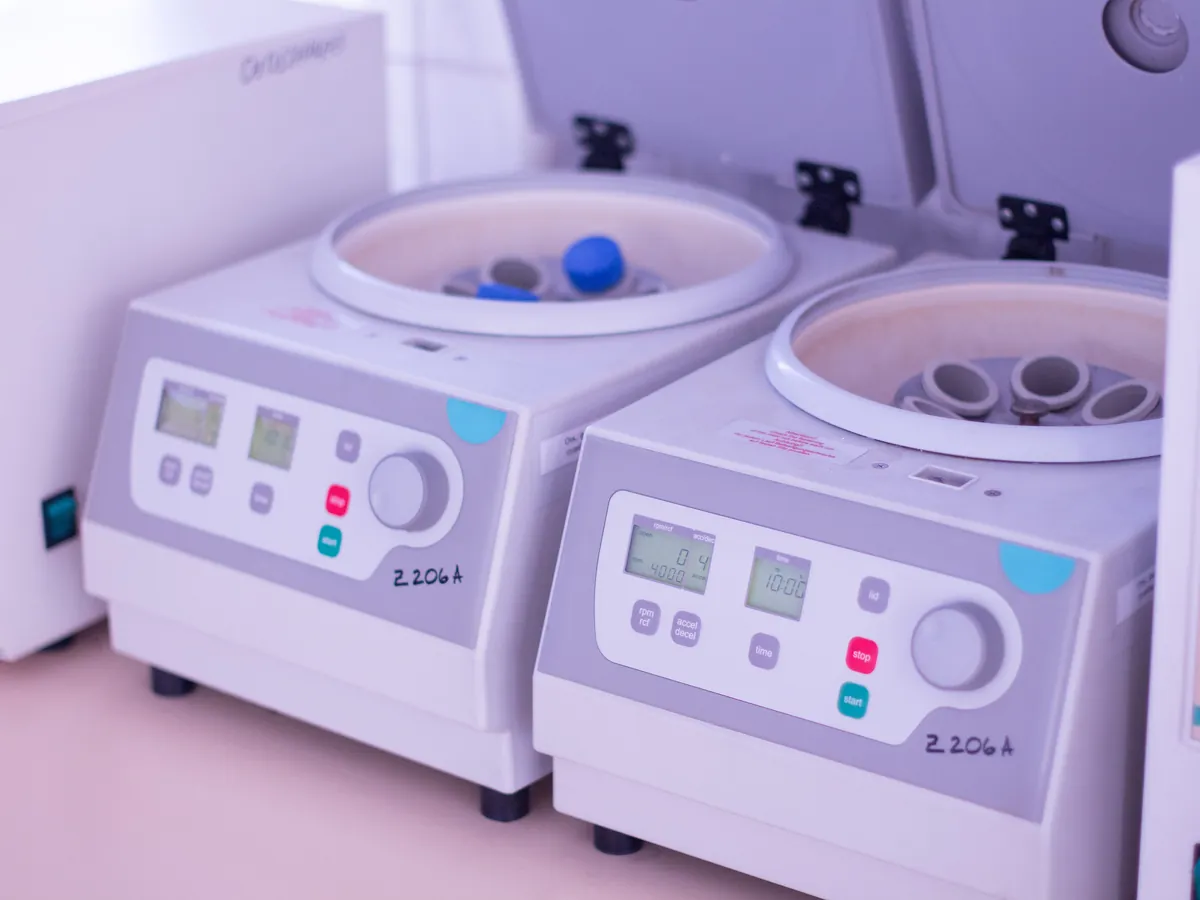
- Centrifuge
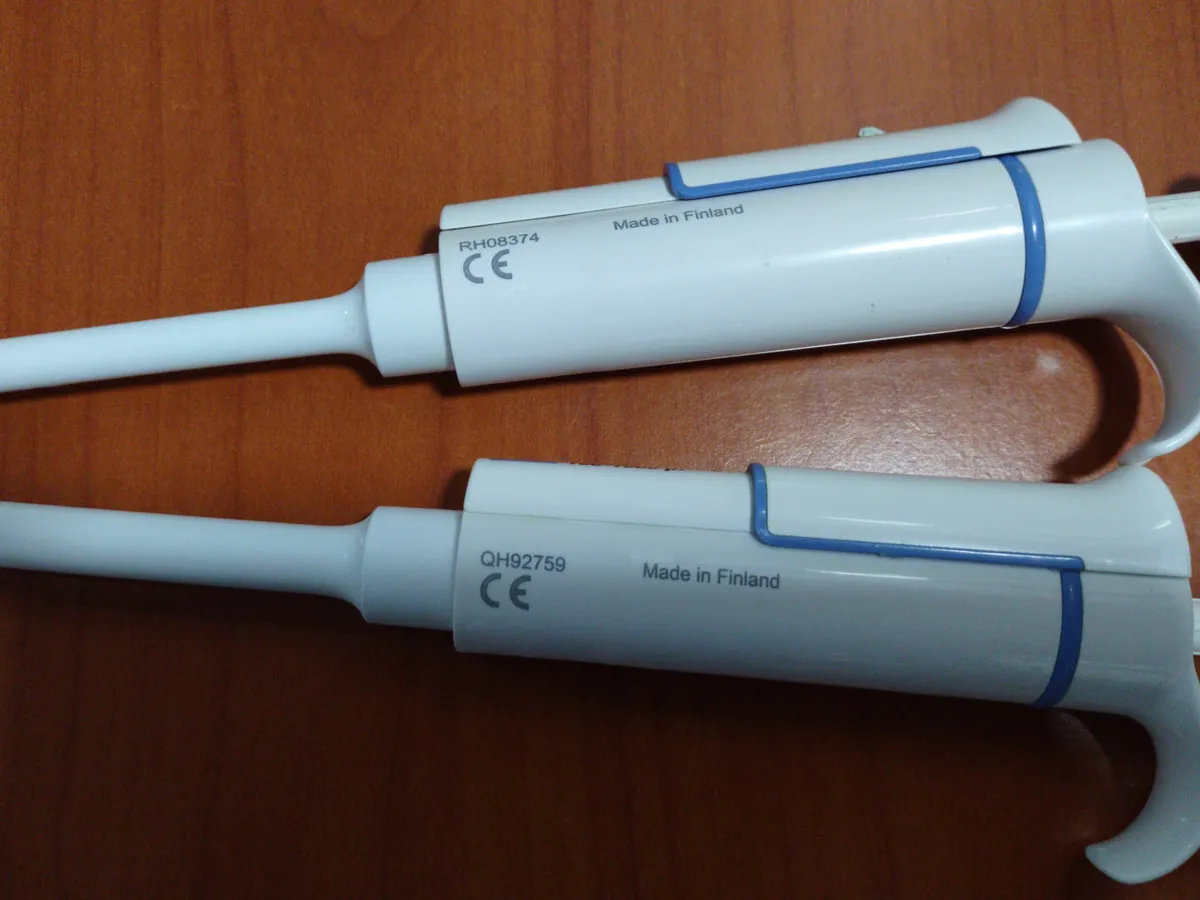
- Micropipette
Reference: Typical method based on ISO 22855 and AOAC liquid chromatographic methods for preservatives in beverages. Follow your validated method.
Why this method works
In an acidic buffer (pH about 4.0–4.5) the salts are converted largely to the free acids, which are retained on C18 and separate well. Benzoic acid absorbs strongly at about 225–230 nm and sorbic acid at about 255–260 nm. A diode array detector can measure each at its own maximum, or a single compromise wavelength (about 230–235 nm) can be used. Concentrations are calculated by comparing peak areas with those of standards of known concentration.
Instruments used

Reagents & standards
| Reagent | Grade / specification |
|---|---|
| Benzoic acid and sorbic acid standards | Certified purity (or sodium benzoate / potassium sorbate with conversion) |
| Methanol | HPLC grade |
| Ammonium acetate buffer | About 20 mM, adjusted to pH about 4.2 with acetic acid |
| Carrez reagents I and II | Potassium hexacyanoferrate(II) and zinc acetate, for clarifying solid and protein-rich foods |
| Water | HPLC grade |
Preparing the sample
- 01
Degas
Sonicate carbonated drinks.
- 02
Dilute / extract
Drinks: 5 mL to 50 mL. Solids: weigh, extract in warm water–methanol.
- 03
Clarify
Add Carrez I and II to solid or milky samples, make up and filter.
- 04
Filter
0.45 µm syringe filter into a vial.
- 05
Inject
Inject with benzoic and sorbic acid standards.
Procedure
- 1Liquids: degas carbonated drinks in an ultrasonic bath. Pipette 5.0 mL into a 50 mL volumetric flask and make up with mobile phase (dilution factor 10).
- 2Solid and semi-solid foods: weigh about 5 g of homogenised sample into a 100 mL volumetric flask. Add about 50 mL of water–methanol (e.g. 60:40) and sonicate for 15 minutes in a warm bath.
- 3For protein- or fat-rich samples, add 2 mL Carrez I, mix, then 2 mL Carrez II, mix; make up to volume, let settle and filter (or centrifuge).
- 4Filter through a 0.45 µm syringe filter into an HPLC vial, discarding the first 1 mL.
- 5Prepare duplicate sample preparations and a spiked sample for recovery.
Standard preparation
- 1Stock: accurately weigh about 50 mg each of benzoic acid and sorbic acid into a 50 mL flask, dissolve in methanol and make up (about 1000 µg/mL each).
- 2Working standard: dilute 1.0 mL of stock to 50 mL with mobile phase (about 20 µg/mL each).
- 3For a calibration line, prepare 5 levels covering about 5–100 µg/mL.
Notes for analysts
- The chromatogram is illustrative; retention times shift with buffer pH and methanol content. Lower pH increases retention of both acids.
- The same run often also measures caffeine and the sweeteners saccharin and acesulfame-K if a gradient or DAD is used.
- Benzoic acid occurs naturally in some foods (for example cranberries, cinnamon and fermented dairy), so a low result is not always proof of added preservative.
- Conversion factors to the free acid: sodium benzoate × 0.8474 = benzoic acid; potassium sorbate × 0.7464 = sorbic acid.
Method parameters (typical)
| Column | C18, 250 × 4.6 mm, 5 µm |
|---|---|
| Mobile phase | Ammonium acetate buffer pH about 4.2 : methanol, about 70 : 30 v/v (adjust for resolution) |
| Flow rate | 1.0 mL/min |
| Detection | UV/DAD: 230 nm for benzoic acid, 260 nm for sorbic acid (or a single wavelength about 235 nm) |
| Injection volume | 10–20 µL |
| Column temperature | 30 °C |
| Run time | About 10 minutes |
System suitability & sequence
| Parameter | Limit |
|---|---|
| Resolution between benzoic and sorbic acid | Not less than 2.0 |
| %RSD of peak areas (5 standard injections) | Not more than 2.0% |
| Tailing factor | Not more than 2.0 for both peaks |
Typical sequence
- 1Blank × 1
- 2Standard × 5
- 3Sample 1 × 2
- 4Sample 2 × 2
- 5Spiked sample × 1
- 6Bracketing standard × 1
Calculation with a worked example
Where
- Aₛₐ
- Mean benzoic acid peak area in the sample solution
- Aₛₜ
- Mean benzoic acid peak area in the standard solution
- Cₛₜ
- Benzoic acid concentration in the standard (µg/mL), purity-corrected
- DF
- Dilution factor (50 / 5 = 10); µg/mL in the drink equals mg/L
Given
- Sample
- Orange-flavoured soft drink, 5.0 mL to 50 mL
- Aₛₐ
- 192,800
- Aₛₜ
- 301,200
- Cₛₜ
- 20.0 µg/mL
- DF
- 10
Working
- 1
Benzoic acid in sample solution = (192,800 / 301,200) × 20.0 = 12.80 µg/mL
- 2
Benzoic acid in drink = 12.80 × 10 = 128.0 µg/mL = 128 mg/L
- 3
As sodium benzoate: 128.0 × (144.11 / 122.12) = 151.1 mg/L
Benzoic acid = 128 mg/L (equivalent to about 151 mg/L sodium benzoate)
What result passes
- Compare with the maximum permitted level for that food category in the applicable regulation (EU additives regulation, FSSAI Food Additives Regulations, Codex GSFA). Limits are usually expressed as the free acid; for soft drinks they are typically in the range of about 150–250 mg/kg as benzoic acid depending on the market.
- Check that the additive is permitted in that food at all, and that it is declared on the label.
Validation parameters (ICH Q2(R2))
| Parameter | Typical requirement |
|---|---|
| Specificity | No interference at either retention time in a preservative-free sample; DAD peak purity |
| Linearity | About 5–100 µg/mL, r ≥ 0.999 |
| Recovery | Spike recovery typically 90–105% |
| Precision | Repeatability %RSD typically ≤ 2–3% |
| LOQ | Typically 1–5 mg/kg in the food |
Run this method in LimsPulse: specifications and STPs under version control, results calculated and checked against limits, and a signed Certificate of Analysis.