Microbial Count of Cosmetics (Aerobic Mesophilic Bacteria)
Measures how many aerobic mesophilic microorganisms a cosmetic contains. A weighed portion is dispersed in a diluent that neutralises the product's preservatives, plated on a general agar medium and incubated; colonies are counted and converted to cfu per gram or millilitre. The result is compared with commonly used microbiological limits.
- Cosmetics & personal care
- Plate count (pour plate, spread plate or membrane filtration) after neutralisation
- LAF
- Incubator
- Colony counter
- Autoclave
- Analytical balance
Reference: Overview based on ISO 21149 (enumeration and detection of aerobic mesophilic bacteria), with yeasts and moulds by ISO 16212 and limits as in ISO 17516. Follow the current standards and your validated SOP.
Why this method works
Cosmetics are not sterile but must have a low microbial load and be free from specified microorganisms. Preservatives in the product would stop microorganisms growing on the plate and give a falsely low count, so the first dilution uses a neutralising diluent (for example containing polysorbate 80 and lecithin), and the method's ability to recover microorganisms in the presence of the product is demonstrated before routine use (method suitability, also called neutralisation validation). Each viable cell or clump grows into one colony, so the count is reported as colony-forming units (cfu). Counts on plates in the reliable range are multiplied by the dilution factor and divided by the volume plated.
Instruments used
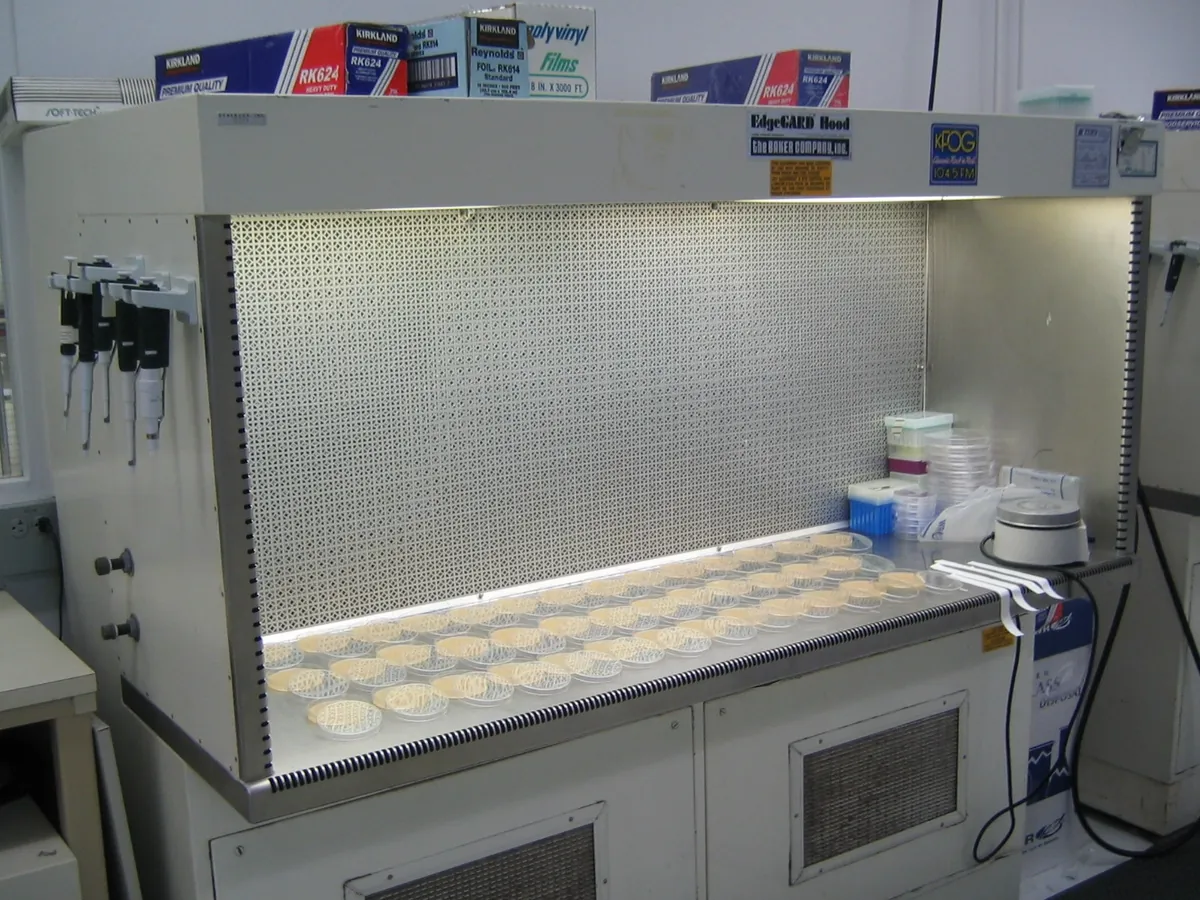
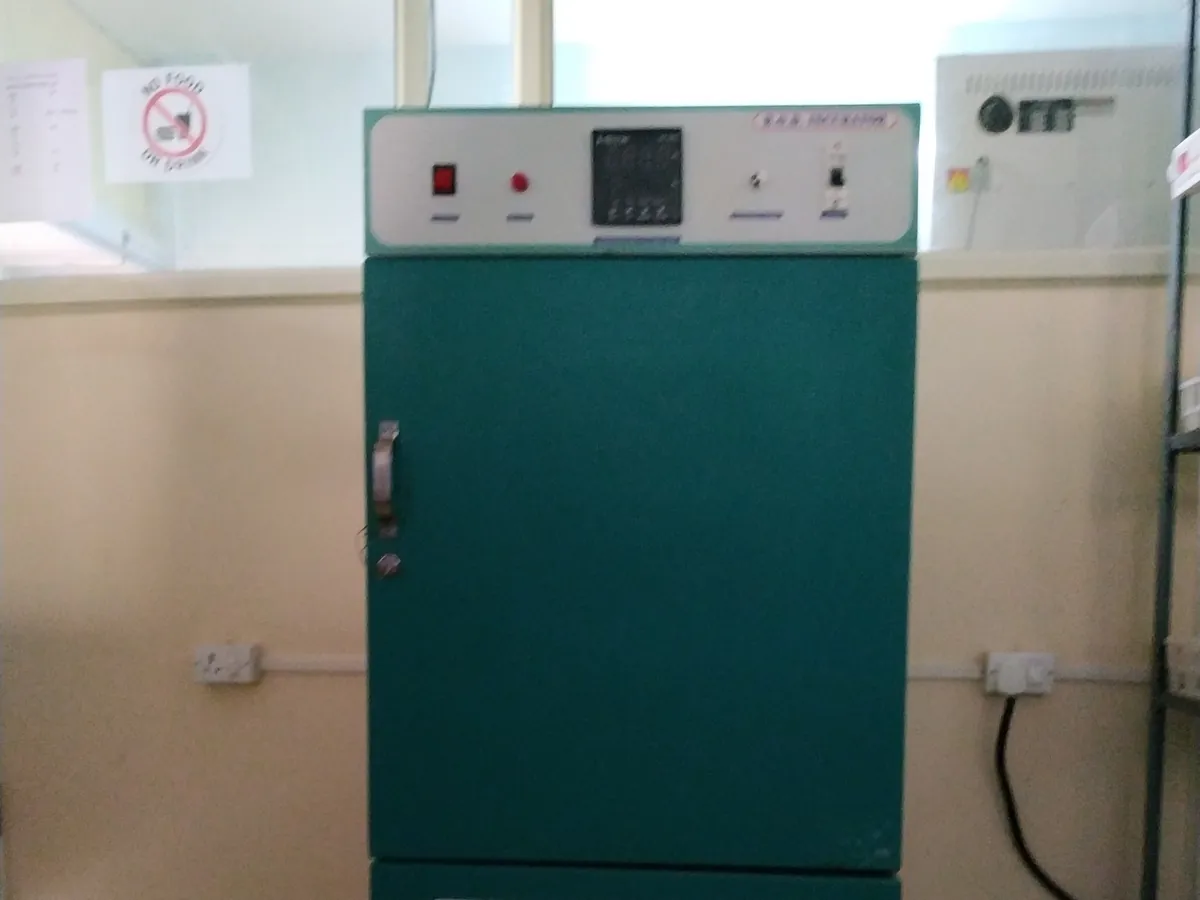
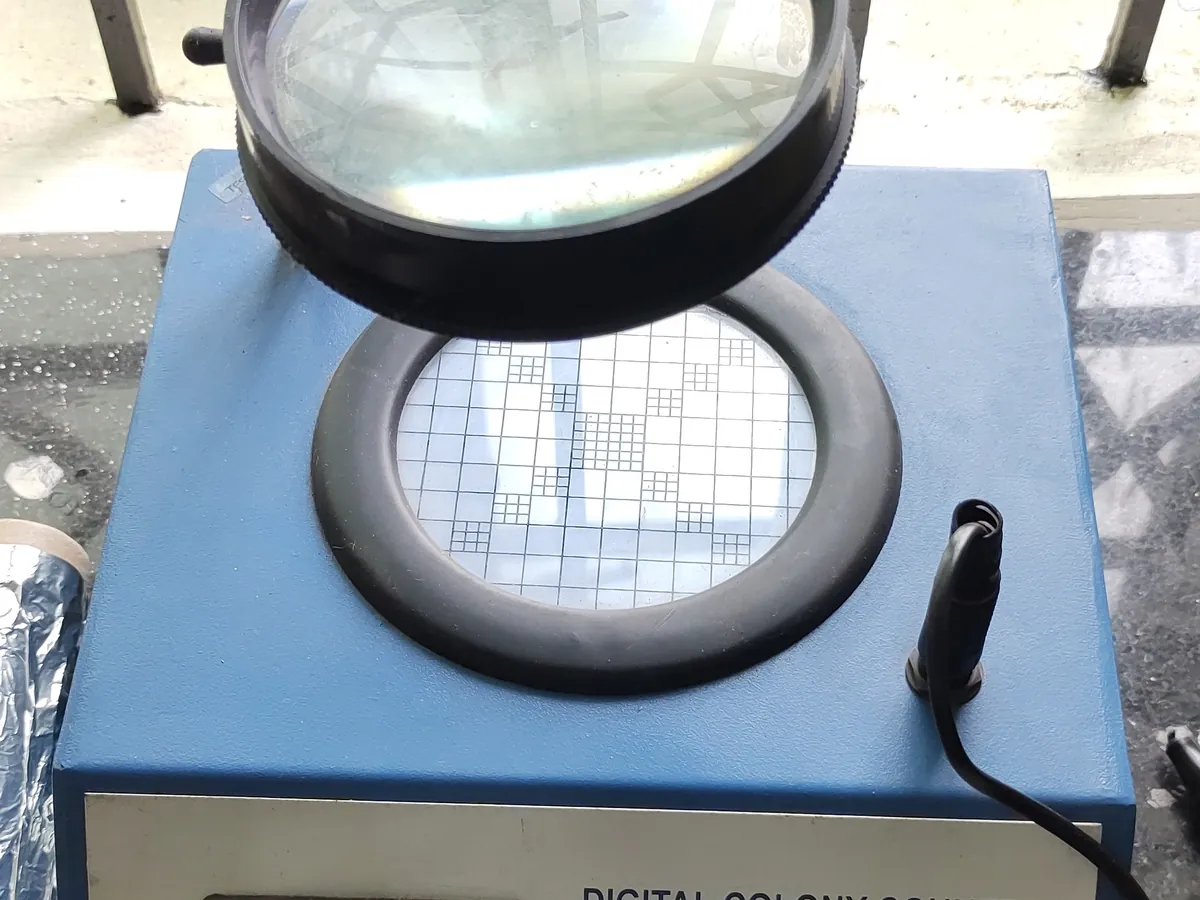
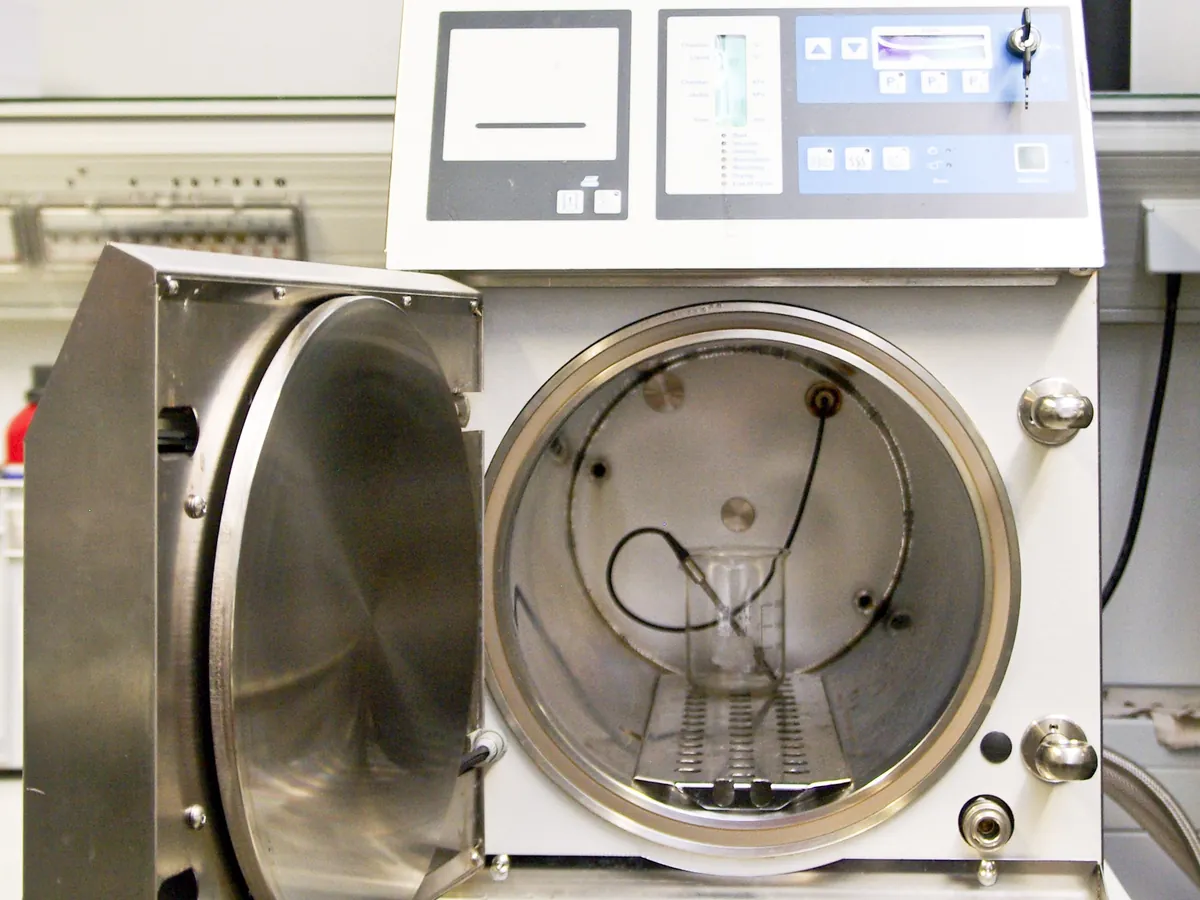

Reagents & standards
| Reagent | Grade / specification |
|---|---|
| Neutralising diluent | As specified in ISO 21149, chosen and validated for the product's preservative system |
| Culture medium | General-purpose agar (for example soybean-casein digest agar) as listed in the standard |
Preparing the sample
- 01
Initial suspension
Disperse a weighed portion in neutralising diluent (usually 1 in 10).
- 02
Dilute
Prepare further decimal dilutions if high counts are expected.
- 03
Plate
Plate a known volume by the technique in the standard.
- 04
Incubate
Incubate under the conditions in the standard.
- 05
Count & calculate
Count colonies and calculate cfu/g or cfu/mL.
Procedure
- 1Work to ISO 21149 and your validated SOP in a clean microbiology area; this overview does not replace the standard.
- 2Prepare the initial suspension of the product in the validated neutralising diluent, typically 1 g or 1 mL in 9 mL (a 1:10 dilution). Oily products may need a dispersing agent as the standard describes.
- 3Plate a known volume (often 1 mL) in duplicate by the technique the standard specifies; prepare further dilutions only if needed.
- 4Incubate and count colonies as specified, using plates within the countable range.
- 5Run negative controls (diluent and medium) with each batch. Method suitability (recovery in the presence of product) is shown once for each product type before routine use.
- 6Yeasts and moulds are counted separately on a selective medium (ISO 16212) and added to the bacterial count for the total viable count where the specification requires.
Notes for analysts
- Low-risk products (high alcohol, very low water activity, extreme pH) may need little or no routine microbial testing under the ISO 29621 risk-assessment approach.
- A low count only means something if the neutralisation has been proven. Without it, a heavily preserved product can look clean when it is not.
- This page is an overview of the QC test; culture and organism-handling steps must follow the ISO standard and your laboratory's biosafety rules.
Method parameters (typical)
| Standard | ISO 21149 (bacteria); ISO 16212 (yeasts and moulds) |
|---|---|
| Initial dilution | Usually 1:10 in neutralising diluent |
| Plating | Duplicate plates per dilution |
| Incubation | As specified in the standard |
| Reporting | cfu/g or cfu/mL; '< 10 cfu/g' when no colonies grow at the 1:10 dilution with 1 mL plated |
System suitability & sequence
| Parameter | Limit |
|---|---|
| Method suitability | Recovery of test strains in the presence of product shown before routine use, as defined in the standard |
| Negative controls | No growth on diluent and medium controls |
| Media | Each batch passes growth-promotion checks |
Typical sequence
- 1Negative controls
- 2Sample initial suspension
- 3Plating in duplicate
- 4Incubation
- 5Counting and calculation
- 6Review against limits
Calculation with a worked example
Where
- Mean colonies
- Average count of the duplicate plates at the chosen dilution
- Volume plated
- Volume of suspension on each plate (mL)
- Dilution factor
- Reciprocal of the dilution plated (1:10 → 10)
Given
- Product
- Body lotion
- Plate counts at 1:10
- 46 and 52 colonies, 1 mL plated
Working
- 1Mean = (46 + 52) ÷ 2 = 49 colonies
- 2cfu/g = 49 ÷ 1 mL × 10 = 490 cfu/g
- 3
490 cfu/g = 4.9 × 10² cfu/g
Aerobic mesophilic count = 4.9 × 10² cfu/g: within the commonly used limit of ≤ 10³ cfu/g for general products, but it would exceed ≤ 10² cfu/g if this were an eye-area or children's product.
Try it with your numbersWhat result passes
- Commonly used limits (ISO 17516 and many company and national specifications): products for children under 3 years, the eye area and mucous membranes — total aerobic mesophilic count ≤ 10² cfu/g or mL; other products — ≤ 10³ cfu/g or mL.
- Specified microorganisms named in the standard (Escherichia coli, Pseudomonas aeruginosa, Staphylococcus aureus and Candida albicans) should be absent in 1 g or 1 mL; their detection uses separate standards and is not covered here.
- Check the limits in your market's regulation or the product specification; some regions set their own values.
Validation parameters (ICH Q2(R2))
| Parameter | Typical requirement |
|---|---|
| Method suitability | Recovery of the standard's test strains in the presence of product, within the limits set by the standard |
| Neutraliser efficacy and toxicity | Neutraliser stops preservative activity without harming recovery |
Run this method in LimsPulse: specifications and STPs under version control, results calculated and checked against limits, and a signed Certificate of Analysis.