Chemical Oxygen Demand (COD) by Closed Reflux Digestion
The sample is digested in a sealed tube with a known excess of potassium dichromate in strong sulphuric acid, with silver sulphate catalyst and mercuric sulphate to mask chloride. After 2 hours at 150 °C the unreacted dichromate is titrated with ferrous ammonium sulphate (FAS), or the colour is read on a spectrophotometer.
- Environmental & water
- Dichromate digestion at 150 °C for 2 hours, finished by FAS titration (ferroin indicator) or colorimetry
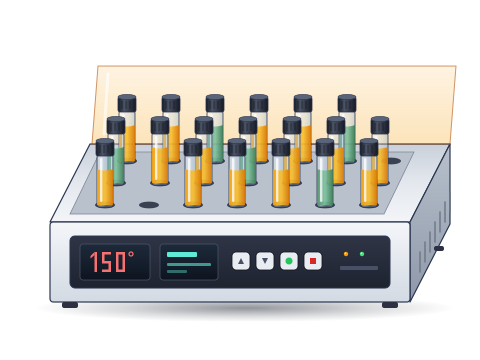
- COD digester
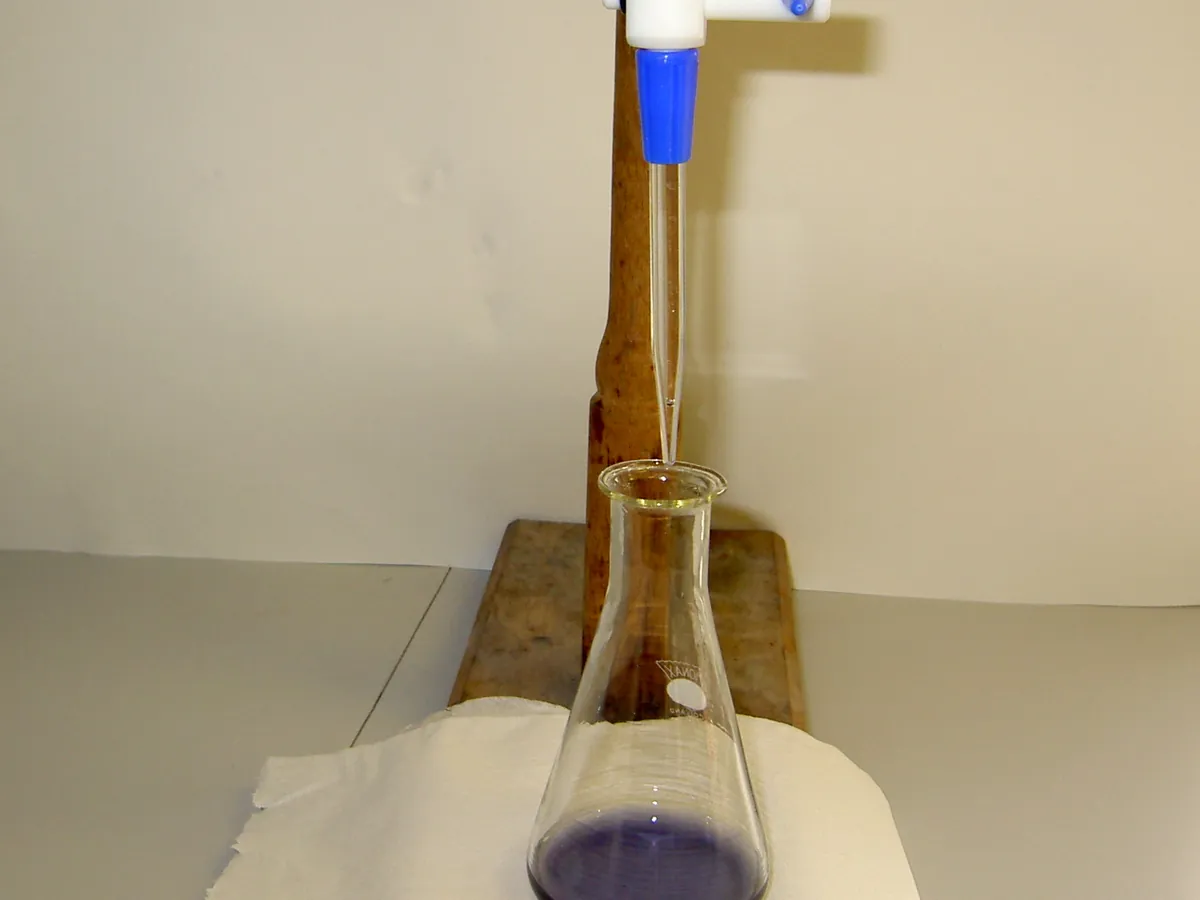
- Burette & glassware
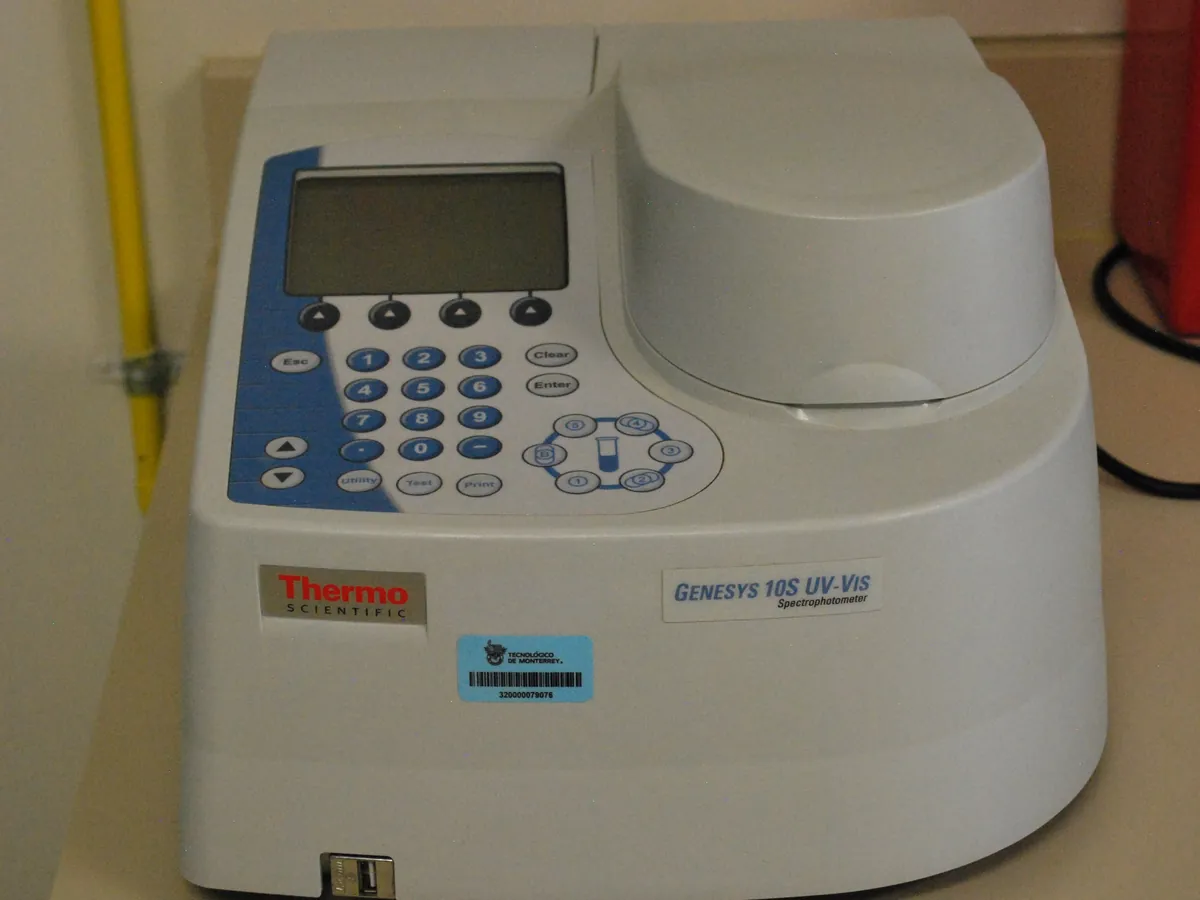
- UV-Vis
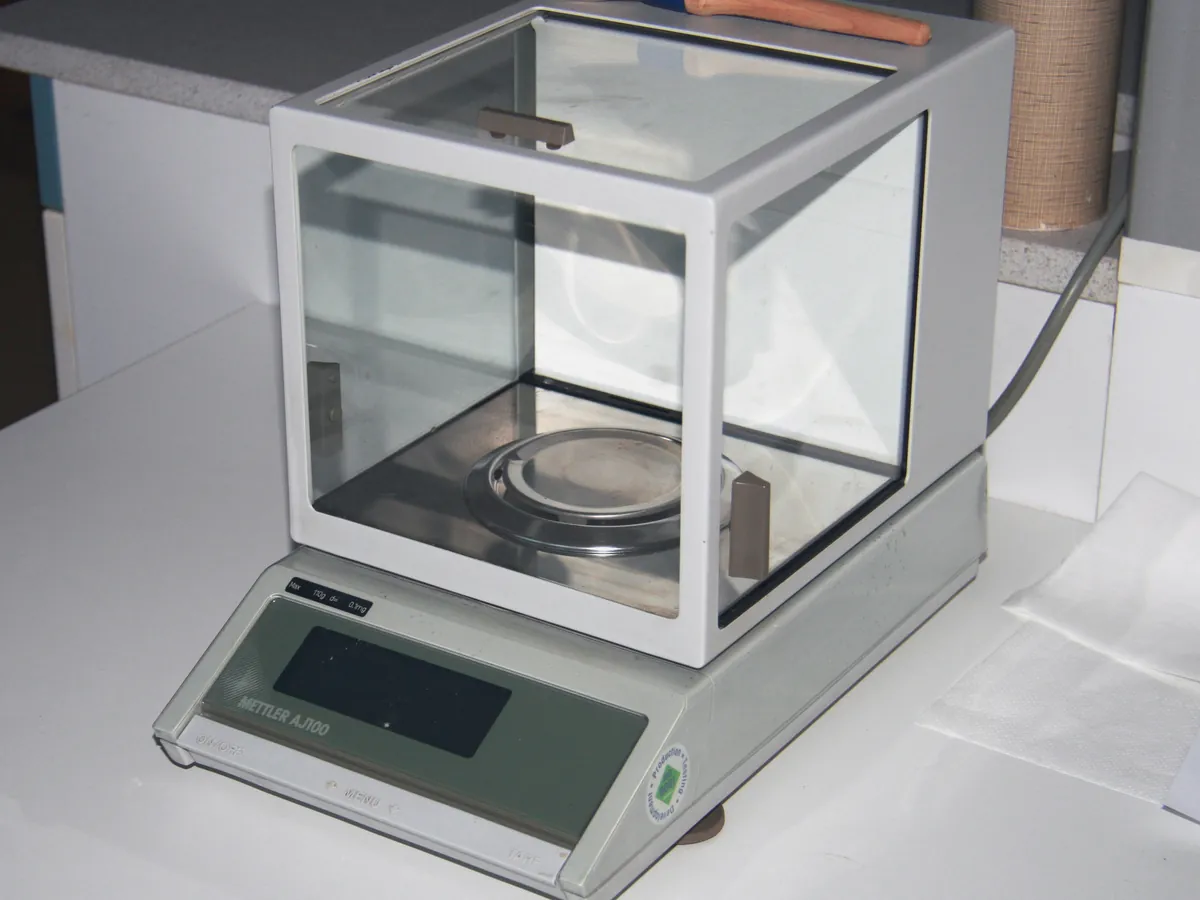
- Analytical balance
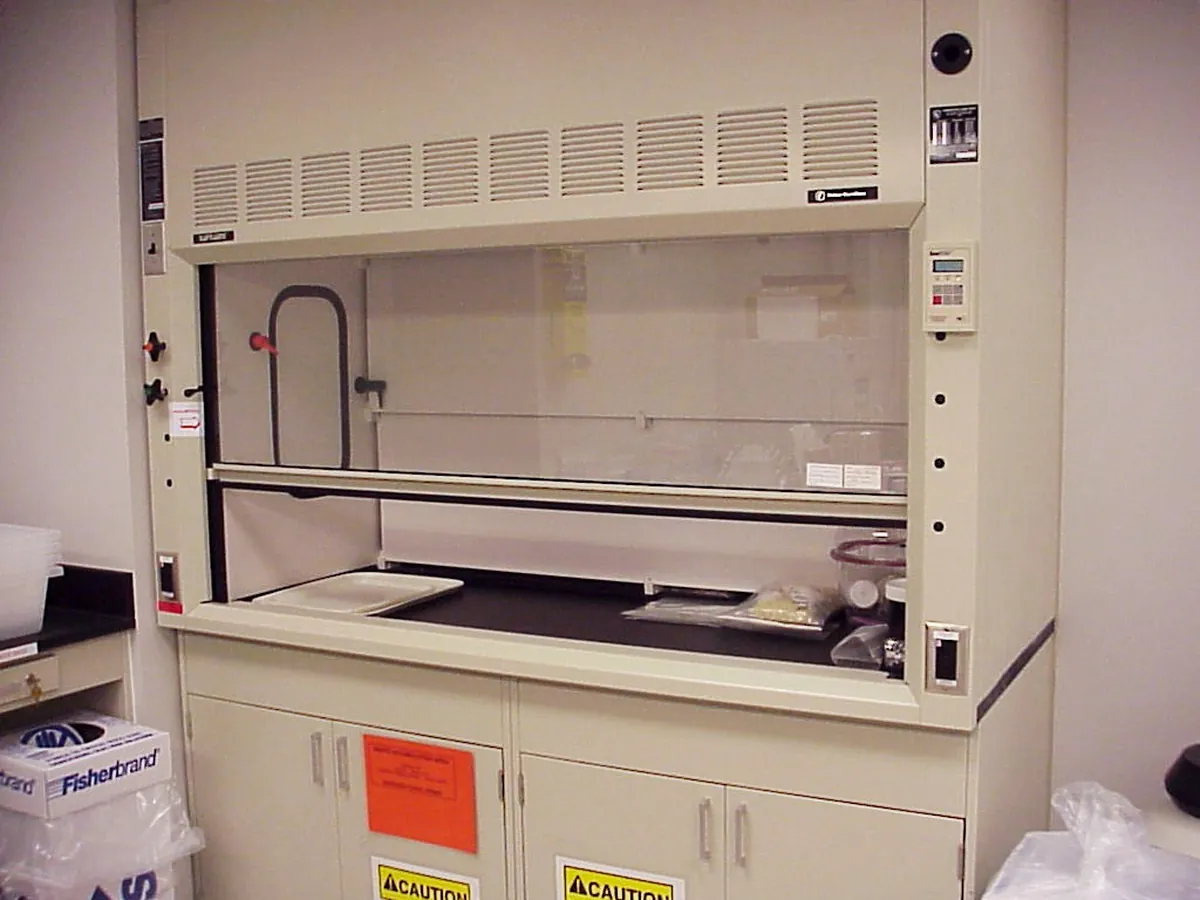
- Fume hood
Reference: Typical method based on APHA Standard Methods 5220 C (closed reflux, titrimetric) and 5220 D (closed reflux, colorimetric), IS 3025 (Part 58) and ISO 15705.
Why this method works
Dichromate oxidises most organic matter to carbon dioxide and water and is itself reduced from Cr(VI) to Cr(III). The amount of dichromate consumed is expressed as the equivalent mass of oxygen. In the titrimetric finish, the remaining dichromate is titrated with FAS using ferroin, which turns from blue-green to reddish-brown at the endpoint. The difference between a blank and the sample gives the COD. In the colorimetric finish, the Cr(III) formed (about 600 nm) or the Cr(VI) remaining (about 420 nm for low ranges) is measured against KHP standards.
Instruments used
Reagents & standards
| Reagent | Grade / specification |
|---|---|
| Digestion solution | Potassium dichromate (about 0.01667 M) with mercuric sulphate in sulphuric acid |
| Sulphuric acid reagent | Concentrated H₂SO₄ containing silver sulphate (catalyst) |
| Ferrous ammonium sulphate (FAS) titrant | About 0.10 M Fe(NH₄)₂(SO₄)₂·6H₂O in dilute H₂SO₄, standardised daily |
| Ferroin indicator | 1,10-phenanthroline ferrous sulphate complex |
| KHP standard | 425 mg/L potassium hydrogen phthalate ≈ 500 mg/L theoretical COD |
| Sulphamic acid (optional) | To remove nitrite interference |
Preparing the sample
- 01
Homogenise
Blend samples containing solids so a 2.5 mL aliquot is representative.
- 02
Dispense
Add sample, digestion solution and acid reagent to each tube.
- 03
Cap and mix
Cap tightly and invert to mix (the tube becomes hot).
- 04
Digest
150 °C for 2 hours in the pre-heated COD reactor.
- 05
Cool
Cool to room temperature.
- 06
Finish
Titrate with FAS using ferroin, or read absorbance.
Procedure
- 1Preserve samples by acidifying to pH below 2 with H₂SO₄ if not analysed promptly, and keep chilled; analyse within the holding time in your method (often up to 28 days when preserved).
- 2Homogenise the sample. Dilute it if the expected COD is above the range of the tube method.
- 3Pre-heat the COD reactor to 150 °C.
- 4Into a clean 16 × 100 mm tube pipette 2.5 mL of sample, 1.5 mL of digestion solution and then carefully 3.5 mL of sulphuric acid reagent down the side so it forms a layer. (Use the volumes in your method if tubes differ.)
- 5Prepare a reagent blank with 2.5 mL purified water and a KHP check standard in the same way.
- 6Cap tightly, invert several times to mix and place in the reactor. Digest for 2 hours.
- 7Cool to room temperature in a rack.
- 8Titrimetric finish: transfer the contents to a small flask (or titrate in the tube), add 1–2 drops of ferroin and titrate with standardised FAS from blue-green to reddish-brown. Record the volume for blank (A) and sample (B).
- 9Colorimetric finish: wipe the tube, read absorbance at about 600 nm against the reagent blank and read COD from the KHP calibration curve.
Standard preparation
- 1FAS standardisation (daily): pipette the same volume of digestion solution as used for samples into a tube with 2.5 mL water and the acid reagent, cool, and titrate with FAS using ferroin. Molarity of FAS = (volume of 0.01667 M K₂Cr₂O₇, mL ÷ volume of FAS, mL) × 0.1000.
- 2KHP standards for the colorimetric curve: dilute the 500 mg/L COD stock to several levels (for example 100, 200, 300, 400 and 500 mg/L) and digest them like samples.
Notes for analysts
- COD includes organic matter that bacteria cannot break down, so COD is always higher than BOD for the same sample.
- For waters with very high chloride (for example sea water), standard dichromate methods give a positive bias; use a high-chloride method.
- Hexavalent chromium, mercury and silver wastes must be collected for hazardous waste disposal.
Method parameters (typical)
| Digestion temperature | 150 ± 2 °C |
|---|---|
| Digestion time | 2 hours |
| Sample volume | 2.5 mL in 16 × 100 mm tubes (method dependent) |
| Titrant | FAS about 0.10 M, standardised daily |
| Indicator | Ferroin; endpoint blue-green to reddish-brown |
| Colorimetric wavelength | About 600 nm (high range) or 420 nm (low range) |
| Typical range (tube method) | Roughly 40–400 mg/L titrimetric and up to about 1000 mg/L colorimetric without dilution, depending on method |
System suitability & sequence
| Parameter | Limit |
|---|---|
| KHP check standard recovery | Typically 90–110% of the theoretical value, or your control limits |
| Reagent blank | Consistent with previous blanks for the reagent lot |
| Calibration curve (colorimetric) | Correlation coefficient typically not less than 0.995 |
| Duplicate agreement | As defined in your SOP (for example RPD not more than 10%) |
Typical sequence
- 1FAS standardisation
- 2Reagent blank
- 3KHP check standard
- 4Samples (with one duplicate per batch)
- 5Spiked sample if required
Calculation with a worked example
Where
- A
- Volume of FAS used for the reagent blank (mL)
- B
- Volume of FAS used for the sample (mL)
- M
- Molarity of FAS (mol/L)
- 8000
- Milliequivalent weight of oxygen (8 mg) × 1000 mL/L
- V
- Volume of sample digested (mL)
Given
- A (blank)
- 2.30 mL
- B (sample)
- 1.45 mL
- M (FAS)
- 0.0985 M
- V (sample)
- 2.5 mL
Working
- 1
A − B = 2.30 − 1.45 = 0.85 mL
- 2
0.85 × 0.0985 = 0.083725
- 3
0.083725 × 8000 = 669.8
- 4COD = 669.8 ÷ 2.5 = 267.9 mg/L
COD = 268 mg O₂/L
What result passes
- Report results only when the KHP check and blank meet QC limits.
- Compare with your consent limit. For example, the general standards for discharge into inland surface water in India typically set COD at 250 mg/L; check the current notification.
- If more than about half of the dichromate is consumed (sample titre close to zero or very high absorbance), repeat with a dilution.
Validation parameters (ICH Q2(R2))
| Parameter | Typical requirement |
|---|---|
| Accuracy | KHP and spiked sample recoveries |
| Precision | Replicate digests of KHP and real samples |
| Interferences | Chloride (masked by HgSO₄), nitrite (sulphamic acid), reduced inorganic species such as ferrous iron and sulphide |
| Range | Verified with KHP standards across the working range |
Run this method in LimsPulse: specifications and STPs under version control, results calculated and checked against limits, and a signed Certificate of Analysis.