Aggregate Impact Value (AIV)
A measured volume of 12.5–10 mm aggregate is struck 15 times by a standard falling hammer. The fines produced (passing 2.36 mm) are expressed as a percentage of the original mass. A lower AIV means a tougher aggregate.
- Construction materials
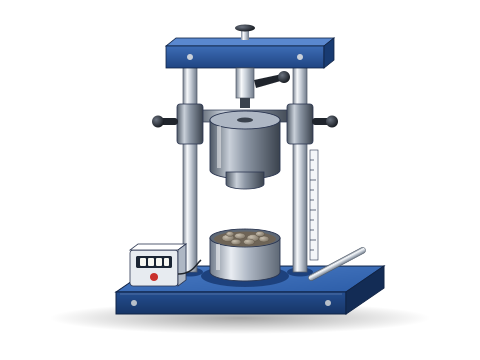
- Impact testing with a falling hammer, then sieving
- AIV tester
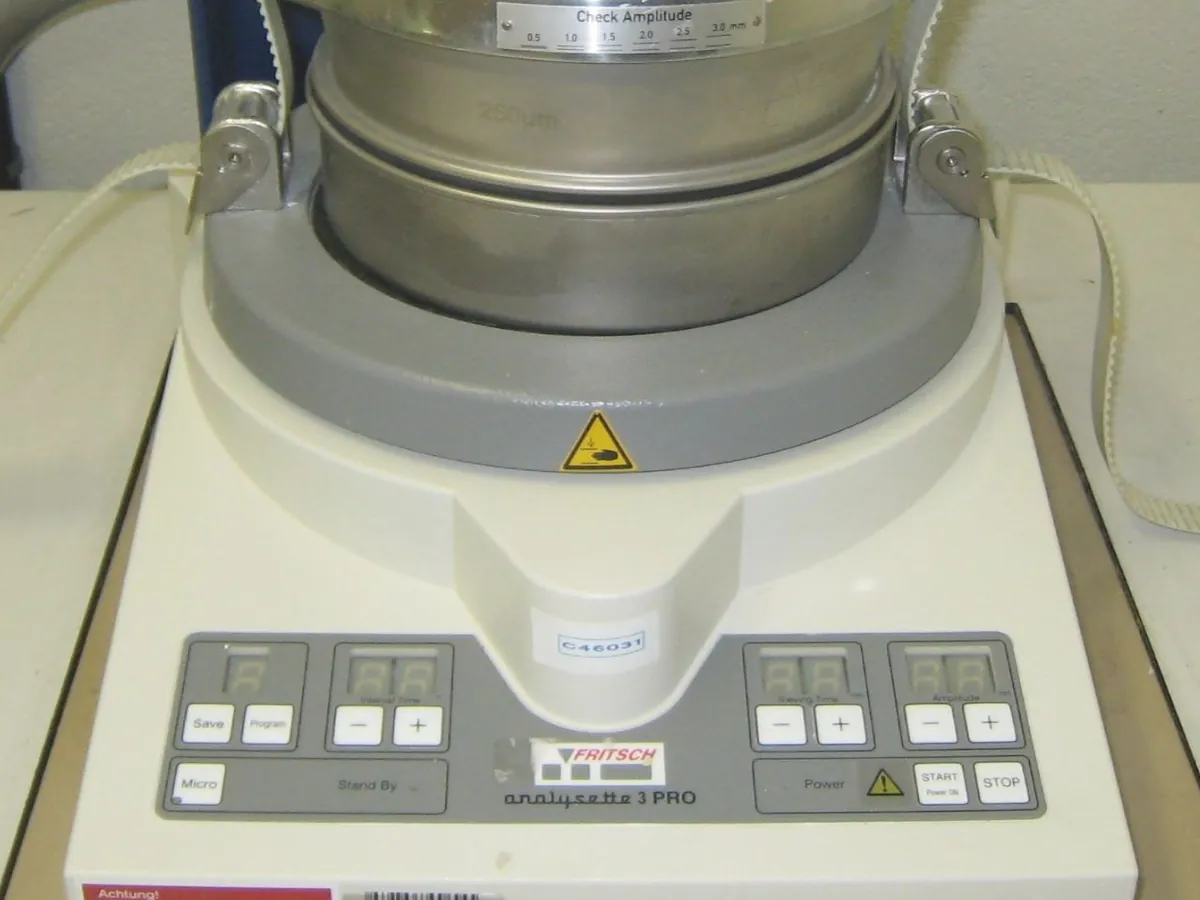
- Sieve shaker
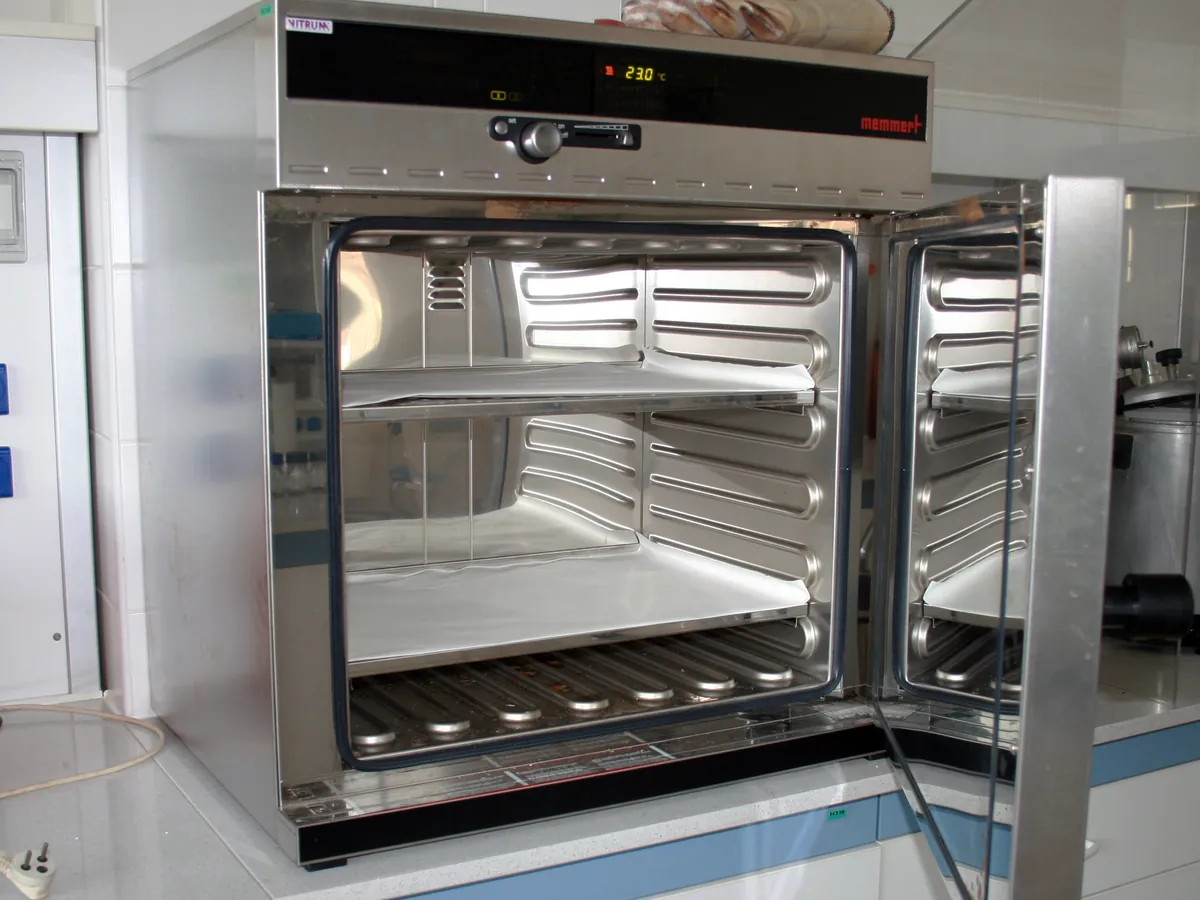
- Hot air oven
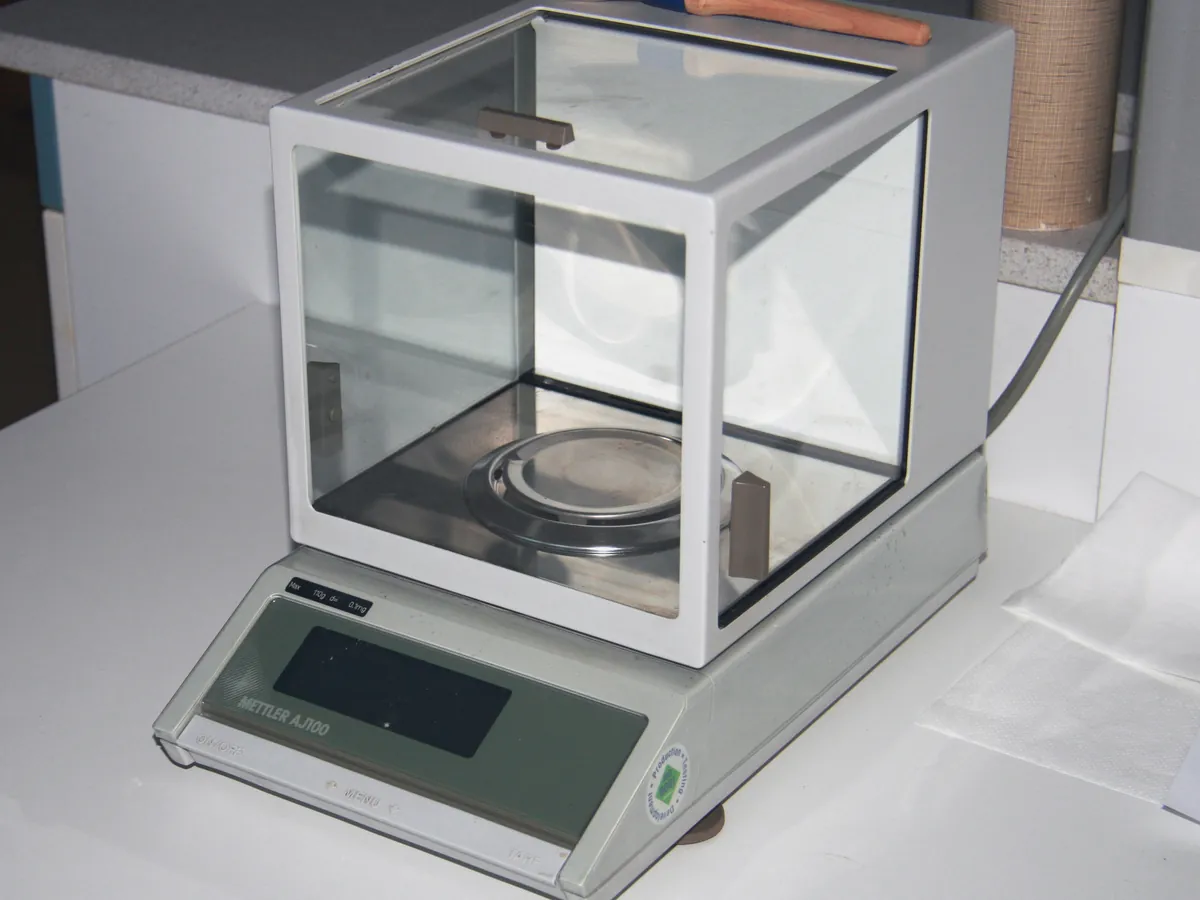
- Analytical balance
Reference: Typical method based on IS 2386 (Part 4); limits from IS 383. Always follow the current editions and your approved SOP.
Why this method works
Road and pavement aggregates are hit repeatedly by wheel loads, and weak stone breaks into dust. The impact test copies this in a simple way. A standard hammer is dropped a fixed height onto the aggregate in a steel cup. The blows crush part of the sample, and the amount that then passes a 2.36 mm sieve shows how easily the stone breaks under shock. Because the hammer mass, drop height and number of blows are fixed, results from different labs can be compared.
Instruments used
Reagents & standards
| Reagent | Grade / specification |
|---|---|
| Test sieves | 12.5 mm, 10 mm and 2.36 mm IS sieves |
| Measure | Cylindrical metal measure, about 75 mm internal diameter and 50 mm deep |
| Tamping rod | Straight steel rod about 10 mm diameter and 230 mm long, with a rounded end |
Preparing the sample
- 01
Grade
Sieve out the fraction passing 12.5 mm and retained on 10 mm.
- 02
Dry
Oven-dry at 100–110 °C for about 4 hours and cool.
- 03
Fill measure
Fill the measure in 3 layers, 25 tamps each; strike off.
- 04
Weigh (A)
Weigh the measured aggregate.
- 05
Impact
Compact in the cup and give 15 hammer blows.
- 06
Sieve (B)
Sieve on 2.36 mm and weigh the fines.
Procedure
- 1Sieve the aggregate and keep the fraction passing the 12.5 mm and retained on the 10 mm sieve.
- 2Dry it in the oven at 100–110 °C for about 4 hours (or to constant mass) and cool it.
- 3Fill the measure in three roughly equal layers. Give each layer 25 strokes with the rounded end of the tamping rod, dropped freely from about 50 mm. Strike off the surface level with the rod.
- 4Weigh the aggregate in the measure (mass A). Use the same mass for the duplicate test.
- 5Place the impact machine on a level, rigid floor. Put the cup in position, transfer the whole sample into it and compact it with 25 strokes of the rod.
- 6Raise the hammer until its lower face is 380 ± 5 mm above the aggregate and let it fall freely. Give 15 blows in total, each at an interval of not less than about 1 second.
- 7Remove the crushed aggregate and sieve it on the 2.36 mm sieve until no more passes. Weigh the fraction passing (mass B) and the fraction retained (mass C).
- 8If A − (B + C) is more than about 1 g, discard the result and test a fresh sample. Carry out two tests and report the mean.
Standard preparation
- 1Check that the hammer mass (typically 13.5–14.0 kg) and drop height (380 ± 5 mm) have been verified within the calibration interval.
- 2Check the 2.36 mm sieve for damage and valid aperture verification.
Notes for analysts
- IS 2386 Part 4 also describes a wet impact test for weak aggregates (when the dry AIV is high); use it only if your specification calls for it.
- Always measure the sample by volume in the measure, not by a fixed mass. Lighter aggregates therefore give a lower mass A.
- A soft floor absorbs part of the blow and gives a falsely low AIV. Bolt the machine to a solid base.
Method parameters (typical)
| Size fraction | Passing 12.5 mm, retained on 10 mm |
|---|---|
| Drying | 100–110 °C, about 4 hours, then cool |
| Filling | 3 layers × 25 tamps in the measure; 25 tamps in the cup |
| Hammer | Typically 13.5–14.0 kg |
| Drop height | 380 ± 5 mm |
| Blows | 15, at intervals of not less than about 1 second |
| Fines sieve | 2.36 mm |
| Replicates | 2; report the mean to the nearest whole number |
System suitability & sequence
| Parameter | Limit |
|---|---|
| Mass loss during test | A − (B + C) not more than about 1 g, otherwise repeat |
| Machine set-up | Base level and rigid; hammer falls freely in its guides |
Typical sequence
- 1Sieve, dry and cool the aggregate
- 2Fill and weigh the measure (A)
- 3Compact in the cup and apply 15 blows
- 4Sieve on 2.36 mm; weigh B and C
- 5Repeat on a second portion and average
Calculation with a worked example
Where
- A
- Oven-dry mass of the test sample (g)
- B
- Mass of fines passing the 2.36 mm sieve after the test (g)
Given
- Test 1
- A = 340.0 g, B = 62.5 g
- Test 2
- A = 338.5 g, B = 61.0 g
Working
- 1Test 1: AIV = 62.5 ÷ 340.0 × 100 = 18.38%
- 2Test 2: AIV = 61.0 ÷ 338.5 × 100 = 18.02%
- 3Mean = (18.38 + 18.02) ÷ 2 = 18.20%
- 4
Report to the nearest whole number: 18%
Aggregate impact value = 18%, well within the typical limits for both wearing and non-wearing concrete surfaces.
What result passes
- Typically, IS 383 limits AIV to not more than 45% for aggregate used in concrete other than for wearing surfaces.
- Typically not more than 30% for concrete wearing surfaces such as runways, roads and pavements.
- Road specifications (for example MoRTH) set their own AIV limits by layer; use the project specification.
- A commonly quoted guide: below about 10% exceptionally strong, 10–20% strong, 20–30% satisfactory for road surfacing, and above about 35% weak.
Validation parameters (ICH Q2(R2))
| Parameter | Typical requirement |
|---|---|
| Approach | Standard method; competence shown by duplicate agreement and proficiency testing |
| Repeatability | Duplicate results should agree closely (e.g. within about 1–2 percentage points); investigate larger differences |
| Equipment control | Hammer mass and drop height verified periodically |
Run this method in LimsPulse: specifications and STPs under version control, results calculated and checked against limits, and a signed Certificate of Analysis.