Physical testing
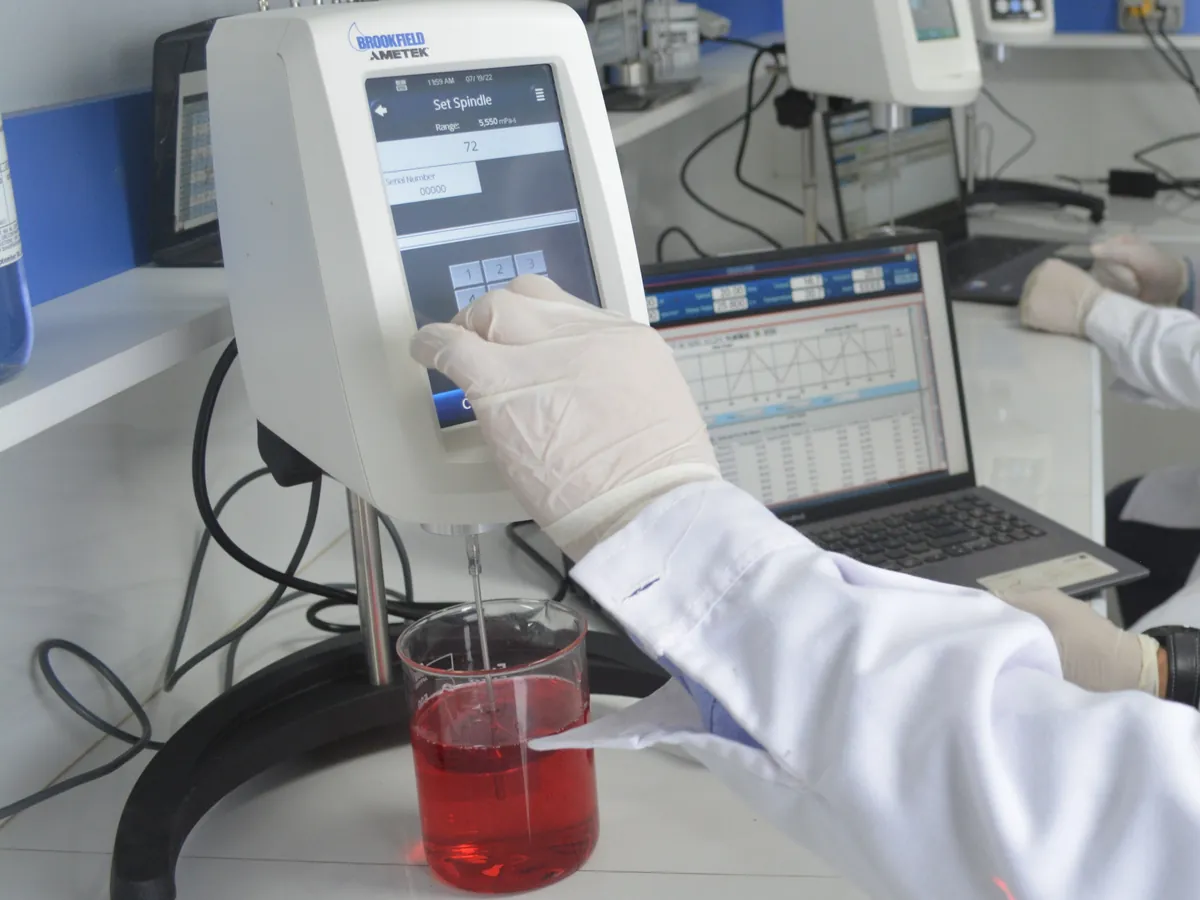
Viscometer / rheometer
Measures how thick a liquid is, that is its resistance to flow (viscosity). Used for syrups, suspensions, gels, creams and polymer solutions.
- Pharmaceutical
- Cosmetics
- Food & beverage
- Paints & coatings
- Polymers
- Petrochemicals
TROUBLESHOOTING
Common problems, causes and fixes
Reading keeps falling with time
Likely causes
- • Shear-thinning or thixotropic sample
- • Sample warming from friction or room
What to do
- • Read at a fixed time as the STP states
- • Check bath temperature and container immersion
Error or 'EEEE' / reading above 100% torque
Likely causes
- • Sample too thick for spindle/speed combination
What to do
- • Use a smaller spindle or lower speed as the STP permits
Very low % torque, poor repeatability
Likely causes
- • Sample too thin for the spindle/speed
- • Instrument not zeroed
What to do
- • Use a larger spindle or higher speed
- • Auto-zero with no spindle attached
Viscosity standard reads out of tolerance
Likely causes
- • Wrong temperature
- • Bent spindle
- • Wrong container size or guard leg missing
- • Instrument not level
What to do
- • Check temperature with a calibrated probe
- • Replace the spindle
- • Use the container and guard leg the calibration requires
- • Level the instrument
Results differ between analysts
Likely causes
- • Different immersion depth or air bubbles
- • Different sample mixing or reading time
What to do
- • Immerse to the mark at an angle
- • Write exact mixing and reading time into the STP
In LimsPulse · Calibration Management
Keep every Viscometer in control: usage logs, calibration and maintenance schedules, and automatic blocking of overdue instruments.