Construction materials testing
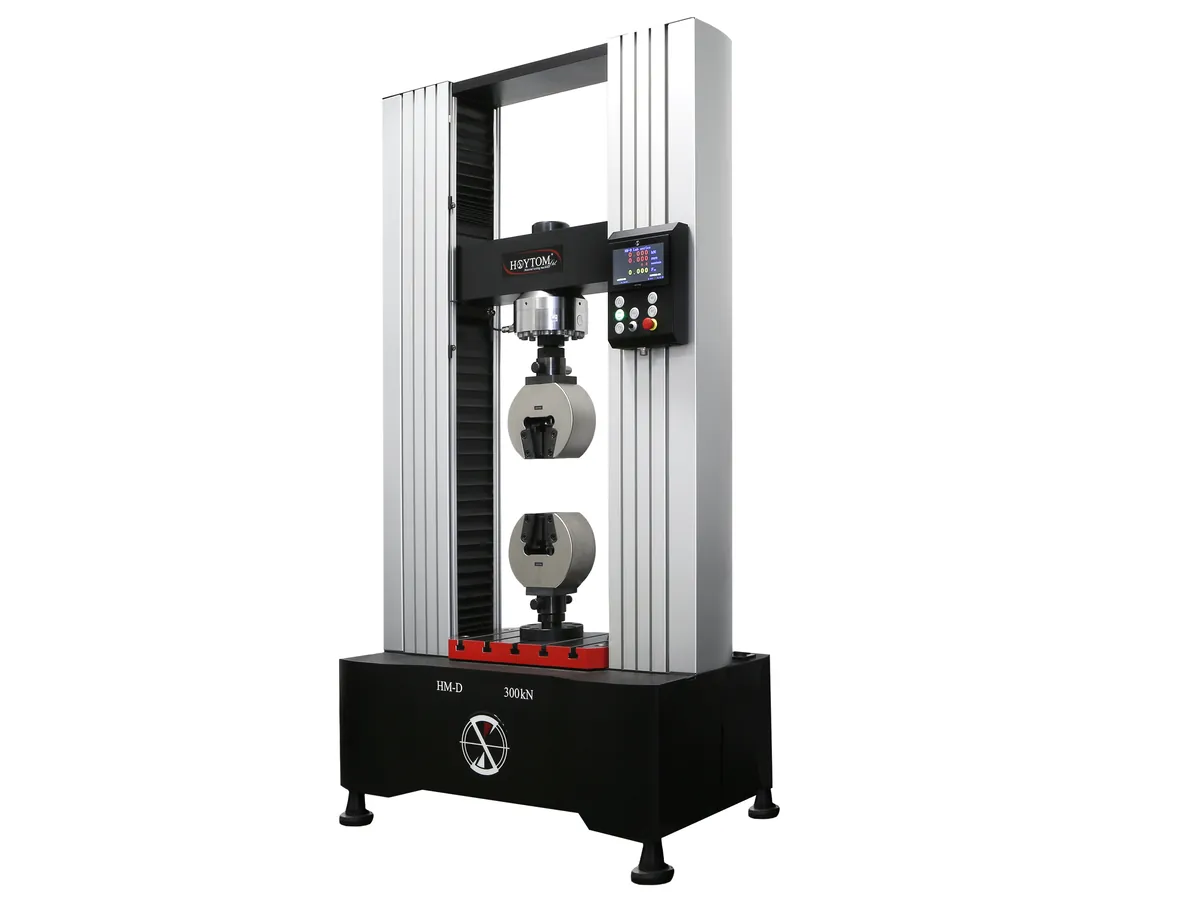
Universal Testing Machine (UTM)
A versatile machine that pulls, compresses or bends specimens while measuring force and extension. In construction labs it is mainly used for tensile testing of reinforcement bars to find yield strength, tensile strength and elongation.
- Construction materials testing
- Steel plants and rolling mills
- Infrastructure projects
- Fabrication and precast yards
- Academic and research labs
Follow your site SOP
This is a typical operating sequence for learning. Your instrument model and approved SOP take precedence.
STAGE 1
Before you start
- 1Check the force and extensometer calibration status labels are in date.
- 2Inspect jaw faces for worn teeth or embedded scale and clean them.
- 3Weigh the bar and measure its length to calculate mass per metre and effective area.
- 4Mark the gauge length on the bar (for example with a punch or marker at fixed intervals).
- Use jaws that match the bar diameter; wrong jaws cause slippage or jaw breaks.
STAGE 2
Setting up
- 1Select the test method in the software and enter specimen details (grade, diameter, area, gauge length).
- 2Grip the bar in the upper jaws, zero the force, then grip the lower end with the bar vertical and centred.
- 3Attach the extensometer at the gauge marks and set its gauge length.
- 4Set the test speed as required by IS 1608 / ISO 6892-1 for the elastic, yield and plastic regions.
- Remove the extensometer (or let the software prompt removal) before fracture unless it is designed to survive it.
STAGE 3
Testing
- 1Close the guard and start the test.
- 2Watch the force–extension curve for slippage (saw-tooth drops) in the elastic part.
- 3Remove the extensometer at the prompt after yield.
- 4Let the test run to fracture; the software records the maximum force.
- Stand clear: bars fracture with a loud bang and broken ends can whip.
STAGE 4
After testing
- 1Release the grips and remove the broken pieces.
- 2Fit the pieces together and measure the final gauge length to find elongation.
- 3Note whether fracture occurred within the gauge length; a break in or near the jaws may invalidate elongation.
- 4Report proof stress, tensile strength, TS/YS ratio and elongation against the IS 1786 grade requirements.
In LimsPulse · Calibration Management
Keep every UTM in control: usage logs, calibration and maintenance schedules, and automatic blocking of overdue instruments.