Sulphur Analyser (XRF / UV Fluorescence)
Measures total sulphur in fuels and oils, either by X-ray fluorescence (fast, non-destructive, from tens of mg/kg to several per cent) or by combustion and ultraviolet fluorescence (very low levels, down to about 1 mg/kg).
- Petroleum refining
- Fuel terminals
- Marine fuel testing
- Regulatory and customs labs
- Biofuel production
- Independent testing laboratories
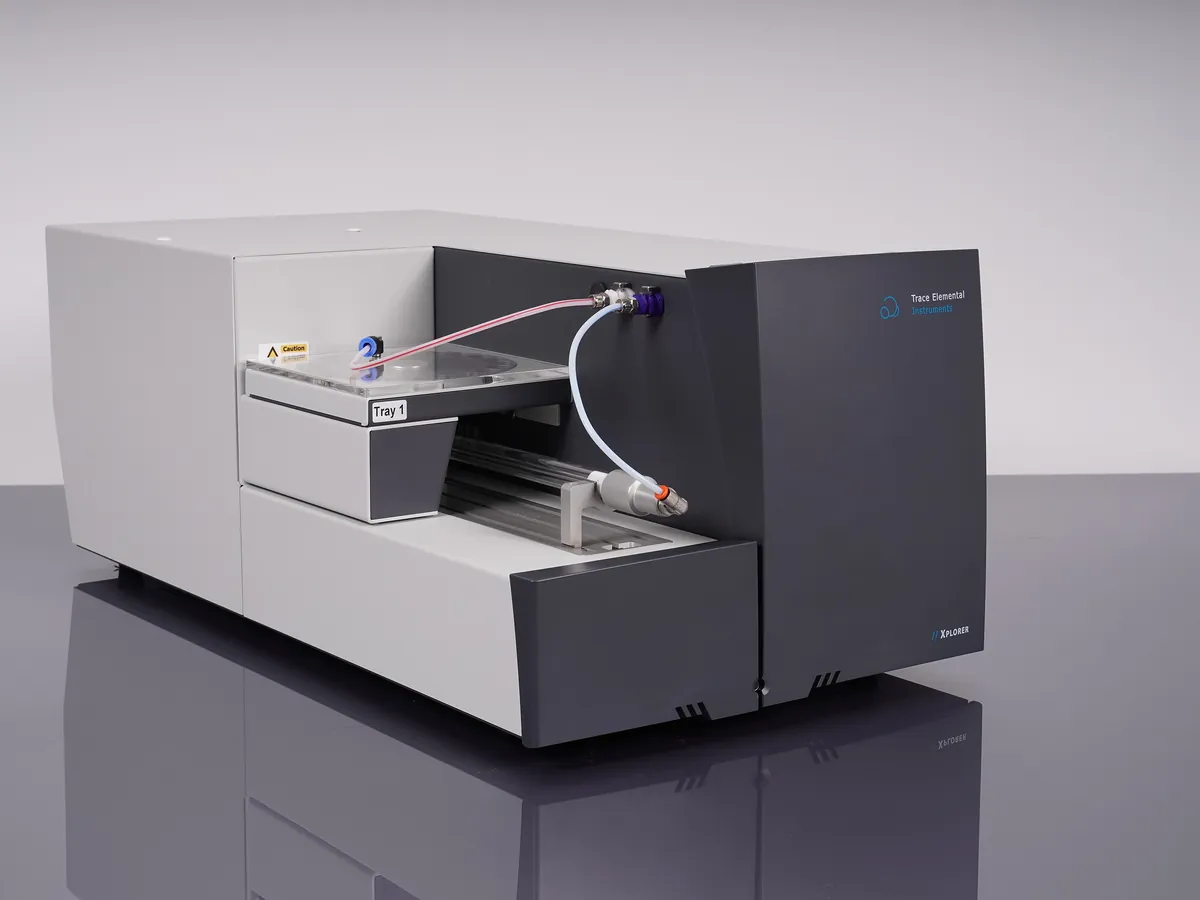
How Sulphur analyser works
Both techniques convert the amount of sulphur into a light signal and compare it with a calibration made from standards of known sulphur content. XRF measures X-rays emitted by sulphur atoms excited by an X-ray tube. UVF burns the sample to SO₂ and measures the fluorescence emitted by excited SO₂ molecules.
The path of a sample
- 01
Calibrate
Standards of known sulphur content (for example di-n-butyl sulphide or dibenzothiophene in a matching solvent or mineral oil) are measured to build a calibration line.
- 02
Introduce sample
XRF: sample poured into a cup with a polyester or polypropylene film window. UVF: a few microlitres injected by syringe or autosampler into the furnace.
- 03
Excite
XRF: an X-ray tube excites sulphur atoms. UVF: the sample burns at about 1000–1100 °C in oxygen, forming SO₂; a membrane dryer removes water; the SO₂ is exposed to UV light.
- 04
Detect
XRF: a detector counts sulphur Kα X-rays at about 2.3 keV. UVF: a photomultiplier tube measures fluorescence from excited SO₂.
- 05
Calculate
The signal is converted to sulphur content (mg/kg or % m/m) from the calibration line, using sample density where volume is injected.
Main parts and what they do
X-ray tube (XRF)
Low-power X-ray source that excites sulphur atoms in the sample.
Sample cups and window film (XRF)
Disposable cups closed with thin polyester or polypropylene film through which X-rays pass.
Detector (XRF)
Proportional counter or silicon drift detector that measures sulphur X-ray intensity.
Helium purge or vacuum (some XRF)
Reduces absorption of the low-energy sulphur X-rays by air.
Combustion furnace and quartz tube (UVF)
Burns the sample completely at about 1000–1100 °C in argon/oxygen.
Sample inlet / autosampler (UVF)
Injects a known volume at a controlled rate, or introduces a boat with the sample.
Membrane dryer (UVF)
Removes water vapour from the combustion gases before detection.
UV lamp and photomultiplier tube (UVF)
Excites SO₂ and measures the fluorescence emitted.
Gas supply (UVF)
High-purity oxygen and argon (or helium) with regulators and flow controllers.
Software
Calibration, QC checks, results, audit trail.
Terms every analyst should know
X-ray fluorescence
When an inner-shell electron is knocked out, an outer electron falls into the gap and emits an X-ray of energy characteristic of the element. For sulphur this is about 2.3 keV.
UV fluorescence of SO₂
SO₂ absorbs UV light (around 190–230 nm) and re-emits light at longer wavelengths. The emitted intensity is proportional to the SO₂ concentration.
Matrix matching
XRF signals depend on what else is in the sample. Standards should match the sample type (for example diesel vs fuel oil), or the software applies a correction.
Units
mg/kg (ppm by mass) for low levels; % m/m (mass/mass) for heavy fuels. For UVF, a volume injection is converted to mass using density.
Limit of quantification
The lowest level that can be measured with acceptable precision. The method chosen must have adequate precision near the specification limit.
Keep every Sulphur analyser in control: usage logs, calibration and maintenance schedules, and automatic blocking of overdue instruments.