Cosmetics testing
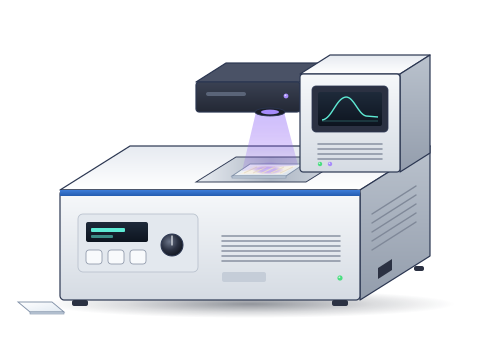
In vitro SPF analyser (UV transmittance analyser)
Measures how much ultraviolet light passes through a thin film of sunscreen spread on a roughened PMMA plate, then calculates in vitro SPF, UVA protection factor and critical wavelength from the transmittance spectrum.
- Cosmetics & personal care
- Sunscreen manufacturers
- UV filter suppliers
- Contract testing labs
- Textiles (UV protection)
TROUBLESHOOTING
Common problems, causes and fixes
Large plate-to-plate variation
Likely causes
- • Uneven spreading
- • Wrong product dose
- • Plates of different roughness or batch
- • Film not settled
What to do
- • Train analysts and standardise spreading time and pressure
- • Weigh the dose on a verified balance
- • Use one plate lot per study and check roughness certificates
- • Keep to the drying time
In vitro SPF far above in vivo value
Likely causes
- • Too much product applied
- • Plate roughness too low
- • Fluorescence from the product
What to do
- • Check the application dose and balance
- • Use plates that meet the method roughness specification
- • Check the instrument's fluorescence handling or use filters
Noisy spectrum below 300 nm
Likely causes
- • Low lamp output at short wavelengths
- • Very high absorbance (little light passes)
- • Dirty optics
What to do
- • Check lamp hours and replace if needed
- • Confirm the dynamic range of the instrument covers the absorbance measured
- • Clean windows and sphere port
Reference sunscreen out of range
Likely causes
- • Instrument drift
- • Plate or glycerine blank problem
- • Expired or badly stored reference product
What to do
- • Repeat the blank and re-verify transmittance with filters
- • Use fresh plates and blank
- • Replace the reference product
Wavelength check fails
Likely causes
- • Monochromator misalignment
- • Filter damaged or out of certification
What to do
- • Call service to realign
- • Recertify or replace the filter
In LimsPulse · Calibration Management
Keep every SPF analyser in control: usage logs, calibration and maintenance schedules, and automatic blocking of overdue instruments.