Physical testing
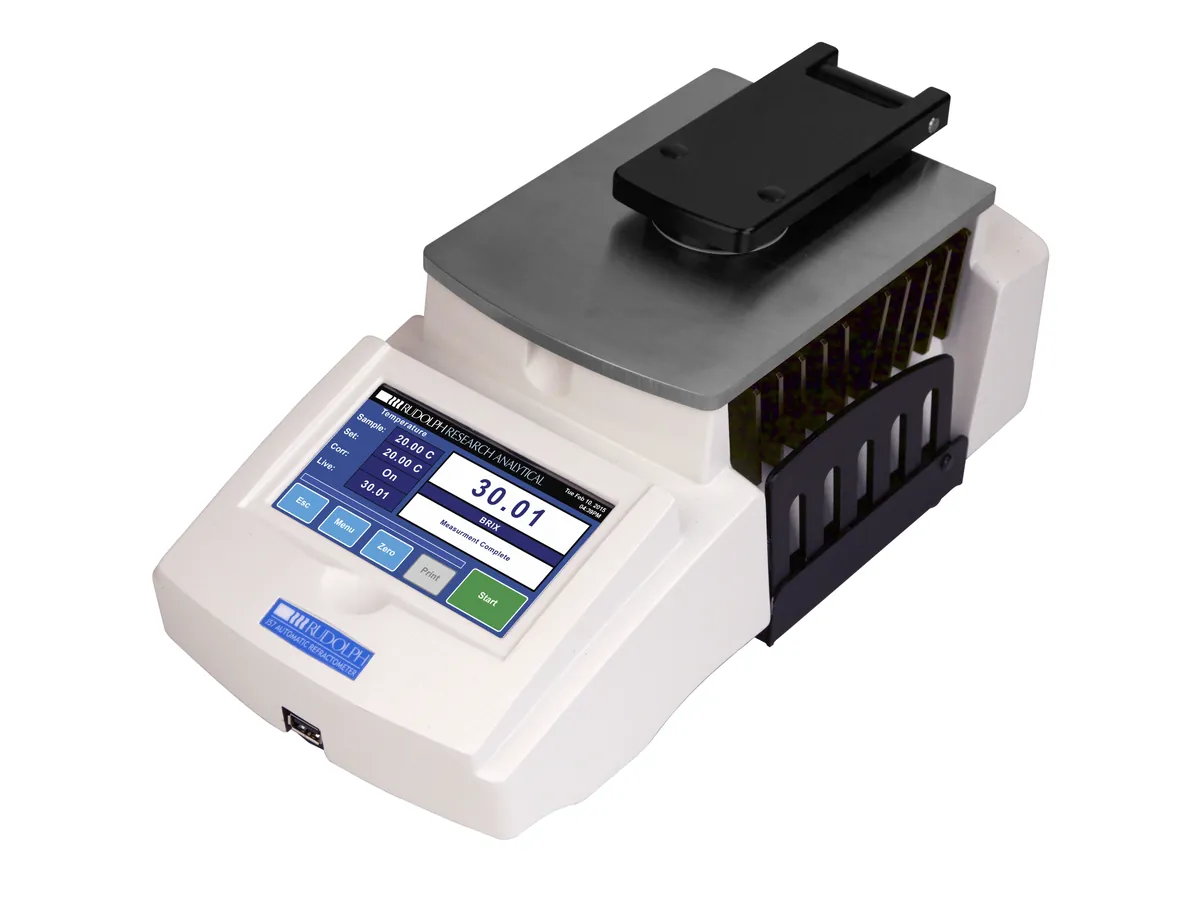
Refractometer
Measures the refractive index of a liquid or melted solid, usually at 20 °C and 589 nm. It is a quick identity and purity test for oils, solvents and syrups.
- Pharmaceutical
- Food & beverage
- Flavours & fragrances
- Chemicals
- Petrochemicals
TROUBLESHOOTING
Common problems, causes and fixes
Blurred or no light–dark boundary
Likely causes
- • Too little sample
- • Bubbles or particles on the prism
- • Sample too dark or opaque
What to do
- • Cover the prism fully
- • Clean and reload without bubbles
- • Use reflected light mode or another method if the sample is opaque
Water check reads wrong
Likely causes
- • Prism not at 20 °C
- • Residue on the prism
- • Water not fresh or not pure
What to do
- • Wait for temperature stability
- • Clean the prism thoroughly
- • Use fresh purified water
Readings drift with time
Likely causes
- • Evaporation of a volatile sample
- • Temperature not stable
What to do
- • Close the cover and read quickly
- • Allow more time for equilibration
Colour fringes on the boundary (Abbe)
Likely causes
- • Compensator not adjusted with white light
What to do
- • Turn the compensator knob until the boundary is sharp and colourless
Results differ between two instruments
Likely causes
- • Different temperatures
- • One instrument out of calibration
What to do
- • Measure both at the same temperature
- • Check both with the reference liquid
In LimsPulse · Calibration Management
Keep every Refractometer in control: usage logs, calibration and maintenance schedules, and automatic blocking of overdue instruments.