Physical testing
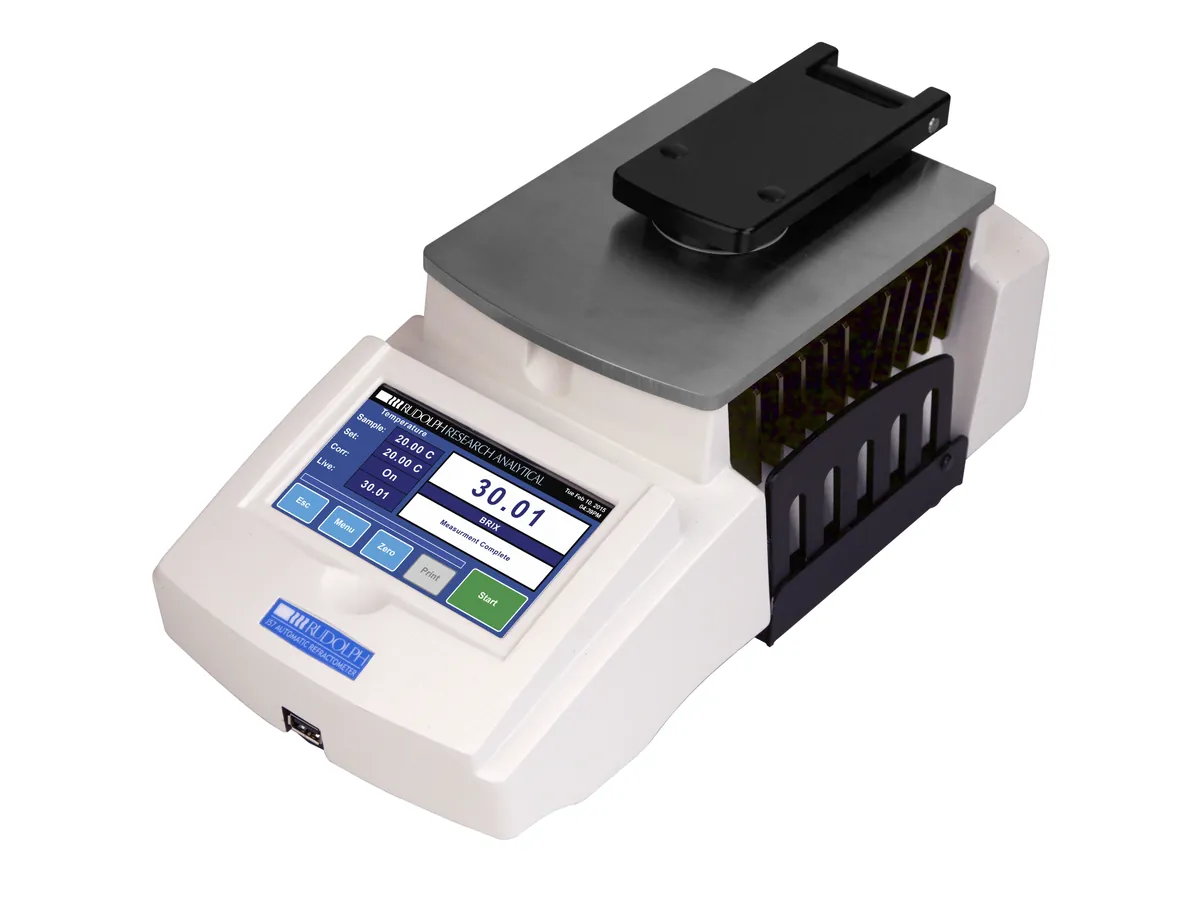
Refractometer
Measures the refractive index of a liquid or melted solid, usually at 20 °C and 589 nm. It is a quick identity and purity test for oils, solvents and syrups.
- Pharmaceutical
- Food & beverage
- Flavours & fragrances
- Chemicals
- Petrochemicals
Follow your site SOP
This is a typical operating sequence for learning. Your instrument model and approved SOP take precedence.
STAGE 1
Before you start
- 1Check the calibration status and that the daily water check (if required) has passed.
- 2Switch on and set the prism temperature (usually 20.0 °C). Wait until it is stable.
- 3Clean the prism with a soft tissue and a suitable solvent, then dry it.
- Never use abrasive tissues or metal tools on the prism.
STAGE 2
Measurement
- 1Place enough sample on the prism to cover it completely (usually a few drops).
- 2Close the cover to reduce evaporation and wait for the temperature to stabilise.
- 3Start the measurement (digital) or line up the boundary with the cross-hairs and read the scale (Abbe).
- 4Record the refractive index and the temperature.
- 5Clean the prism and repeat on a fresh portion; report the mean if your SOP asks for duplicates.
- Solid samples must be melted or dissolved as the monograph describes.
- Bubbles or undissolved particles on the prism give a blurred boundary.
STAGE 3
After use
- 1Clean the prism with a suitable solvent, then water if appropriate, and dry it.
- 2Close the cover and complete the log.
- Remove oils and sticky syrups straight away; dried residues are hard to clean and can damage the prism seal.
In LimsPulse · Calibration Management
Keep every Refractometer in control: usage logs, calibration and maintenance schedules, and automatic blocking of overdue instruments.