Refractometer
Measures the refractive index of a liquid or melted solid, usually at 20 °C and 589 nm. It is a quick identity and purity test for oils, solvents and syrups.
- Pharmaceutical
- Food & beverage
- Flavours & fragrances
- Chemicals
- Petrochemicals
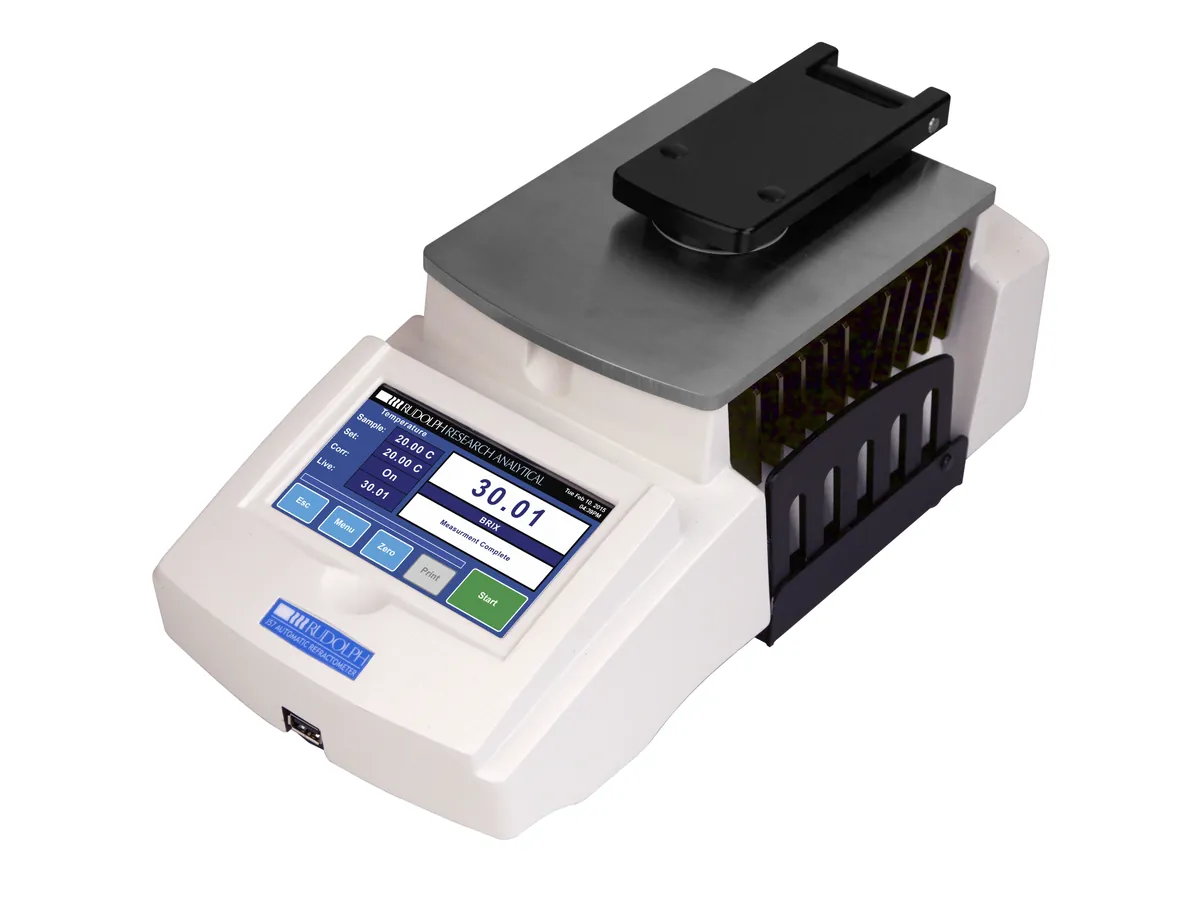
Test your Refractometer knowledge
Multiple-choice questions
Pick an answer to see whether you are right and why.
Q1. The refractive index of purified water at 20 °C is about:
basicQ2. In the symbol n20D, the letter D refers to:
basicQ3. Most refractometers measure refractive index using:
intermediateQ4. As temperature increases, the refractive index of most liquids:
intermediateQ5. Which material should never be used to clean a refractometer prism?
basicQ6. Why is refractive index alone not enough to prove the identity of a liquid?
advanced
Viva questions
Think of your answer first, then open it to compare.
1. How would you check a refractometer before use?
Clean the prism, let it reach 20 °C, put fresh purified water on it and confirm the reading is about 1.3330 within the SOP limit. If it is out, clean and repeat, then adjust or report.
2. What is degrees Brix and where is it used?
Brix is a refractive-index scale for sucrose solutions; 1 °Brix is about 1 g sucrose per 100 g solution. It is used to check sugar content of syrups and juices.
3. Why should you close the sample cover when measuring a volatile solvent?
Volatile liquids evaporate from the thin film on the prism. Evaporation cools the sample and changes its composition, so the reading drifts. The cover limits evaporation.
Keep every Refractometer in control: usage logs, calibration and maintenance schedules, and automatic blocking of overdue instruments.