Construction materials testing
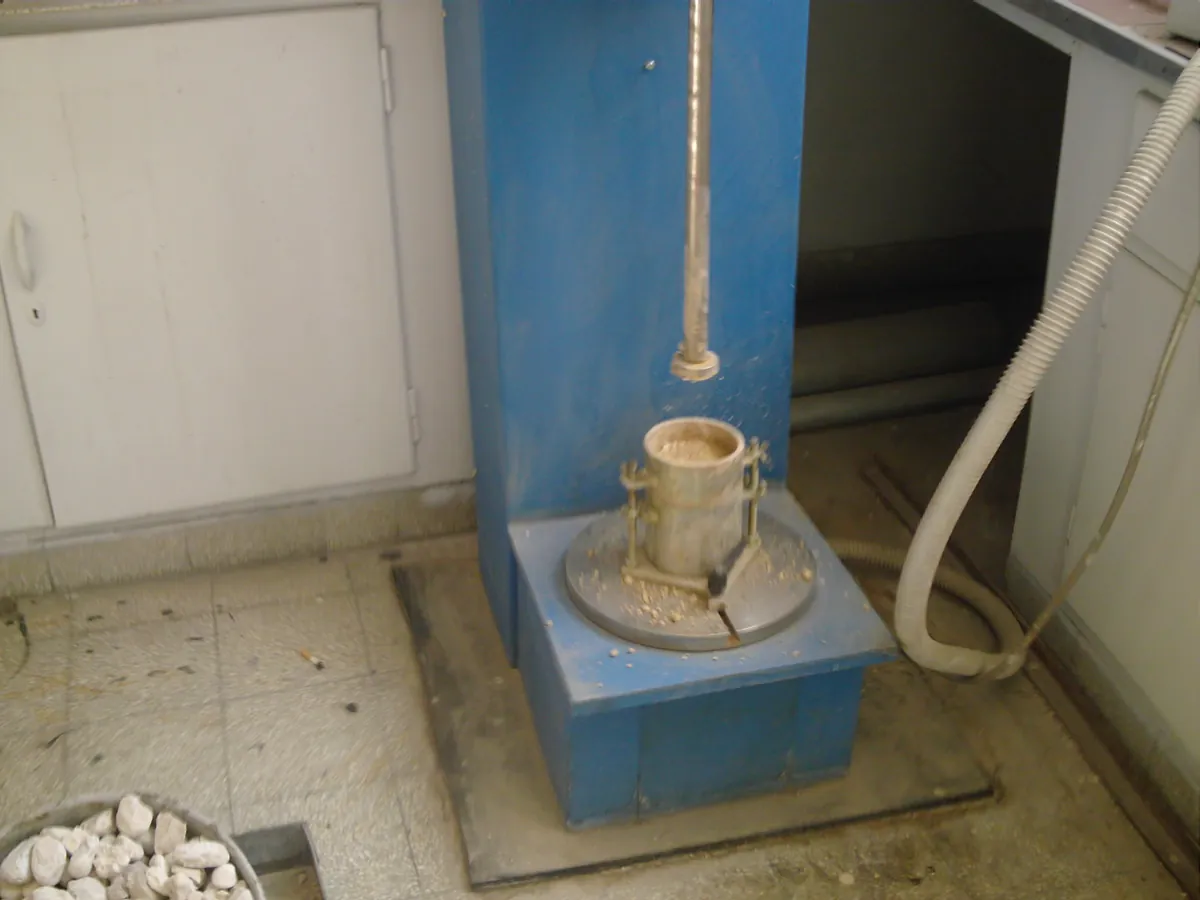
Proctor Compaction Apparatus
A cylindrical mould and a rammer of fixed mass and drop height used to compact soil at different water contents and find its maximum dry density (MDD) and optimum moisture content (OMC).
- Geotechnical testing
- Road and highway construction
- Railways and airports
- Dams and embankments
- Construction materials testing
TROUBLESHOOTING
Common problems, causes and fixes
MDD lower than expected
Likely causes
- • Rammer not falling freely (blocked vent, dirty sleeve)
- • Drop height too short
- • Compacted on a soft surface
What to do
- • Clean sleeve and vents
- • Check drop height
- • Compact on a solid concrete floor or block
Compaction curve has no clear peak
Likely causes
- • Water content points too close together or all on one side
- • Soil reused many times and particles crushed
What to do
- • Spread points around the expected OMC
- • Use fresh soil for each point if particles break down
Last layer too high or too low
Likely causes
- • Uneven layer quantities
What to do
- • Weigh equal portions for each layer
Results differ between manual and automatic compactor
Likely causes
- • Uneven blow pattern by hand
- • Automatic compactor not calibrated
What to do
- • Train operators on blow pattern
- • Calibrate the automatic compactor against the manual method
In LimsPulse · Calibration Management
Keep every Proctor apparatus in control: usage logs, calibration and maintenance schedules, and automatic blocking of overdue instruments.