Microbiology & sterility
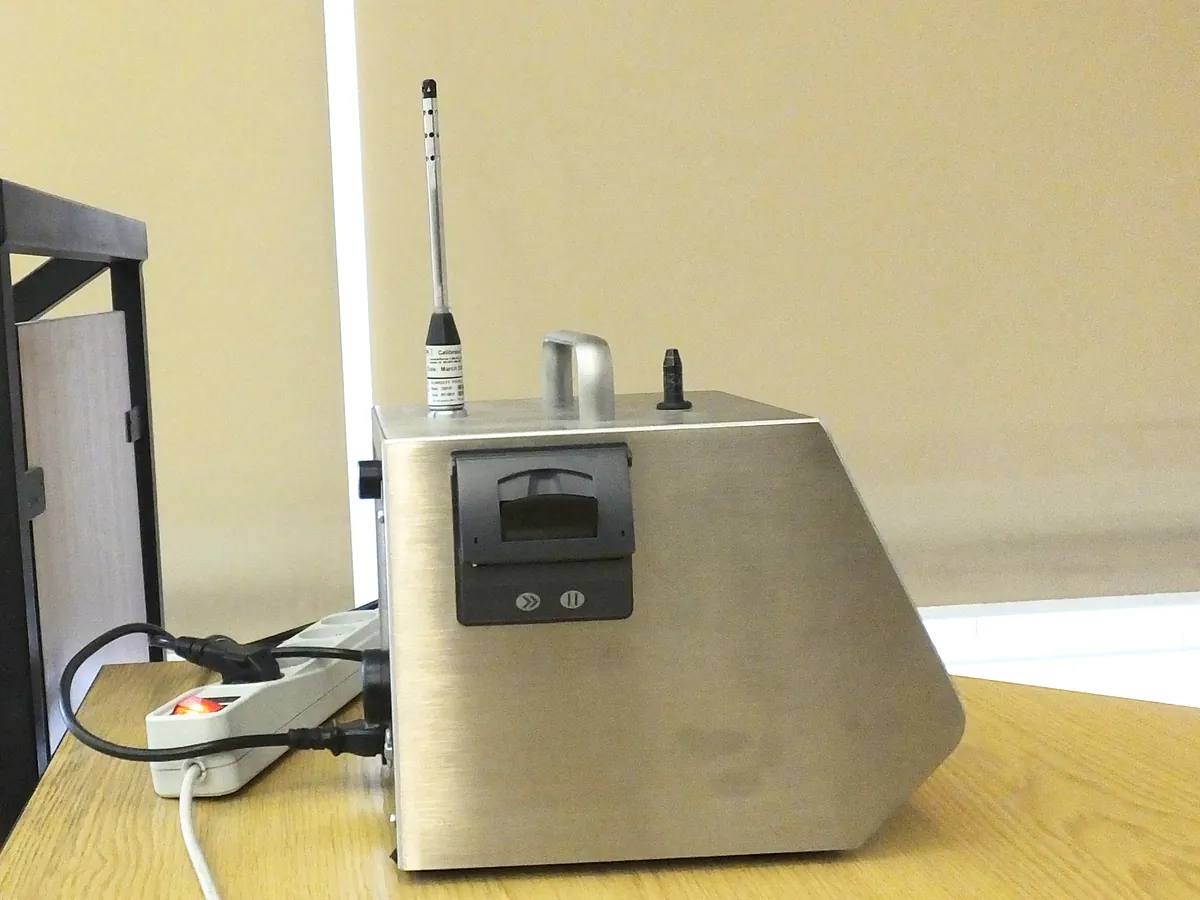
Airborne particle counter
Counts and sizes airborne particles, typically at ≥0.5 µm and ≥5.0 µm, by measuring light scattered as each particle passes through a laser beam. Used to classify clean rooms and to monitor non-viable particles in Grades A–D.
- Pharmaceutical
- Biotech
- Medical devices
- Semiconductors
- Hospitals
- Aerospace
TROUBLESHOOTING
Common problems, causes and fixes
Counts with the purge filter fitted
Likely causes
- • Contaminated sensor or inlet
- • Leak at the filter connection
- • Electronic noise or laser fault
What to do
- • Purge for longer and re-check
- • Refit the filter
- • Send for cleaning and service
Flow alarm
Likely causes
- • Blocked inlet or kinked tubing
- • Pump wear
What to do
- • Clear the inlet and straighten tubing
- • Service and recalibrate the pump
Sudden high counts in Grade A
Likely causes
- • Real excursion: intervention, HEPA leak or HVAC failure
- • Probe disturbed or touched
What to do
- • Follow the excursion SOP and assess the impact on product
- • Check the HVAC and filter status
- • Review video and operator activity
Very low ≥5.0 µm counts compared with history
Likely causes
- • Long tubing or bends losing large particles
- • Sensor degraded
What to do
- • Shorten tubing
- • Check calibration and counting efficiency
In LimsPulse · Calibration Management
Keep every Particle counter in control: usage logs, calibration and maintenance schedules, and automatic blocking of overdue instruments.