Microbiology & sterility
Airborne particle counter
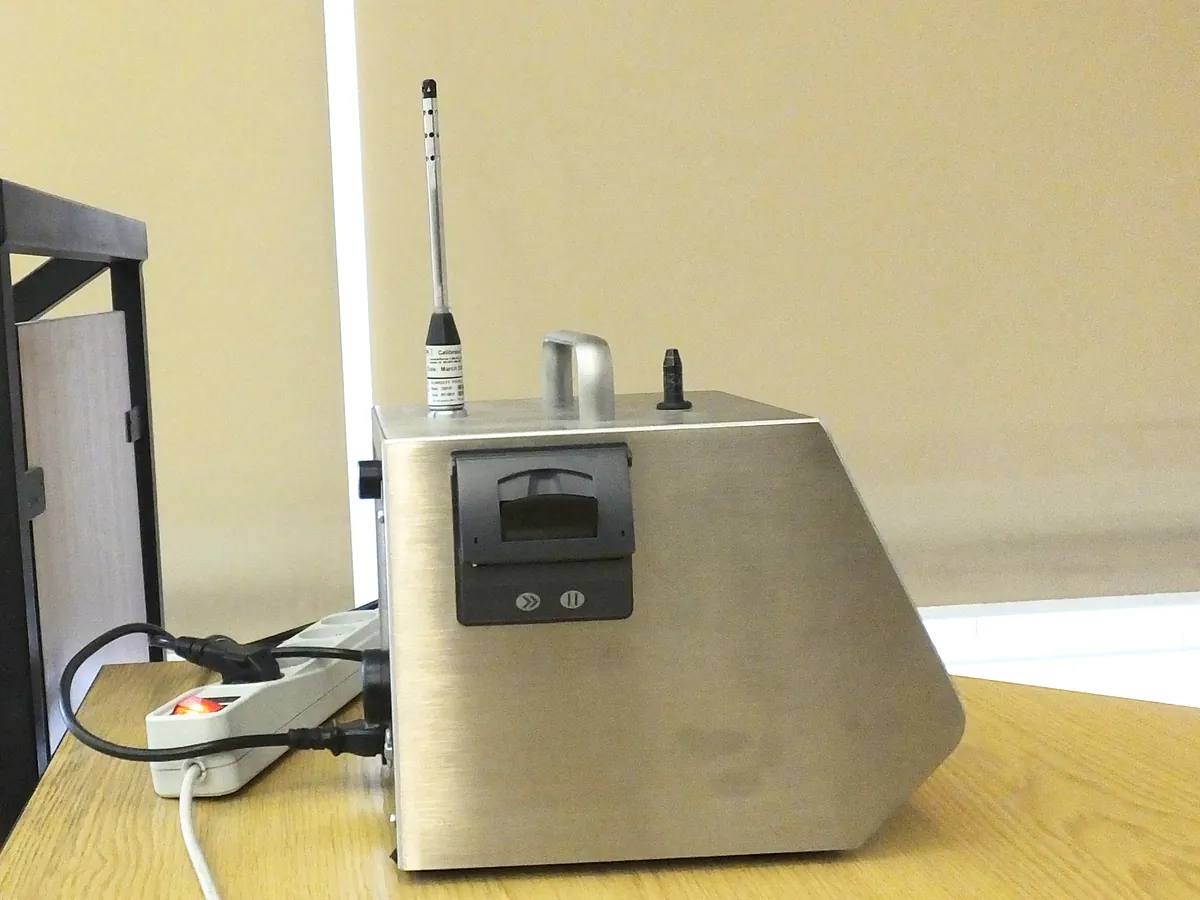
Counts and sizes airborne particles, typically at ≥0.5 µm and ≥5.0 µm, by measuring light scattered as each particle passes through a laser beam. Used to classify clean rooms and to monitor non-viable particles in Grades A–D.
- Pharmaceutical
- Biotech
- Medical devices
- Semiconductors
- Hospitals
- Aerospace
Follow your site SOP
This is a typical operating sequence for learning. Your instrument model and approved SOP take precedence.
STAGE 1
Before sampling
- 1Check the calibration label is in date and the battery is charged.
- 2Fit the zero-count (purge) filter and run a zero count; it should read zero or within the manufacturer's false count limit.
- 3Wipe the counter and probe with sterile 70% IPA before taking them into a clean area.
- 4Set the sample volume, the size channels and the location IDs as per the SOP.
- Do not take the counter into Grade A/B without the approved cleaning and transfer steps.
STAGE 2
Sampling
- 1Place the isokinetic probe at working height, facing into the airflow.
- 2Use the shortest possible tubing and avoid sharp bends.
- 3Run the sample for the defined volume (e.g. 1 m³ for Grade A classification) and stand away from the probe.
- 4Record the counts for each channel and any alarms.
- People near the probe release particles; keep your distance during sampling.
STAGE 3
After sampling
- 1Download or print the data and attach to the record.
- 2Compare counts with the alert and action limits for the grade.
- 3Clean the counter and store it with the inlet capped.
In LimsPulse · Calibration Management
Keep every Particle counter in control: usage logs, calibration and maintenance schedules, and automatic blocking of overdue instruments.