Volumetric & glassware
Micropipette (Piston-Operated Pipette)
A hand-held, piston-operated device that measures and dispenses small liquid volumes, typically 0.1 µL to 10 mL, using disposable tips. Used for standards, dilutions, microbiology and bioassays.
- Pharmaceutical
- Biotech
- Clinical diagnostics
- Universities
- Food & beverage
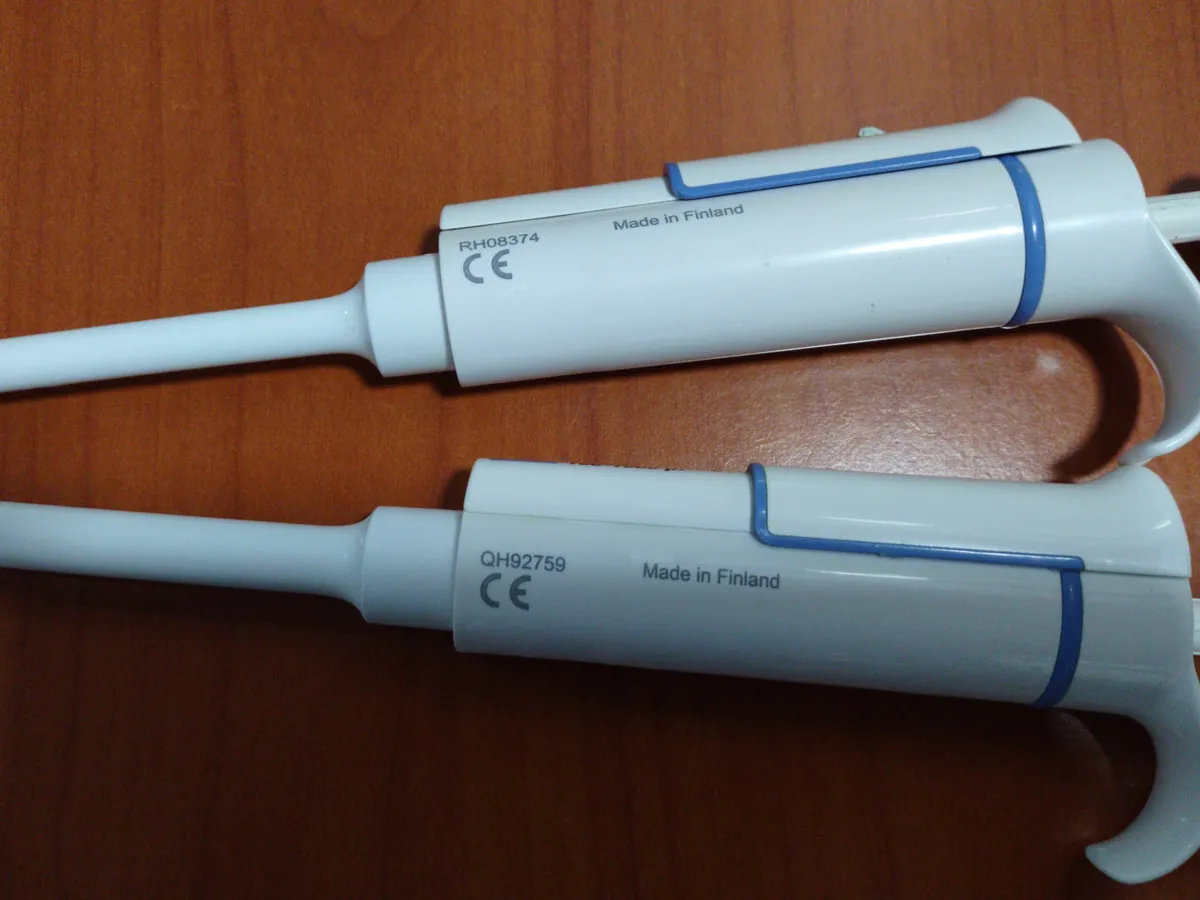
Follow your site SOP
This is a typical operating sequence for learning. Your instrument model and approved SOP take precedence.
STAGE 1
Before use
- 1Check the calibration label is within date.
- 2Choose a pipette whose range includes the required volume, ideally using it above about 35% of its maximum volume.
- 3Let pipette, tips and liquid reach room temperature.
- 4Check for leaks: aspirate, hold the pipette vertically for a few seconds and watch for a drop forming.
STAGE 2
Pipetting
- 1Pre-wet a new tip by aspirating and dispensing the liquid two or three times.
- 2Hold the pipette vertically and immerse the tip only a few millimetres below the surface.
- 3Release the plunger slowly and smoothly, wait about a second, then withdraw the tip.
- 4Dispense against the vessel wall, press to the blow-out stop and slide the tip up the wall.
- 5Change the tip for each new sample or standard.
- Never lay a pipette down with liquid in the tip: liquid can run into the shaft and damage it.
STAGE 3
After use
- 1Eject the tip and set the volume to the maximum to relax the spring.
- 2Store the pipette vertically on its stand.
In LimsPulse · Calibration Management
Keep every Micropipette in control: usage logs, calibration and maintenance schedules, and automatic blocking of overdue instruments.