Los Angeles Abrasion Machine
A rotating steel drum in which coarse aggregate is tumbled with steel balls for a fixed number of revolutions. The percentage worn down to fines (the LA abrasion value) measures resistance to abrasion and impact.
- Construction materials testing
- Road and highway construction
- Railways
- Quarries
- Academic labs
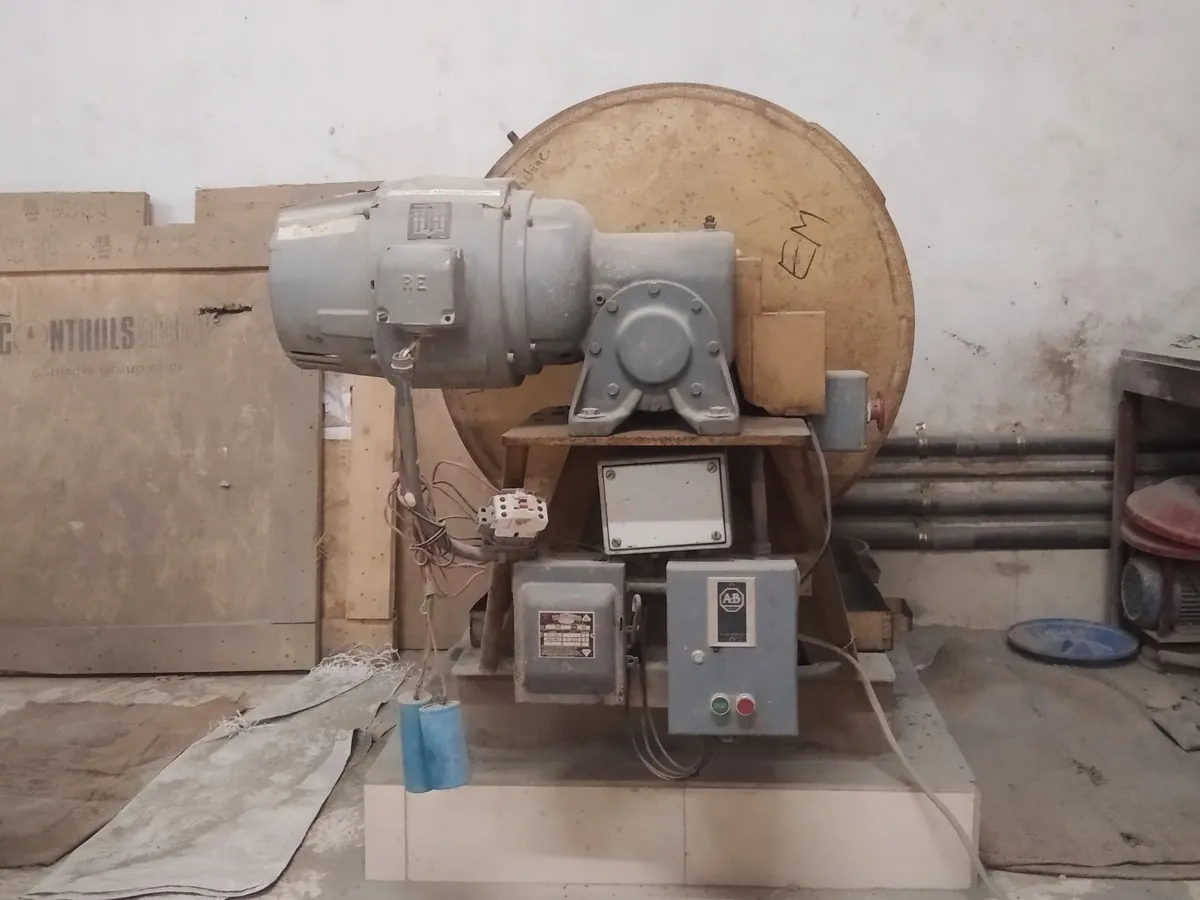
What is LA abrasion machine?
The Los Angeles (LA) abrasion test measures how much coarse aggregate wears and breaks when it is tumbled with steel balls. A graded sample (typically 5 kg for the common gradings) is placed in a closed steel drum, about 700 mm in diameter and 500 mm long, together with an abrasive charge of steel spheres. The drum turns at about 30 to 33 revolutions per minute.
Inside the drum a steel shelf picks up the aggregate and balls and drops them on each revolution, giving an impact as well as grinding action. After the specified number of revolutions (typically 500 for gradings A–D and 1000 for the larger gradings), the material is sieved on a 1.70 mm sieve. The loss, as a percentage of the original mass, is the LA abrasion value.
The method is in IS 2386 Part 4 and ASTM C131 (small-size coarse aggregate) and ASTM C535 (large-size). IS 383 typically limits LA abrasion to not more than 50% for general concrete and not more than 30% for wearing surfaces.
Used for
- Abrasion resistance of coarse aggregate for concrete (IS 383)
- Approval of road aggregates for bituminous and granular layers
- Railway ballast quality
- Comparing quarries and checking production consistency
How it works
- 01
Choose grading
The sample is prepared to one of the standard gradings (A, B, C, D… ) that best matches the aggregate in use.
- 02
Weigh
The washed and oven-dried sample (typically 5000 g for A–D) is weighed.
- 03
Load charge
The correct number of steel spheres for the grading is placed in the drum with the sample (e.g. 12 spheres for grading A).
- 04
Rotate
The drum turns at 30–33 rpm for the required revolutions, usually 500.
- 05
Sieve
Material is removed and sieved on a 1.70 mm sieve; the retained portion is washed, dried and weighed.
- 06
Calculate
Abrasion value = (original mass − mass retained on 1.70 mm) ÷ original mass × 100.
Advantages
- Widely specified and understood worldwide
- Combines abrasion and impact, like real service conditions
- Large sample is more representative than the impact test
- Simple to operate with a revolution counter
Limitations
- Noisy and heavy; needs a solid foundation and enclosure
- Long test (about 15–35 minutes depending on revolutions)
- Results depend on correct grading, abrasive charge and drum speed
- Worn shelf or balls reduce severity and give low values
1 calibration procedure
Methods that use LA abrasion machine
Keep every LA abrasion machine in control: usage logs, calibration and maintenance schedules, and automatic blocking of overdue instruments.