Los Angeles Abrasion Value
A graded sample of coarse aggregate is tumbled with a set number of steel spheres in a rotating drum. The material worn down to pass a 1.70 mm sieve is expressed as a percentage of the original mass.
- Construction materials
- Rotating drum with steel spheres, then sieving
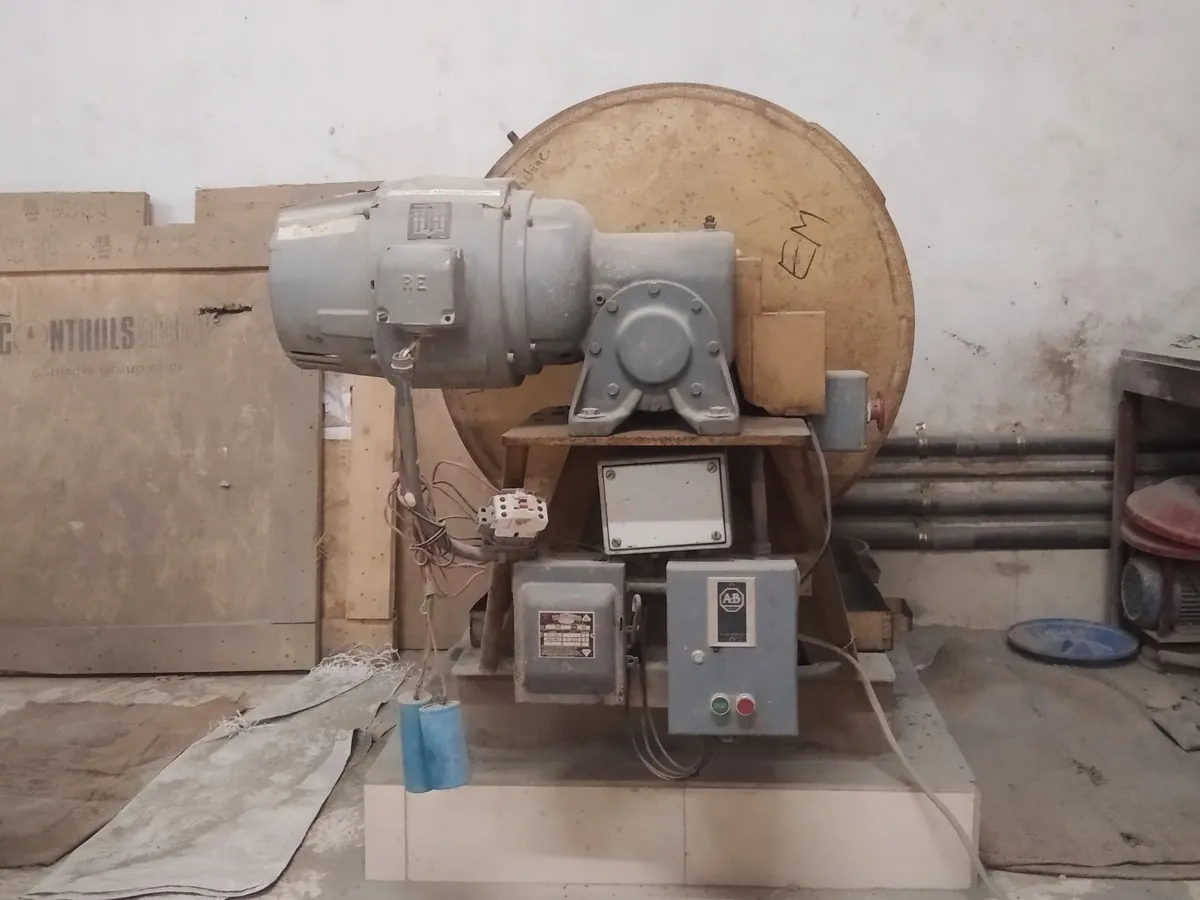
- LA abrasion machine
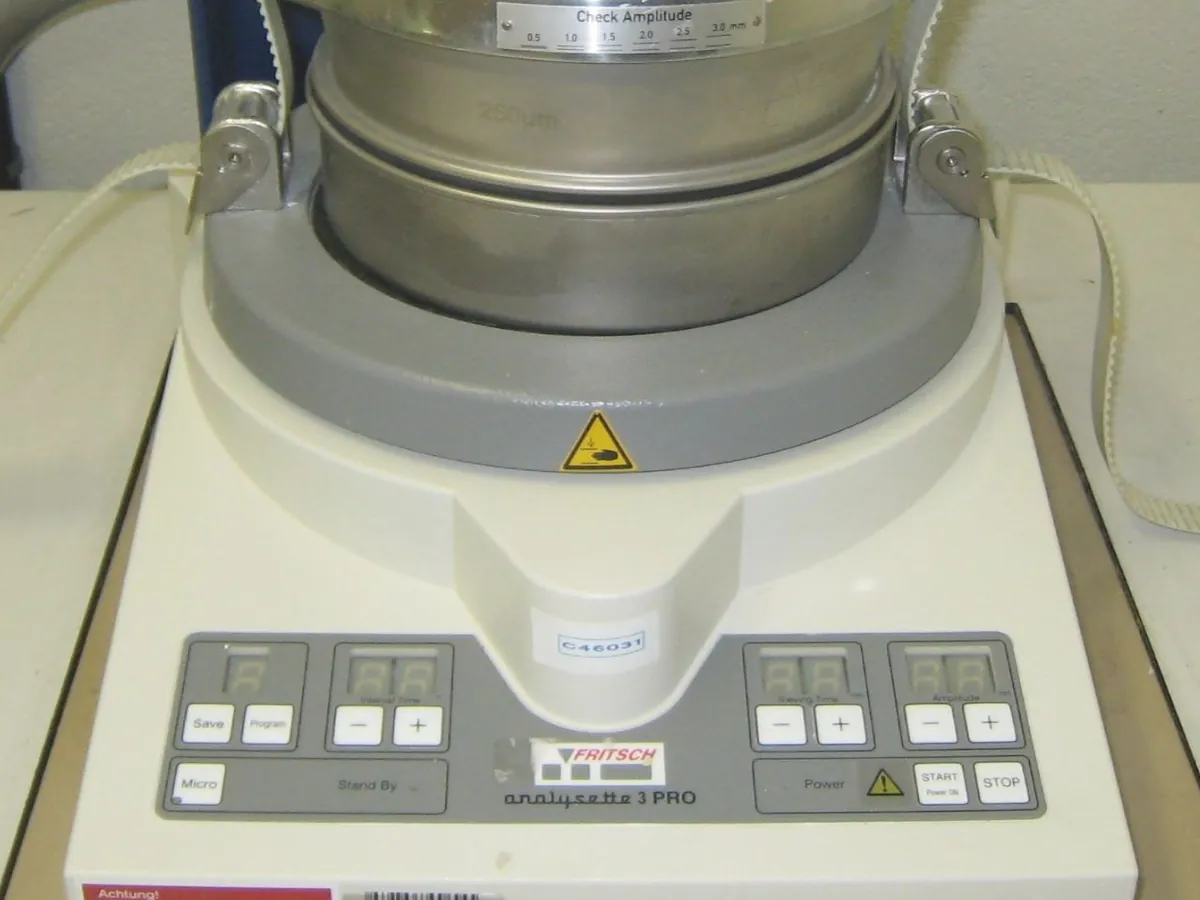
- Sieve shaker
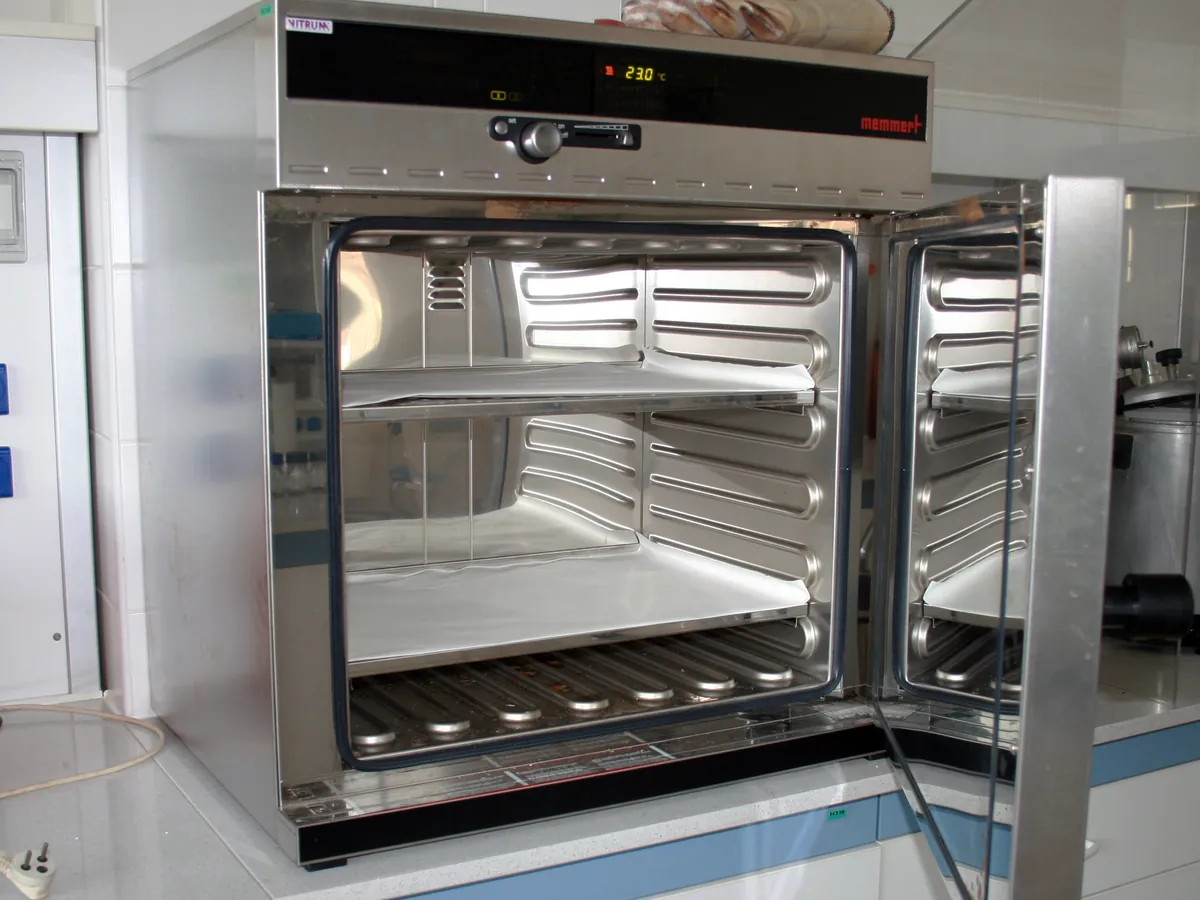
- Hot air oven
- Analytical balance
Reference: Typical method based on IS 2386 (Part 4) and ASTM C131; limits from IS 383. Always follow the current editions and your approved SOP.
Why this method works
Inside the drum a steel shelf lifts the aggregate and spheres and drops them on each turn. The particles are both hit (impact) and rubbed against each other and the spheres (abrasion). Hard, tough stone loses little mass; soft or weathered stone breaks down. The loss is measured as the material passing a 1.70 mm sieve after a fixed number of revolutions. The sample grading and the number of spheres are matched (Gradings A to D for normal sizes), so that each test has a similar energy per particle.
Instruments used

Reagents & standards
| Reagent | Grade / specification |
|---|---|
| Abrasive charge | Steel spheres about 48 mm in diameter, each typically 390–445 g; the number depends on the grading (e.g. 12 for Grading A, 11 for B, 8 for C, 6 for D) |
| Test sieves | Sieves for preparing the grading, and a 1.70 mm sieve for the wear fraction |
Preparing the sample
- 01
Choose grading
Pick the grading (A–G) closest to the aggregate as supplied.
- 02
Prepare
Wash, oven-dry and make up the size fractions to mass.
- 03
Load
Put the sample and the matching abrasive charge in the drum.
- 04
Rotate
Run 500 revolutions at 30–33 rpm (Gradings A–D).
- 05
Sieve
Sieve on 1.70 mm; wash, dry and weigh the coarse part.
- 06
Calculate
Express the loss as % of the original mass.
Procedure
- 1Choose the grading that best represents the aggregate. For example, Grading B uses about 2500 g of 20–12.5 mm and 2500 g of 12.5–10 mm aggregate (5000 g total). See the current table for all gradings.
- 2Wash the fractions, dry them at 105–110 °C to constant mass, cool and weigh them to make up the test sample (mass A, typically 5000 ± 10 g for Gradings A–D).
- 3Check the drum is clean and empty. Place the sample and the correct number of spheres in the drum and close the cover tightly.
- 4Rotate the drum at 30–33 rpm for 500 revolutions (Gradings A–D). Larger gradings (E–G) use 1000 revolutions; follow the table in the standard.
- 5Discharge the material onto a tray, remove the spheres and sieve the material on a coarser sieve first, then on the 1.70 mm sieve.
- 6Wash the material retained on 1.70 mm, dry it to constant mass at 105–110 °C, cool and weigh it (mass B).
Standard preparation
- 1Verify the drum speed, revolution counter and mass of the abrasive charge within the calibration interval.
- 2Check that the internal shelf is firmly fixed and not worn badly; a worn shelf lowers the wear result.
Notes for analysts
- Some laboratories also check uniformity by sieving after 100 revolutions; a large loss at 100 revolutions relative to 500 shows a non-uniform or weathered stone.
- Use the grading closest to the material as supplied. Testing an artificial grading can give a misleading result.
- ASTM C535 covers the larger gradings with 1000 revolutions; IS 2386 Part 4 includes them in one table.
Method parameters (typical)
| Drum | Hollow steel cylinder about 700 mm internal diameter and 500 mm long, with an internal shelf |
|---|---|
| Speed | 30–33 rpm |
| Revolutions | 500 for Gradings A–D; 1000 for Gradings E–G |
| Sample mass | Typically 5000 ± 10 g for Gradings A–D |
| Abrasive charge | Typically about 5000 g (A), 4584 g (B), 3330 g (C), 2500 g (D); see current table |
| Wear sieve | 1.70 mm |
| Drying | 105–110 °C to constant mass |
System suitability & sequence
| Parameter | Limit |
|---|---|
| Revolution counter | Stops at the set number of revolutions |
| Charge mass | Within the tolerance stated for the grading |
Typical sequence
- 1Select grading and prepare the sample (A)
- 2Load sample and charge
- 3Run the set revolutions
- 4Sieve on 1.70 mm; wash, dry and weigh (B)
- 5Calculate % wear
Calculation with a worked example
Where
- A
- Original oven-dry mass of the sample (g)
- B
- Oven-dry mass retained on the 1.70 mm sieve after the test (g)
Given
- Grading
- B, 500 revolutions
- Original mass A
- 5000 g
- Retained on 1.70 mm after washing and drying, B
- 3920 g
Working
- 1
Loss = A − B = 5000 − 3920 = 1080 g
- 2% wear = 1080 ÷ 5000 × 100 = 21.6%
Los Angeles abrasion value = 21.6% (report as 22%), within the typical limits for wearing and non-wearing concrete.
What result passes
- Typically, IS 383 limits the abrasion value to not more than 50% for aggregate used in concrete other than for wearing surfaces.
- Typically not more than 30% for concrete wearing surfaces.
- Road and railway specifications set their own limits by layer (for example lower limits for bituminous surfacing); use the project specification.
Validation parameters (ICH Q2(R2))
| Parameter | Typical requirement |
|---|---|
| Approach | Standard method; competence shown by repeat tests and proficiency testing |
| Repeatability | Results on split samples should agree closely; ASTM C131 gives precision statements for guidance |
| Equipment control | Drum speed, shelf condition and charge mass verified periodically |
Run this method in LimsPulse: specifications and STPs under version control, results calculated and checked against limits, and a signed Certificate of Analysis.