LA abrasion machine · Calibration procedure
Drum speed and abrasive charge check
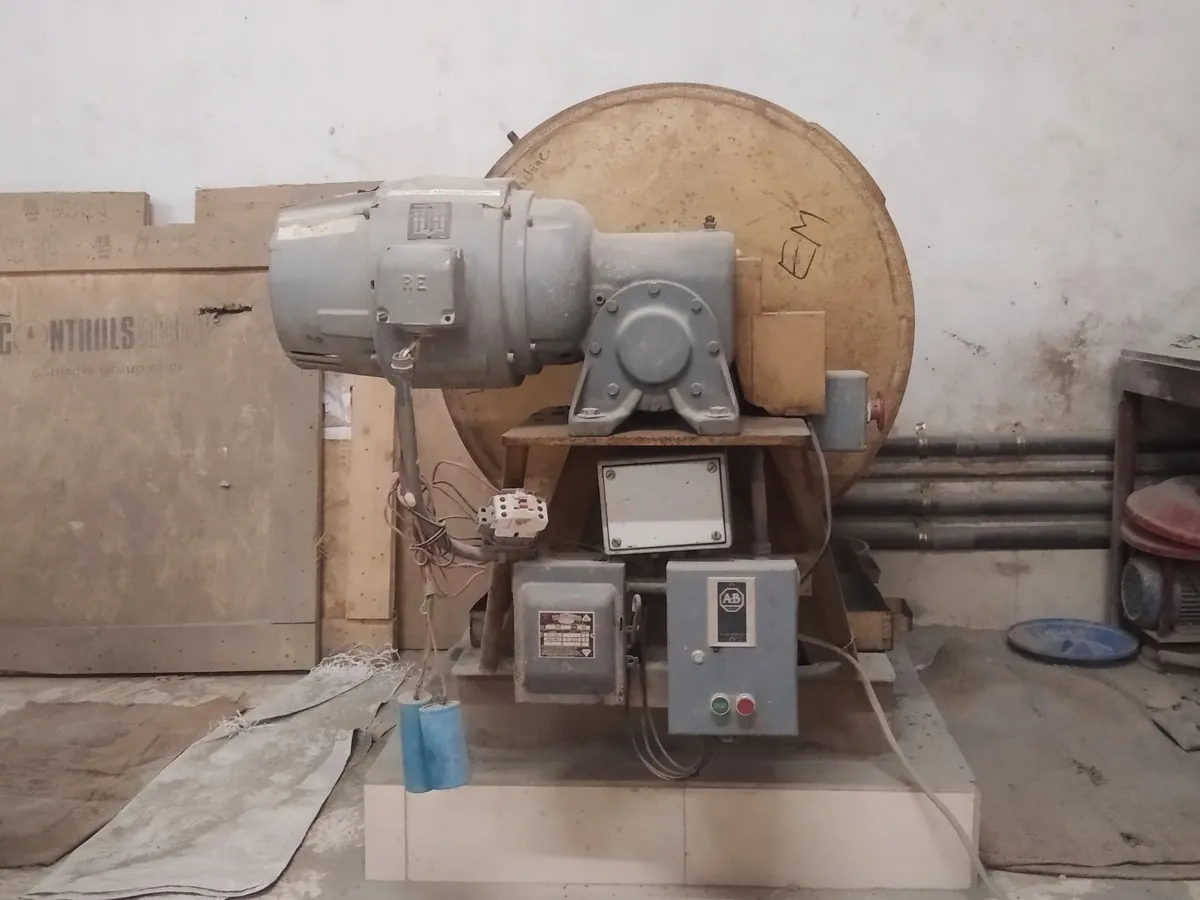
Times the drum to confirm it turns at 30–33 rpm, checks the revolution counter, and weighs each steel sphere and the total charge for each grading.
PURPOSE
Why this is checked
Drum speed and the mass of the abrasive charge control how hard the aggregate is worked. A slow drum or worn spheres give falsely low abrasion values.
Frequency
Drum speed and counter typically every 12 months; sphere masses every 6 to 12 months (spheres wear with use), as defined in your SOP.
Learn how the LA abrasion machine worksYOU WILL NEED
Standards & tools
- Calibrated stopwatch
- Calibrated balance (resolution 1 g; capacity ≥ 6 kg)
- Calibrated vernier calliper for sphere diameter
- Calibrated tape for drum dimensions
BEFORE YOU START
Prerequisites
- Drum empty or loaded as in normal use
- Machine on its foundation and warmed up
PROCEDURE
Step by step
- 1Mark the drum and count revolutions over a timed period of at least 5 minutes (or time a set number of revolutions).
- 2Calculate rpm; compare with 30–33 rpm.
- 3Set the counter to a known number (e.g. 100) and confirm the drum stops after exactly that many revolutions.
- 4Weigh each sphere individually; check each is within the individual mass range and measure diameter.
- 5Weigh the total charge for each grading used and compare with the required total.
- 6Check the internal drum diameter, length and shelf depth.
RECORD
Example observation table
| Item | Specified (typical) | Measured | Result |
|---|---|---|---|
| Revolutions in 5 min | 150 – 165 | 157 | Pass |
| Drum speed | 30 – 33 rpm | 31.4 rpm | Pass |
| Counter stop at 100 rev | 100 | 100 | Pass |
| Individual sphere mass (12) | 390 – 445 g each | 412 – 421 g | Pass |
| Total charge, grading A (12 spheres) | 5000 ± 25 g | 5016 g | Pass |
CALCULATION
How to calculate the result
Formula
Drum speed (rpm) = Revolutions counted ÷ Time (min); Test duration = Required revolutions ÷ rpm
Worked example
- 1157 revolutions in 5.0 min: speed = 157 ÷ 5.0 = 31.4 rpm (within 30–33 rpm)
- 2Time for 500 revolutions = 500 ÷ 31.4 = 15.9 min (at 30 rpm it would be 16.7 min; at 33 rpm, 15.2 min)
- 3
Sphere masses: 418 + 420 + 415 + 420 + 421 + 412 + 419 + 416 + 421 + 418 + 419 + 417 = 5016 g, within 5000 ± 25 g for grading A
ACCEPTANCE CRITERIA
Pass if
- Drum speed 30 to 33 rpm (IS 2386 Part 4 / ASTM C131).
- Counter stops at the set number of revolutions.
- Each sphere within the specified mass range (typically about 390–445 g); total charge within the tolerance for the grading (e.g. grading A 12 spheres, 5000 ± 25 g; grading B 11 spheres, about 4584 ± 25 g; grading C 8 spheres, about 3330 ± 20 g; grading D 6 spheres, about 2500 ± 15 g).
IF IT FAILS
What to do
- Service the motor, belts or gearbox if speed is outside the range.
- Replace worn spheres; make up the charge to the correct total.
- Repair the counter.
- Review abrasion values since the last good check.
In LimsPulse · Calibration Management
LimsPulse schedules this calibration, records the result against limits, and blocks the instrument everywhere if it fails or goes overdue.