Los Angeles Abrasion Machine
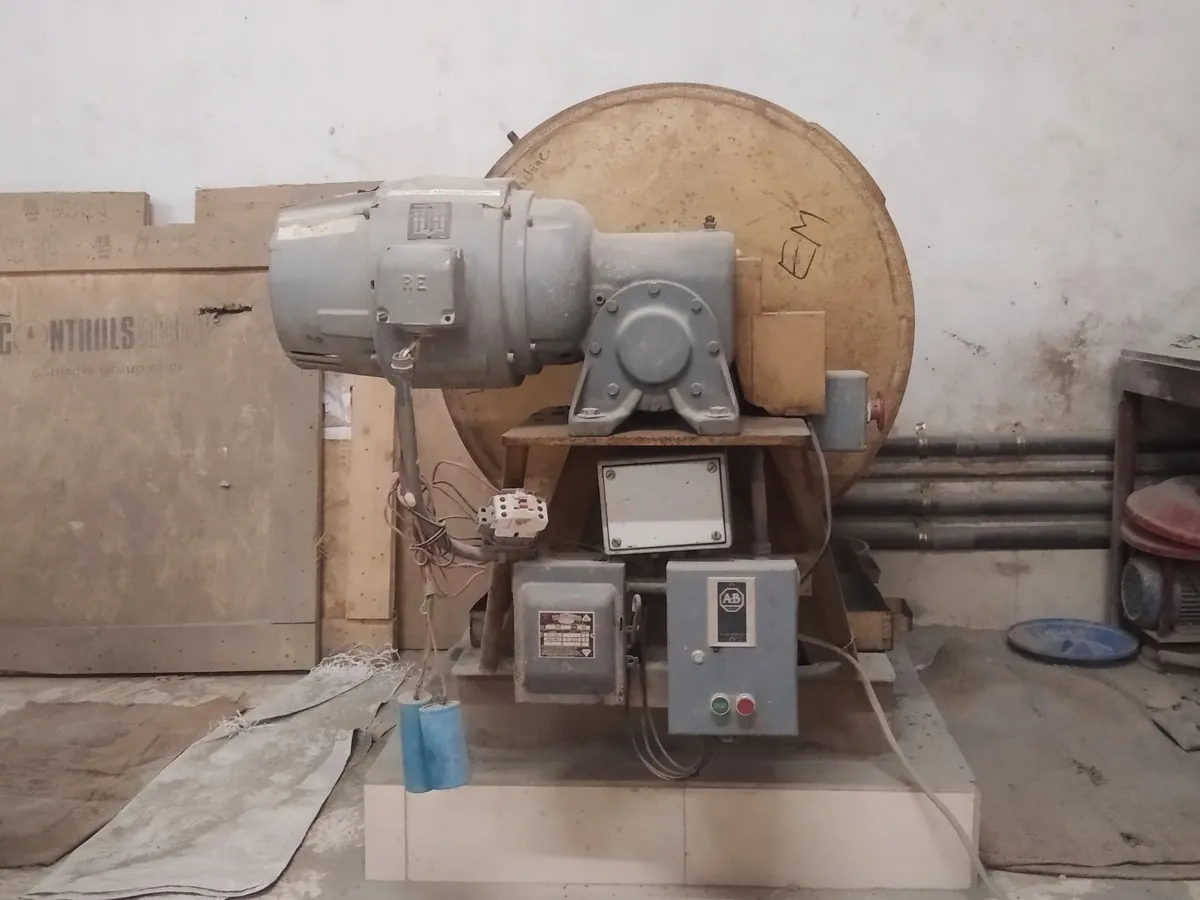
A rotating steel drum in which coarse aggregate is tumbled with steel balls for a fixed number of revolutions. The percentage worn down to fines (the LA abrasion value) measures resistance to abrasion and impact.
- Construction materials testing
- Road and highway construction
- Railways
- Quarries
- Academic labs
How LA abrasion machine works
Aggregate and steel spheres are lifted by the shelf and dropped as the drum turns. Particles are broken by impact and worn by rubbing. The mass passing 1.70 mm after the set revolutions, as a percentage of the starting mass, is the abrasion value. A lower value means a harder, more durable aggregate.
The path of a sample
- 01
Choose grading
The sample is prepared to one of the standard gradings (A, B, C, D… ) that best matches the aggregate in use.
- 02
Weigh
The washed and oven-dried sample (typically 5000 g for A–D) is weighed.
- 03
Load charge
The correct number of steel spheres for the grading is placed in the drum with the sample (e.g. 12 spheres for grading A).
- 04
Rotate
The drum turns at 30–33 rpm for the required revolutions, usually 500.
- 05
Sieve
Material is removed and sieved on a 1.70 mm sieve; the retained portion is washed, dried and weighed.
- 06
Calculate
Abrasion value = (original mass − mass retained on 1.70 mm) ÷ original mass × 100.
Main parts and what they do
Steel drum
Hollow cylinder, typically about 700 mm internal diameter and 500 mm long, closed at both ends, mounted on stub shafts.
Cover plate
Dust-tight opening for loading and unloading, clamped shut during the test.
Internal shelf
Removable steel shelf, about 90 mm deep, running the full length of the drum.
Abrasive charge
Set of steel spheres of specified size and mass.
Drive motor and gearbox
Turns the drum at a uniform speed of about 30–33 rpm.
Revolution counter
Counts revolutions and stops the drum at the preset number.
Tray and sieves
Collect the discharged material; 1.70 mm sieve for the test.
Acoustic enclosure (recommended)
Reduces noise to safe levels.
Terms every analyst should know
Abrasive charge
Cast-iron or steel spheres about 48 mm in diameter, each weighing about 390–445 g. The number and total mass depend on grading (e.g. grading A: 12 spheres, 5000 ± 25 g).
Shelf
A steel shelf across the inside of the drum that carries the charge up and drops it, producing impact.
Drum speed
Typically 30–33 rpm. Faster or slower speeds change how the charge falls and therefore the result.
Grading
Standard size ranges of the sample; the grading used is reported with the result.
Keep every LA abrasion machine in control: usage logs, calibration and maintenance schedules, and automatic blocking of overdue instruments.