Petroleum testing
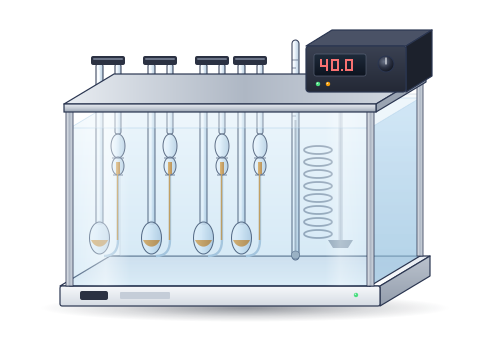
Kinematic Viscosity Bath
A clear, stirred liquid bath held to within about ±0.02 °C, in which calibrated glass capillary viscometers are timed. Flow time multiplied by the viscometer constant gives kinematic viscosity in mm²/s (cSt).
- Lubricant blending
- Petroleum refining
- Fuel terminals
- Marine fuel testing
- Fleet and machinery oil condition monitoring
- Independent testing laboratories
PREVENTIVE MAINTENANCE
Maintenance checklist
Daily
- Check bath temperature against the reference thermometer
- Check medium level and stirrer operation
- Inspect viscometers for chips or cracks
Weekly
- Clean the bath glass and lighting
- Check holders keep viscometers vertical
Monthly / per SOP
- Run a certified viscosity standard as a check
- Replace bath water and add an algicide, or check oil condition
Annual
- Calibrate the reference thermometer and verify bath uniformity
- Verify or recalibrate viscometer constants
- Verify the timer against a reference time signal
- Service heater, controller and chiller
SAFETY
Safety precautions
Before you work on the Viscosity bath
- Bath oil at 100 °C causes burns; wear heat-resistant gloves when inserting or removing viscometers.
- Silicone or white oil used near its flash point is a fire hazard; choose a bath oil whose flash point is well above the operating temperature.
- Cleaning solvents (petroleum spirit, heptane, acetone, toluene) are flammable; use them in a fume hood away from the bath heater.
- Glass viscometers break easily; handle with care and dispose of broken glass in a sharps bin.
- Never use mouth pipetting; use bulbs or vacuum lines.
- Keep electrical parts dry; wipe up water or oil spills at once.
In LimsPulse · Calibration Management
Keep every Viscosity bath in control: usage logs, calibration and maintenance schedules, and automatic blocking of overdue instruments.