Chromatography
High-Performance Thin-Layer Chromatography (HPTLC)
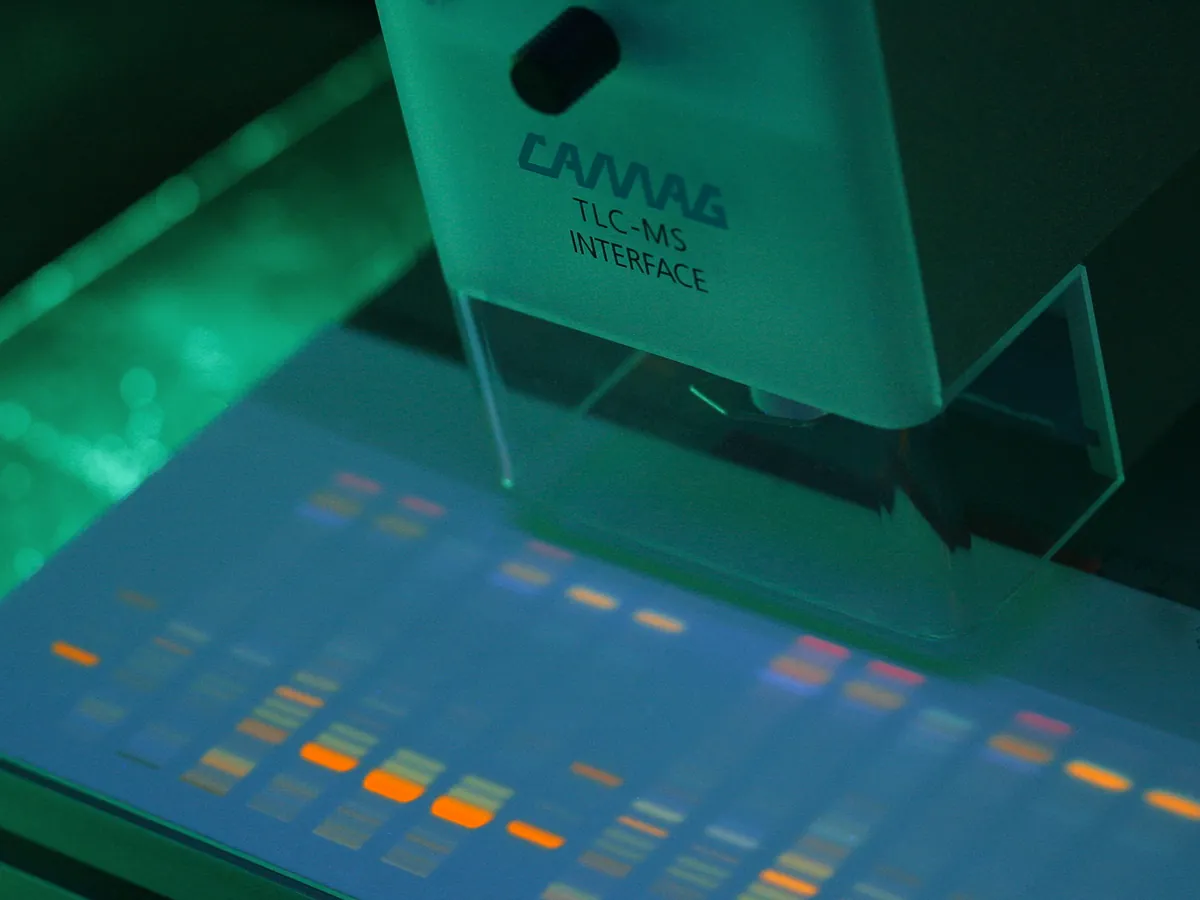
An instrumental, standardised form of TLC that uses fine-particle plates, automated band application, controlled development and densitometric scanning. Widely used for herbal identification fingerprints and semi-quantitative or quantitative assays.
- Pharmaceutical
- Herbal and nutraceutical
- Food & cosmetics
- Forensic
- Academic research
TROUBLESHOOTING
Common problems, causes and fixes
Rf values differ from the reference
Likely causes
- • Chamber not saturated
- • Humidity or temperature different
- • Mobile phase prepared wrongly or reused
What to do
- • Saturate for the specified time
- • Condition the plate to controlled humidity
- • Prepare fresh mobile phase each time
Smile or curved solvent front
Likely causes
- • Uneven saturation
- • Plate not vertical
- • Edge effects
What to do
- • Use a twin-trough chamber with filter paper
- • Check the plate sits level
- • Keep tracks away from the plate edges
Diffuse or tailing zones
Likely causes
- • Sample applied in too strong a solvent or too large a volume
- • Overloaded track
- • Plate too active or contaminated
What to do
- • Use spray-on band application and a weaker solvent
- • Reduce the amount applied
- • Pre-wash and activate plates
Uneven colour after derivatisation
Likely causes
- • Hand spraying
- • Uneven heating
What to do
- • Use a dipping or automatic spraying device
- • Use a calibrated plate heater
In LimsPulse · Calibration Management
Keep every HPTLC in control: usage logs, calibration and maintenance schedules, and automatic blocking of overdue instruments.