Chromatography
High-Performance Thin-Layer Chromatography (HPTLC)
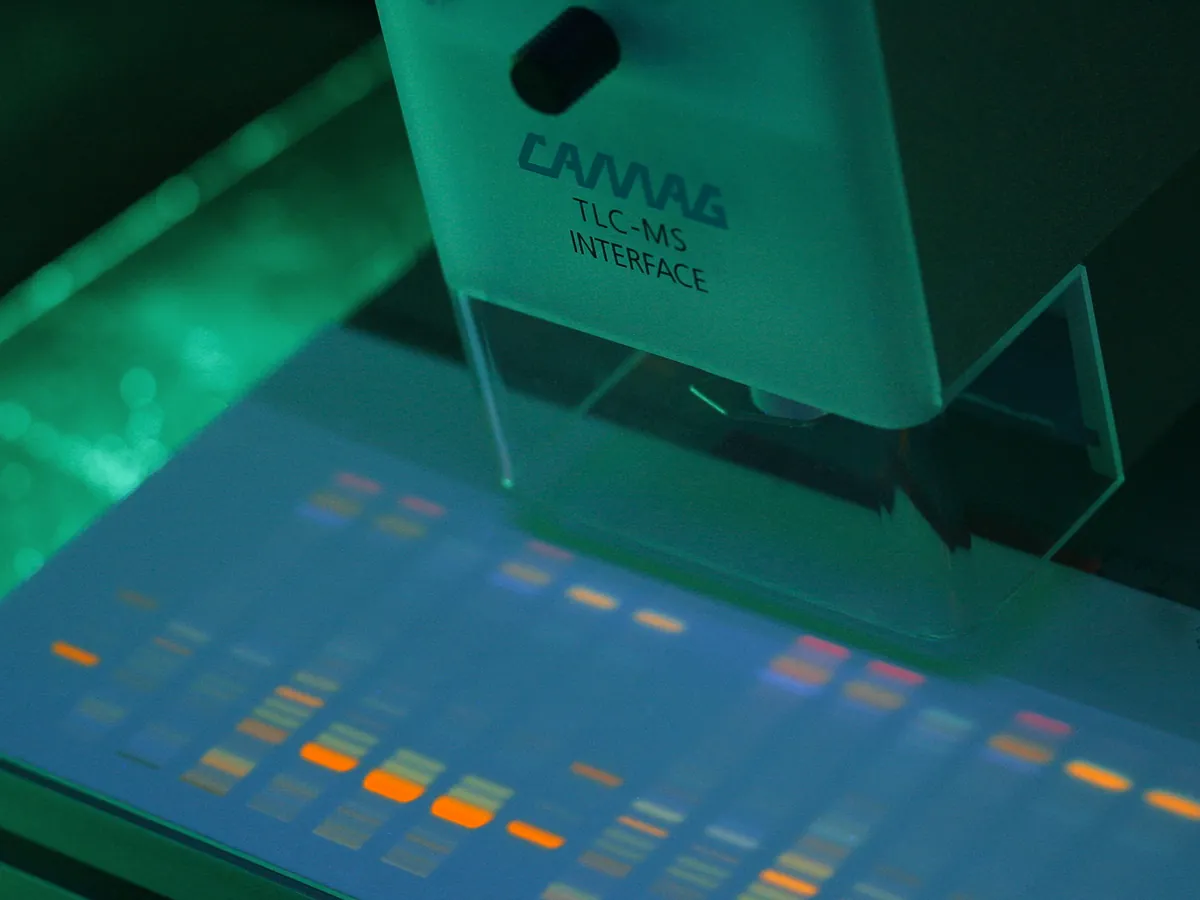
An instrumental, standardised form of TLC that uses fine-particle plates, automated band application, controlled development and densitometric scanning. Widely used for herbal identification fingerprints and semi-quantitative or quantitative assays.
- Pharmaceutical
- Herbal and nutraceutical
- Food & cosmetics
- Forensic
- Academic research
Follow your site SOP
This is a typical operating sequence for learning. Your instrument model and approved SOP take precedence.
STAGE 1
Before you start
- 1Check calibration status of the applicator, scanner and balance.
- 2Use plates from a qualified supplier; pre-wash with methanol and activate if the method requires.
- 3Prepare the mobile phase fresh and in the exact proportions stated.
- 4Record laboratory temperature and relative humidity.
- Handle plates by the edges with gloves; fingerprints and dust show up as zones.
STAGE 2
Application and development
- 1Set the application pattern: band length, distance from the lower edge (e.g. 8 mm) and from the sides.
- 2Apply samples, reference standards and the system suitability mixture on the same plate.
- 3Condition the plate to the specified humidity if required, then saturate the chamber (often 20 minutes with filter paper).
- 4Develop to the specified distance, then dry the plate in a stream of cold air.
- Do not let the solvent level reach the applied bands; they would dissolve into the solvent.
STAGE 3
Detection and evaluation
- 1Document the plate under UV 254 nm and 366 nm before derivatisation.
- 2Derivatise as per the method, heat if required, and document again under white light and/or UV 366 nm.
- 3Check the system suitability zones are present and separated as specified.
- 4Compare sample fingerprints with the reference, or scan and quantify against a standard calibration.
- Document derivatised plates promptly; colours can fade or change with time.
STAGE 4
Shutdown
- 1Clean the applicator syringe and rinse the chamber.
- 2Archive the plate images and raw data; store or dispose of the plate as per SOP.
- 3Complete the instrument logs.
In LimsPulse · Calibration Management
Keep every HPTLC in control: usage logs, calibration and maintenance schedules, and automatic blocking of overdue instruments.