Materials & polymer testing
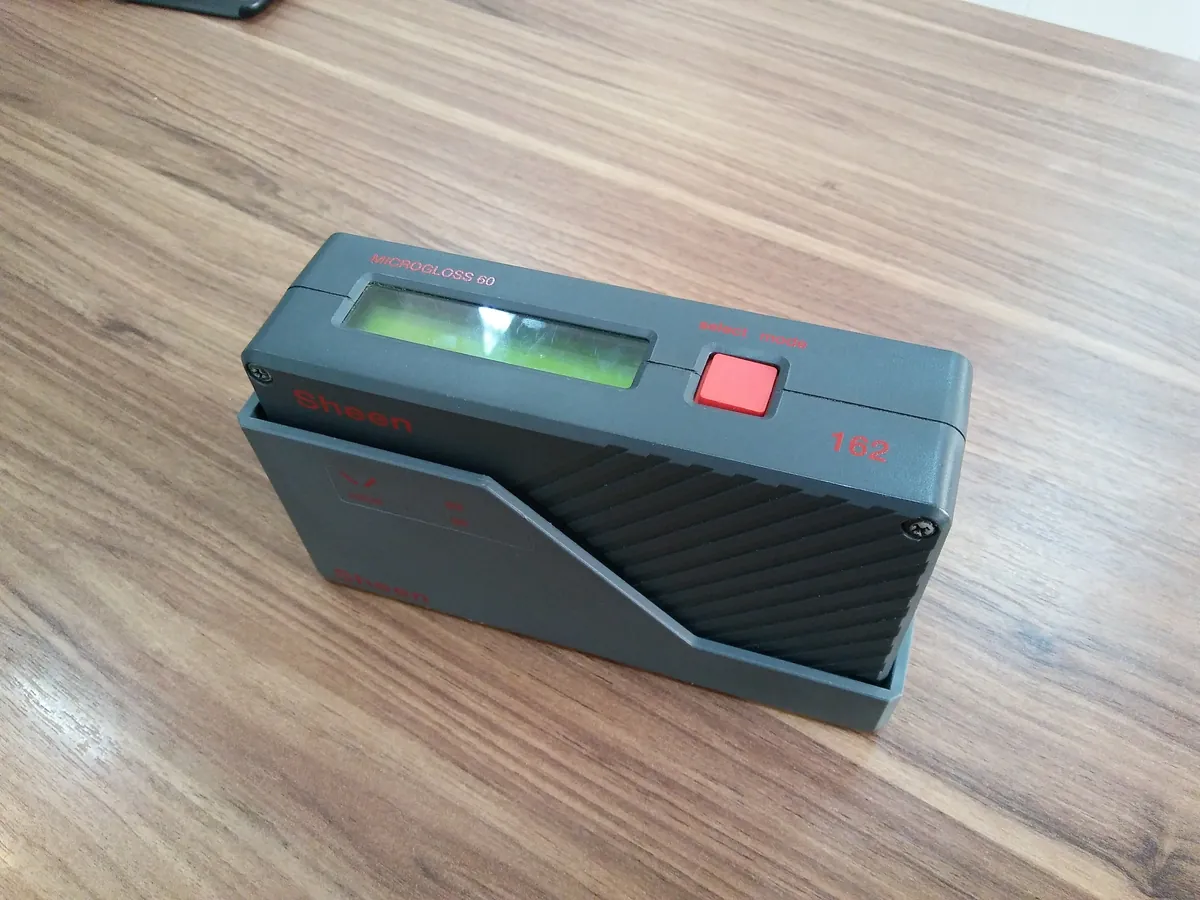
Gloss meter
Shines a beam of light onto a surface at a fixed angle and measures how much is reflected in the mirror direction. The result is given in gloss units (GU), relative to a polished black glass standard.
- Paints & coatings
- Polymers & plastics
- Printing & packaging
- Automotive
- Furniture
- Cosmetics
TROUBLESHOOTING
Common problems, causes and fixes
Calibration fails or values drift
Likely causes
- • Dirty or scratched tile
- • Wrong tile values entered
- • Lamp ageing
What to do
- • Clean the tile gently
- • Check the tile serial number and values
- • Send the meter for service
Readings vary across one panel
Likely causes
- • Uneven film thickness or texture
- • Panel not flat
- • Contamination on the surface
What to do
- • Check application and curing
- • Use flat glass or metal test panels
- • Clean the surface as the method allows
Readings disagree with another lab
Likely causes
- • Different geometry
- • Different calibration tile traceability
- • Different panel preparation
What to do
- • Agree the geometry and method
- • Compare both meters on the same check tiles
- • Exchange the same panels
Readings above 100 GU
Likely causes
- • Metallic, mirror-like or high-refractive-index surface
What to do
- • This is normal for such surfaces; report as measured or use the 20° geometry and a method agreed with the customer
In LimsPulse · Calibration Management
Keep every Gloss meter in control: usage logs, calibration and maintenance schedules, and automatic blocking of overdue instruments.